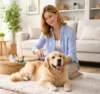
Sensory Games: The Science of Stimulating Your Dog’s Senses
For a dog, the world is a complex tapestry of scents, vibrations, and textures. Traditional exercise often neglects the deeper layers of Canine Perception. Introducing Sensory Games into your daily routine provides Environmental Enrichment that targets the Dopaminergic reward system, leading to a profound state of satisfaction that physical running alone cannot achieve.
Whether it is through Olfactory foraging, tactile exploration, or auditory discrimination, these games help dogs process environmental stimuli more effectively. This structured engagement is particularly critical for high-drive breeds and senior dogs, ensuring their Cognitive function remains sharp throughout all life stages.
💡 Pro-Trainer Strategy: Rotating Toys Schedule
Sensory stimulation should follow a Rotating Toys Schedule to prevent sensory habituation. If the stimuli remain constant, the brain eventually filters them out as ‘background noise.’
Olfactory Stimulation – The Power of Scent Work
To understand Sensory Games, one must first appreciate the biological dominance of the canine nose. A dog’s primary window into the world is not visual, but chemical. While humans possess roughly 6 million olfactory receptors, dogs boast up to 300 million. Engaging this system through structured Scent Work is the most direct path to reducing anxiety and fostering Neural Resilience.
1. Biomechanics of the Sniff & The “Find It” Protocol
When a dog engages in active sniffing, air is diverted into the Olfactory Recess, directly stimulating the Olfactory Bulb and the Limbic System. Structured sniffing games act as a natural sedative by lowering heart rate and releasing endorphins.
Laying the foundation for lifelong cognitive health through puppy scent games.
🛠️ Step-by-Step Foraging Setup:
- The Baseline: Start by tossing high-value treats in plain sight on a high-traction rug.
- Environmental Complexity: Hide treats behind chair legs, under cardboard boxes, or inside rolled-up towels.
- Variable Planes: Use verticality. Place scents on low shelves or safe ledges to force 3D scent tracking.
2. Scent Discrimination & Metabolic Cost
Teaching dogs to identify a target odor among distractor smells requires Inhibitory Control and enhances Synaptic Connectivity. Because the brain consumes 20-25% of body glucose, a 15-minute scent session provides energy drainage comparable to a long walk without straining joints.
🛡️ Expert Safety Note: Avoid Sensory Exhaustion
Olfactory work is taxing. If your dog’s nose becomes dry or they exhibit “fringe-searching” (looking aimlessly), stop the session. Over-stimulation of the Olfactory Mucosa leads to fatigue. Conclude with a calm cool-down routine.
Visual & Predatory Tracking – Engaging the Optic Nerve
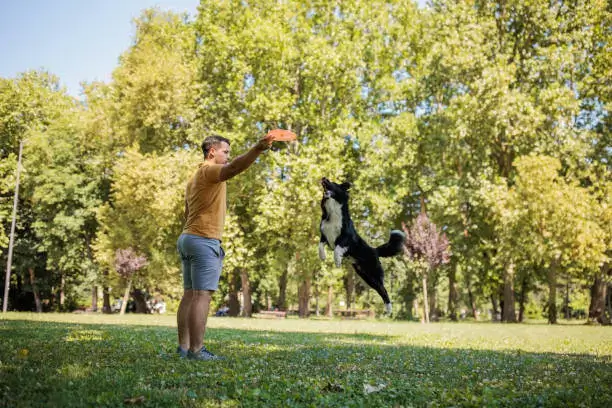
Enhancing visual tracking and optic nerve response through dynamic play.
The canine retina is densely packed with rod cells, making dogs superior at tracking motion even in low light. Moving toys stimulate the Superior Colliculus, fulfilling predatory drive in a controlled manner.
🎯 Tracking Training Exercises:
- The Slow Lure: Move a toy slowly to build intense, sustained Gaze Focus.
- The Disappearing Act: Move a toy behind a barrier to test Object Permanence.
- Variable Speed Intervals: Shift between rapid bursts and dead stops to train Impulse Control.
“True visual enrichment involves Precision Tracking. If your dog isn’t ‘locking on’ to the target with intense eye contact, you aren’t training the brain; you’re just exercising the muscles.” — Maya Mai
Tactile Exploration – Surface Awareness & Proprioception

Stimulating the peripheral nervous system through tactile surface exploration.
Paw pads contain Mechanoreceptors that send texture and vibration data to the Somatosensory Cortex. Exploring different surfaces builds environmental confidence and reduces surface-related anxiety.
🦶 Tactile Enrichment Path:
- Soft/Absorbent: Memory foam or high-pile rugs for deep pressure input.
- Rough/Granular: Sand containers or turf to stimulate toes.
- Slick/Unstable: Yoga bolsters or mats to challenge Vestibular Balance.
- Thermal: Cool tile vs. warm bricks to engage temperature sensitivity.
Additionally, using Textured Lick Mats provides oral enrichment. Repetitive licking stimulates the Vagus Nerve, triggering the parasympathetic “rest and digest” state.
Cognitive Problem-Solving & Interactive Feeding
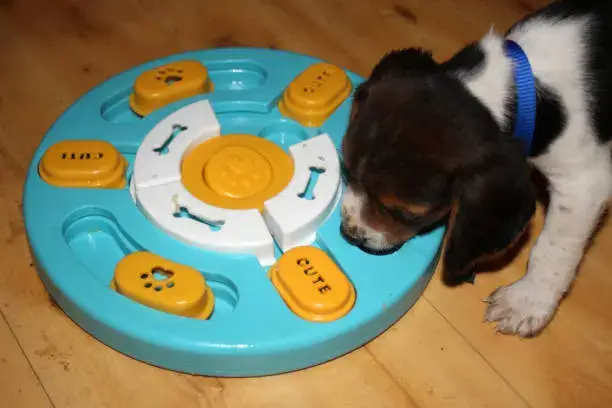
Challenging executive function through interactive puzzle-solving.
Interactive feeders engage the Prefrontal Cortex, enhancing executive function and impulse control. Working for meals (contrafreeloading) activates the dopamine reward system, boosting focus and confidence.
🧠 Cognitive Training Indicators:
- Latent Learning: Solves puzzles faster on subsequent attempts.
- Frustration Tolerance: Persists before seeking owner help.
- Multi-modal Integration: Uses scent to verify treat locations before acting.
Auditory & Vestibular Enrichment
Addressing sound discrimination and balance builds spatial stability and reduces environmental reactivity.
⚖️ Vestibular Training Protocols:
- The Wobble Board: Unstable platforms force micro-adjustments in the Cerebellum.
- Elevation Changes: Low angled ramps engage Otolith Organs.
- The Pivot Circle: Rotating hindquarters while keeping front paws still enhances spatial orientation.
Safety Audit & Weekly Action Plan
⚠️ The Sensory Red-Flag Audit:
- Excessive Panting: Unrelated to temperature or exertion.
- Displacement Behaviors: Sudden scratching, yawning, or lip licking.
- Fringe-Searching: Aimless wandering instead of focused engagement.
- Hyper-Arousal: Inability to settle post-session.
| Day Range | Primary Focus | Core Activity |
|---|---|---|
| Mon – Tue | Olfactory (Scent) | Indoor Scavenger Hunt / Scent Discrimination |
| Wed – Thu | Tactile & Vestibular | Texture Paths / Wobble Board Work |
| Fri – Sat | Cognitive & Visual | Advanced Puzzle Feeders / Motion Tracking |
| Sunday | Sensory Reset | Low-light decompression / Gentle massage |
Frequently Asked Questions (FAQs)
Q1: How do sensory games benefit a dog’s neurological health?
Sensory games promote neurological plasticity by challenging the brain to process diverse environmental stimuli. By engaging the olfactory bulb, tactile mechanoreceptors, and the prefrontal cortex, these games stimulate the dopaminergic reward system and help maintain synaptic connectivity.
Q2: Can sensory games help reduce anxiety and reactivity in dogs?
Yes. Scent work lowers the baseline heart rate and triggers the release of endorphins. Teaching dogs to focus on specific signals builds inhibitory control and emotional resilience against external stress.
Q3: What are the common signs of sensory overload during play?
Indicators include excessive panting, displacement behaviors (yawning/licking), and fringe-searching aimlessly. If these appear, conclude the session with a calm cool-down.
Q4: Are sensory games effective for senior dogs with limited mobility?
Absolutely. Scent work and tactile exploration provide high cognitive engagement and energy drainage without physical stress on aging joints.
Q5: How often should I rotate sensory games to maintain engagement?
Rotate the sensory focus every 48 to 72 hours to prevent sensory habituation and maintain high neural engagement.
Conclusion: The Sensory Advantage
Mastering Sensory Games is the ultimate brain hack for canine wellness. Physical fitness is the body’s hardware, but sensory enrichment is the software—keep both updated to ensure a cognitively sharp, happy companion.