
Puzzle Feeders for Dogs: Cognitive Development & Enrichment
A puzzle feeder is more than just a toy—it’s a tool to keep your dog’s mind active and body engaged. By encouraging problem-solving and self-feeding, puzzle feeders provide both mental stimulation and physical activity during mealtime. Whether you have a puppy or an adult dog, using a puzzle feeder can reduce boredom, slow down eating, and promote healthy habits at home.
In this guide, you’ll learn what puzzle feeders are, how they work, and practical ways to integrate them into your dog’s daily routine.
What is a Puzzle Feeder and How Does It Work?
A puzzle feeder is a type of interactive feeding tool designed to challenge your dog to solve a problem in order to access their food or treats. Unlike regular bowls, puzzle feeders require dogs to use their paws, nose, or mouth to manipulate parts of the feeder. This encourages cognitive development and engages their natural instincts to forage and explore.
Definition and Purpose
Puzzle feeders are specially designed toys that combine feeding with mental enrichment. The main purpose is to:
- Stimulate canine cognition
- Encourage problem-solving skills
- Slow down fast eaters
- Reduce boredom and anxiety
By turning mealtime into a rewarding game, puzzle feeders help dogs practice focus and persistence while keeping them entertained.
Mechanism of Food Dispensing
Most puzzle feeders work by hiding food in compartments or requiring dogs to move pieces to release treats. Common mechanisms include:
Dispensing Mechanisms
- Sliding panels: Dogs slide sections to reveal hidden food
- Rotating wheels or discs: Dogs rotate parts to release kibble
- Hidden compartments: Dogs lift flaps or open containers to get treats
These mechanisms promote fine motor skills and reward dogs for using their problem-solving abilities.
Types of Puzzle Feeders

Dog using a simple puzzle feeder to access hidden treats.
There are many types of puzzle feeders available, each suited to different skill levels and dog sizes:
- Simple puzzles: Great for beginners and puppies
- Moderate difficulty: Requires multiple steps to release food
- Advanced puzzles: Designed for large dogs or highly food-motivated dogs
- DIY feeders: Homemade options using safe household items
By choosing the right type, you can match the puzzle feeder to your dog’s abilities and gradually increase the challenge as they improve.
Benefits of Using a Puzzle Feeder for Your Dog
Puzzle feeders offer far more than a fun way to serve meals. They provide mental and physical stimulation that can improve your dog’s overall well-being. When used consistently, puzzle feeders help dogs develop problem-solving skills, encourage slower eating, and reduce common behavioral issues like boredom-related chewing or excessive barking.
Mental Stimulation and Cognitive Development
Dogs need mental challenges just as much as physical exercise. A puzzle feeder:
Cognitive Benefits:
- Encourages canine cognition as dogs figure out how to retrieve treats
- Engages their problem-solving skills during mealtime
- Provides cognitive enrichment, which can reduce stress and anxiety
Mental stimulation through puzzle feeders is particularly helpful for high-energy or intelligent breeds that require constant engagement. Even a few minutes per session can improve focus and satisfaction.
Physical Exercise and Fine Motor Skills
Using a puzzle feeder isn’t just about thinking—it also involves movement:
- Dogs use paws, noses, and mouths to access food, enhancing fine motor skills
- Manipulating puzzle pieces provides gentle physical activity
- Encourages mealtime engagement and keeps dogs active indoors
For older dogs or those with limited outdoor exercise, puzzle feeders can be a safe way to maintain activity levels and prevent weight gain.
Behavior and Anxiety Management
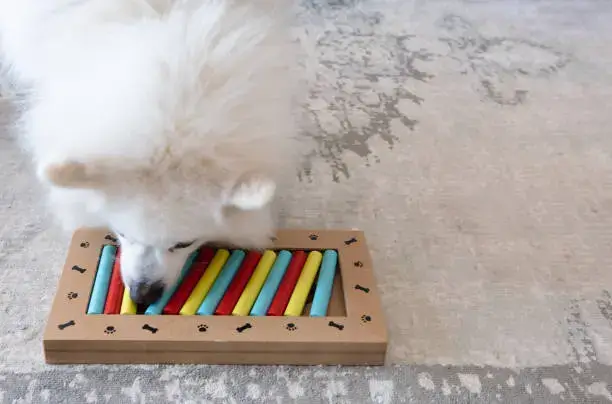
Happy dog solving puzzle feeder, showing mental and physical stimulation.
Puzzle feeders can also help address common behavior concerns:
Behavioral Improvements:
- Slow, rewarding meals reduce gulping and digestive issues
- Keeps dogs busy, preventing destructive behavior due to boredom prevention
- Supports reward-based feeding, which reinforces positive behavior
By making mealtime interactive, dogs feel mentally and physically satisfied, which can decrease attention-seeking or anxiety-related behaviors. Puzzle feeders can even help shy or anxious dogs gain confidence as they master new challenges.
How to Introduce a Puzzle Feeder to Your Dog
Introducing a puzzle feeder to your dog requires patience, observation, and the right strategy. A gradual and structured approach ensures that your dog has a positive experience and learns to enjoy the challenge of accessing their food.
Start Simple
When introducing a puzzle feeder for the first time, simplicity is key. Choose a basic puzzle feeder with fewer compartments or one that requires minimal manipulation. Dogs are more likely to succeed and build confidence if the puzzle is not overly complicated at the beginning.
Tips for starting simple:
- Place a few pieces of kibble or treats in visible compartments.
- Encourage your dog to investigate the feeder by pointing to the food or tapping the compartments.
- Allow your dog to interact with the feeder without forcing them. Patience is essential.
Using a simple puzzle feeder at the start helps your dog learn problem-solving skills and food-motivated behavior.
Use High-Value Treats
High-value treats are a great motivator when first introducing a puzzle feeder. Treats that your dog loves, but doesn’t get frequently, can spark interest and create excitement for the activity.
Practical Ideas:
- Small pieces of cooked chicken, cheese, or commercial dog treats.
- Portion the treats so that the dog can finish the puzzle in a short time, avoiding frustration.
- Rotate treats to maintain curiosity and engagement.
Gradually Increase Difficulty
Once your dog becomes comfortable with a simple puzzle feeder, you can gradually increase the difficulty. Introducing more complex puzzles helps maintain mental stimulation and encourages continuous learning.
Ways to increase difficulty:
- Move the treats deeper into compartments or under flaps.
- Use feeders with multiple steps, like rotating wheels or sliding pieces.
- Extend the time it takes to access the food, but avoid creating frustration.
Supervise and Observe
Especially during the first few sessions, supervision is essential. Watch how your dog interacts with the puzzle feeder to ensure safety and proper use.
Supervision Tips:
- Sit near your dog and offer guidance if needed.
- Use verbal encouragement like “Yes” or “Good job” when the dog solves part of the puzzle.
- Remove the feeder if your dog shows signs of stress or frustration.
Establish a Routine
Incorporating the puzzle feeder into your dog’s daily routine helps reinforce positive habits. Consistency makes it easier for your dog to understand the purpose of the puzzle and anticipate mealtime as a fun and enriching activity.
Routine Tips:
- Use the puzzle feeder once or twice a day, depending on your dog’s feeding schedule.
- Rotate between different puzzle feeders or DIY enrichment games to prevent boredom.
- Combine puzzle feeding with short play sessions for added physical and mental stimulation.
Common Challenges and Solutions
Troubleshooting Tips:
- Frustration or giving up: Simplify the puzzle or use more visible treats.
- Chewing the feeder: Choose a durable material or supervise closely.
- Lack of interest: Use higher-value treats or move the feeder to a quiet area.
- Eating too quickly: Ensure portions are small and increase complexity gradually.
Comparing Puzzle Feeders and Slow Feeders
Puzzle feeders and slow feeders both aim to improve mealtime, but they serve slightly different purposes. While slow feeders mainly slow down eating, puzzle feeders add a layer of mental stimulation and problem-solving.
| Feature | Slow Feeders | Puzzle Feeders |
|---|---|---|
| Design | Ridges or patterns inside a bowl | Sliding parts, flaps, wheels, or compartments |
| Primary Focus | Physical control of eating speed | Cognitive enrichment & problem-solving |
| Mental Engagement | Basic | High, with variable complexity levels |
DIY and Homemade Puzzle Feeder Ideas
Homemade dog enrichment game using muffin tin and treats.
Not all puzzle feeders need to be store-bought. Simple household items can create safe, effective DIY puzzle feeders that challenge your dog’s mind while saving money.
Simple Cup and Towel Game
- Place a few treats under cups and shuffle them.
- Alternatively, hide treats in a folded towel for your dog to uncover.
- Start with easy hiding spots, gradually increasing difficulty as your dog improves.
Muffin Tin Treat Puzzle
- Place treats in muffin tin cups and cover some with tennis balls or lids.
- Dogs must remove the ball or lid to access the food.
- Works well for small or medium dogs; adjust difficulty for large dogs.
Bottle or Box Dispenser Ideas
- Use empty plastic bottles or cardboard boxes with small holes to dispense kibble.
- Ensure bottles are clean and edges are smooth for safety.
- Dogs push, nudge, or roll the bottle to release food, promoting self-feeding and mental exercise.
Tips for Safe and Effective Puzzle Feeder Use
Safety and proper use are essential to make puzzle feeding enjoyable and productive. Implementing a few guidelines ensures your dog benefits fully without stress or injury.
Safety Guidelines:
- Choosing Size/Material: Select an appropriate size, non-toxic durable material, and avoid small swallowable parts.
- Supervision: Observe initial sessions, limit early sessions to 5–10 minutes, and extend as skills improve.
- Hygiene: Clean feeders regularly, inspect for damaged parts, and rotate toys to prevent boredom.
Encouraging Consistent Engagement and Fun
Maintaining your dog’s interest in interactive feeding tools requires planning, patience, and variety. By creating a consistent and enjoyable routine, you can ensure that mealtime remains mentally stimulating and physically rewarding.
Engagement Strategies:
- Rotate Activities Regularly: Introduce new challenges or treats periodically to maintain curiosity and novelty.
- Incorporate Training: Pair feeding with commands like “sit” or “wait” and reward successful problem-solving.
- Monitor & Adjust: Observe interactions and lower difficulty if frustration occurs, or increase as mastery improves.
- Make It a Daily Routine: Schedule interactive feeding at predictable times and pair with short play sessions.

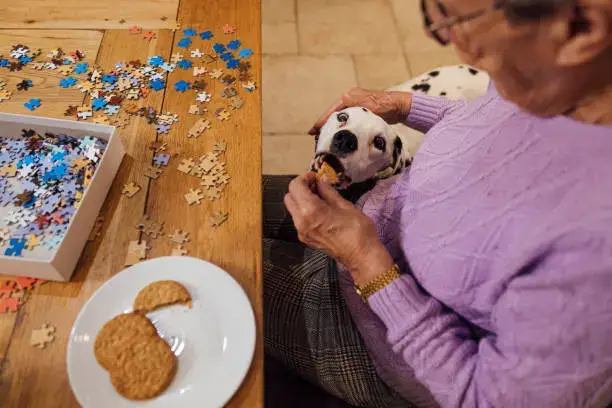
Dog owner supervising dog using interactive feeding toy safely.
Frequently Asked Questions (FAQs)
Q1: Can puppies use puzzle feeders safely?
Yes. Choose safe puzzle feeders for puppies with simple designs. Supervise closely and start with visible treats. This helps puppies learn problem-solving while ensuring safety.
Q2: How often should I use a puzzle feeder?
Once or twice daily is sufficient for most dogs. Frequent use encourages mental exercise and keeps your dog engaged, but overuse can reduce novelty.
Q3: What treats are suitable for puzzle feeders?
Small, healthy kibble or soft treats work best. Cooked chicken or cheese in moderation can also be used. Avoid foods that are too hard or sticky to prevent frustration.
Q4: What if my dog loses interest in interactive feeders?
Rotate puzzle types, try DIY feeders, or use higher-value treats. Keeping challenges new and rewarding prevents boredom and maintains engagement.
Conclusion and Next Steps for Dog Enrichment
Puzzle feeders are an effective way to combine mental stimulation with physical activity. They improve cognitive skills, slow down eating, reduce boredom, and encourage healthy, engaged behavior.