

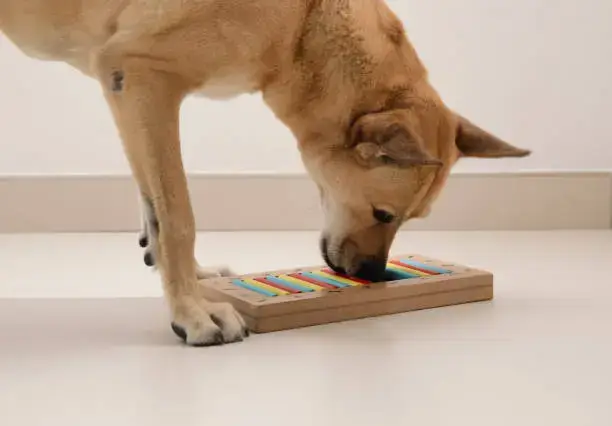
Mental challenge toys for dogs are more than just playthings—they are tools to stimulate your dog’s mind and boost mental well-being. They help dogs develop problem-solving skills, reduce stress, and prevent destructive behavior caused by boredom. Spending just a few minutes each day on brain games can make a noticeable difference in your dog’s focus […]
Category Archives: Dog Care

Quick Summary: A professional Rotating Toys Schedule is a systematic approach to canine enrichment that prevents “Cognitive Satiety.” By limiting access to 3–5 specific toys and swapping them every 2–7 days, you leverage a dog’s natural neophilia (love for novelty). This protocol maintains high engagement levels, reduces destructive boredom, and resets the “novelty premium” of […]

⚖️ Safety Disclaimer: While puzzle feeder ideas enhance mental well-being, they require vigilant supervision. Ingestion of foreign materials (cardboard, plastic shards, or small components) can lead to acute gastrointestinal obstruction. Always inspect DIY enrichment tools for structural integrity before and after use. 🖋️ “At PetCareCompass, we believe mealtime should be an active cognitive victory, not […]

Mastering DIY Dog Toys is about more than just creative recycling; it is a strategic method to provide daily cognitive enrichment without the constraints of commercial availability. By understanding your dog’s instinctual need for chewing, sniffing, and problem-solving, you can transform common household materials into high-performance enrichment tools. 💡 The Enrichment Mandate: Effective DIY toys […]
Dog Supplies & Home Essentials
Mental Enrichment Checklist: Practical Activities to Stimulate Your Dog’s Mind

The Cognitive Mandate: Engineering a resilient canine mind requires more than just novelty; it demands a systematic Mental Enrichment Checklist to promote Neuroplasticity. At PetCareCompass, we define enrichment as the targeted activation of Dopamine-Regulated Reward Systems to neutralize Cortisol-Driven Anxiety and prevent behavioral degradation. Implementing a rigorous Mental Enrichment Checklist is a cornerstone of advanced […]

🧠 “Engaging a dog through Sensory Games is not merely an act of entertainment; it is a fundamental requirement for Neurological Plasticity. By systematically stimulating the olfactory, auditory, and tactile systems, we prevent Environmental Boredom and foster a resilient, balanced canine temperament.” — Maya Mai, Founder of PetCareCompass Sensory Games: The Science of Stimulating Your […]

A puzzle feeder is more than just a toy—it’s a tool to keep your dog’s mind active and body engaged. By encouraging problem-solving and self-feeding, puzzle feeders provide both mental stimulation and physical activity during mealtime. Whether you have a puppy or an adult dog, using a puzzle feeder can reduce boredom, slow down eating, […]
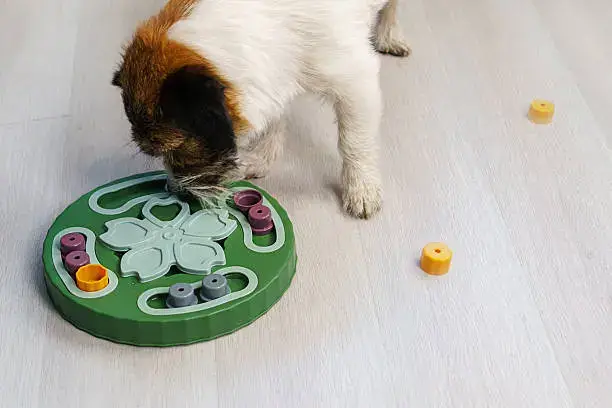
Executive Summary: Sensory Toys for dogs are Neural Enrichment Assets designed to stimulate primary Sensory Modalities (olfactory, visual, tactile, and auditory). This infrastructure includes Tactile Afference devices, Olfactory Thruput assets, and Chromatic Perception hardware. Proper implementation promotes Neural Plasticity, manages Cognitive Load, and prevents Sensory Deprivation in domestic environments, ensuring long-term Somatic Homeostasis. In the […]

🦴 “Selecting Interactive Chew Toys is far more than finding an ‘indestructible’ material. It is about managing the Masticatory Drive and converting latent energy into problem-solving milestones. In my granular clinical audit, I’ve found that the right interactive tool is the most effective non-medical deterrent for Separation Anxiety. Expert Verdict: The ideal toy must challenge […]

Chew toys are an essential part of a dog’s daily routine. They not only satisfy a dog’s natural urge to chew but also support dental health, reduce boredom, and prevent destructive behaviors. Using the right chew toys at home can make a big difference in a dog’s mental and physical well-being. This guide explains how […]