
💡 The Enrichment Mandate
Mastering DIY Dog Toys is about more than just creative recycling; it is a strategic method to provide daily cognitive enrichment without the constraints of commercial availability. By understanding your dog’s instinctual need for chewing, sniffing, and problem-solving, you can transform common household materials into high-performance enrichment tools.
Effective DIY toys utilize safe materials like natural fibers, cardboard, and food-grade silicone to support independent play. Our goal is to make mental stimulation realistic and affordable, ensuring that safety remains the primary engineering focus of every homemade object.
Throughout this guide, we translate professional canine behavioral standards into actionable DIY projects. You will learn to categorize toys based on your dog’s specific chewing profile, implement a successful toy rotation system, and audit materials to prevent accidental ingestion or injury.
Why DIY Dog Toys are Essential for Neurological Vitality

DIY enrichment tools satisfy a dog’s primary biological drive for exploration and problem-solving.
In modern canine science, enrichment is categorized as a biological imperative rather than an optional luxury. Dogs possess ancestral drives—searching, shredding, and scent-tracking—that do not vanish in a domestic setting. DIY Dog Toys serve as the bridge between these primal needs and the constraints of a home environment, offering a scalable way to activate the brain’s dopaminergic reward system through constructive play.
The Cost of Boredom: Recognizing Behavioral Deficiency
Displacement Behaviors
When natural instincts lack a directed outlet, dogs often resort to destructive chewing of furniture, persistent pacing, or hyper-vigilance (excessive barking at environmental micro-sounds). These are not signs of a “bad dog,” but rather a cognitively under-stimulated mind seeking friction.
Attention-Seeking Loops
Boredom frequently manifests as nudging, vocalization, or pawing for attention. By integrating mental stimulation through DIY puzzles, you shift the dog from a reactive state of “demanding” to a proactive state of “problem-solving.”
Harnessing Instinct: Tactical Enrichment Categories
Effective canine enrichment routines utilize common household materials to target specific sensory systems. The goal is to provide a “job” that satisfies the dog’s internal work-drive.
DIY Modalities for Sensation Seeking
- Olfactory Enrichment (Scent Work): Hiding high-value rewards inside cardboard tubes or paper bags forces the dog to use their vomeronasal organ, which is mentally taxing and incredibly calming.
- Masticatory Relief (Chewing): Braiding old fleece strips or heavy-duty denim provides a safe “soft-chew” outlet that releases endorphins and reduces stress hormones like cortisol.
- Foraging Simulation: Wrapping kibble inside a towel or muffin tray mimics the effort required to hunt or scavenge, significantly slowing down rapid eaters and improving focus.
- Destructive Enrichment (Supervised): Allowing a dog to shred cardboard or heavy paper satisfies the dissection instinct in a controlled way, preventing them from applying that drive to your belongings.
The Economic & Adaptive Edge of Homemade Solutions
The primary advantage of DIY Dog Toys is their inherent flexibility. Unlike commercial toys, which often have fixed difficulty levels, homemade solutions can be dynamically scaled to match your dog’s evolving cognitive progress.
Engineering the Challenge: Progressive Difficulty
To ensure sustained boredom relief, you must adjust the “threshold of frustration” as your dog becomes more proficient:
- Level 1: Simple treat scatter or an open paper bag.
- Level 2: Treats inside a loosely rolled towel or a taped cardboard box with holes.
- Level 3: Layered puzzles (e.g., treats inside a bag, inside a box, wrapped in a fleece braid).
- Level 4: Tightening the fabric or using smaller, “low-scent” treats to force more intense focus.
Integrating Routine: The Rhythm of Enrichment
Enrichment is most effective when it follows a predictable circadian rhythm. A structured routine manages the dog’s arousal levels—spiking activity when you are present and encouraging rest when the house is quiet.
Daily Enrichment Schedule
- AM Energy Channeling: A 10-minute sniffing search to “burn” the morning energy spike.
- Mid-Day Cognitive Task: A complex cardboard shredding box or towel puzzle to manage the “mid-day slump.”
- PM Decompression: Licking activities (using silicone trays or mats) to lower the heart rate and prepare for deep sleep.
Maya’s Master Tip: The Trust Factor
“At PetCareCompass, we define DIY Dog Toys as a form of communication. When you guide your dog through a complex homemade puzzle, you aren’t just giving them a toy—you are building behavioral resilience and strengthening the inter-species bond. A tired dog is a happy dog, but a mentally satisfied dog is a balanced dog.” — Maya Mai, PetCareCompass Founder
The Material Safety Protocol: Engineering Hazard-Free DIY Dog Toys
When constructing DIY Dog Toys, the primary objective is to balance structural durability with biological safety. Dogs possess a “chewing profile” that involves significant bite force and the use of carnassial teeth to shear through materials. Therefore, material selection is not just about fun—it is about risk mitigation against mechanical injuries, toxic ingestion, and intestinal obstructions.
Category 01: Low-Risk “Green-Lit” Materials
Textile Integrity: Fleece & 100% Cotton
Fleece is highly recommended because it does not fray into long, dangerous threads. Unlike knitted fabrics, fleece “pills” rather than unravels, reducing the risk of linear foreign body ingestion. Heavyweight cotton towels provide excellent resistance for tugging and are fully breathable.
Shredding Mechanics: Corrugated Cardboard
Uncoated, non-glossy cardboard satisfies the dissection instinct. When shredded, it breaks into dull, soft pulps. Ensure all adhesive tape and staples are removed to prevent esophageal lacerations.
Supervised Variables: Managing Conditional Hazards
Certain materials provide high olfactory or auditory engagement but possess a lower threshold for structural failure. These should never be utilized for independent play but can be highly effective under active parental supervision.
The Polymer Paradox: Plastic Bottles
Plastic bottles create a “crinkle” sound that mimics the snap of small prey, making them highly reinforcing. However, the polyethylene terephthalate (PET) used in bottles can develop razor-sharp edges once punctured.
The Safety Protocol: Always remove the plastic cap and the safety ring. Encasing the bottle in a heavy-duty fleece sleeve or a thick sock adds a protective layer, but the toy must be discarded the moment the plastic structure collapses or shards become visible.
The Prohibited List: High-Risk Components
To ensure the biosecurity of your home enrichment routine, the following materials must be strictly avoided. These components have a high statistical correlation with surgical intervention in veterinary medicine.
High-Hazard Components
- Elasticized Rubber & Bungees: If snapped, these can cause severe ocular trauma or be ingested, leading to a “wadded” obstruction in the small intestine.
- Porous Foam & Upholstery: Memory foam and sponge-like materials are highly palatable but expand in the stomach, causing acute gastric blockages.
- Coated or Printed Paper: Glossy magazines and gift wraps contain heavy metals and toxic dyes that are released through saliva during shredding.
- Small Hardware (< 1.5 inches): Buttons, zippers, and bells are immediate choking hazards. If a DIY toy requires “eyes” or “features,” use non-toxic fabric markers instead of physical attachments.
The “Triple-Scan” Safety Audit
Before introducing any new DIY Dog Toy into your canine enrichment routine, ask these three critical questions:
- 01. The Splinter Test: Under significant pressure, will this material shatter into sharp fragments? (Avoid hard plastics, brittle wood, or glass).
- 02. The Ingestion Hazard: Can the dog swallow a piece larger than 1 inch in less than 5 seconds? (Avoid small parts and loosely woven knits).
- 03. The Toxic Residue: Is there a chemical coating, perfume, or dye that could be released by canine saliva? (Avoid treated lumber and scented laundry sheets).
Maya’s Master Tip: The “Discard & Replace” Rule
“At PetCareCompass, we treat DIY Dog Toys as ‘consumables.’ They are meant to be destroyed as part of the enrichment process. Never try to ‘save’ a damaged homemade toy. The moment a braid becomes loose or a cardboard box is shredded to pulp, discard it. Fresh materials are cheap; a veterinary surgery is not. Safety is the foundation upon which all play is built.” — Maya Mai, PetCareCompass Founder
Safety Engineering: Mitigating Risks in DIY Dog Toys
While creativity drives the construction of DIY Dog Toys, safety must be the primary engineering constraint. A dog’s interaction with any object is predominantly oral, involving significant masticatory force and the potential for rapid material degradation. Understanding the intersection of material science and canine behavior is essential to prevent iatrogenic injuries such as intestinal blockages or choking.
Anatomy of Play: Identifying Behavioral Risk Factors
The Destructive Chewer
Dogs that utilize their carnassial teeth to shear through fabric or cardboard pose the highest risk for ingestion-related obstructions. For these individuals, DIY toys must prioritize “dissection-safe” materials like unprinted cardboard over high-tensile fibers that can shred into strings.
The Soft-Mouth Carrier
Gentle dogs may carry toys without damaging them, but the primary risk shifts to bacterial colonization. Saliva trapped in fabric layers can foster opportunistic pathogens like Staphylococcus if the toy is not sanitized or retired regularly.
Material Integrity: Selecting Non-Toxic Foundations
Material selection is a clinical decision. Not all household items are “bio-compatible” for canine oral interaction. Toxic residues from manufacturing processes can leach into a dog’s bloodstream via mucosal absorption during play.
✅ Pro-Safety Materials
- 100% Organic Cotton: Breathable and biodegradable if micro-fibers are accidentally ingested.
- Heavyweight Denim: Provides high resistance without splintering like brittle plastics.
- Food-Grade Silicone: Free from BPA and phthalates, ideal for scent work or frozen enrichment.
🚫 High-Hazard Materials
- Linear Strings & Yarn: These are “biological saws” in the intestine, leading to intussusception (telescoping of the gut).
- Hard Brittle Plastics: Create razor-sharp polymeric shards that can lacerate the esophagus.
- Chemical Adhesives: Solvent-based glues contain neurotoxins that can cause immediate gastric distress.
The Stewardship Protocol: Active Supervision & Retirement
No DIY Dog Toy is “indestructible.” The safety of a toy is directly proportional to the owner’s level of visual monitoring. Supervision allows for the immediate interruption of dangerous chewing patterns before structural failure occurs.
The Toy Retirement Audit: When to Discard
A proactive owner should retire or rehabilitate any homemade toy that exhibits the following signs of degradation:
- Loss of Structural Tension: If a fabric braid becomes loose, it creates loops that can trap teeth or be swallowed in large sections.
- Surface Pitting: Deep indentations in silicone or rubber act as reservoirs for bacteria, making the toy impossible to sanitize.
- Fiber Release: Visible “pilling” or frayed ends on towels and denim must be trimmed immediately or the toy discarded.
Maya’s Master Tip: The “Two-Finger” Size Rule
“At PetCareCompass, we apply the ‘Two-Finger Rule’ for DIY toys: any component or toy that can fit entirely behind a dog’s back molars is a potential choking hazard. Always size up. A toy should be large enough that it cannot be swallowed whole, but light enough to be carried without neck strain. Safety isn’t just about what the toy is made of; it’s about how it fits your dog’s specific anatomy.” — Maya Mai, PetCareCompass Founder
Precision Matching: Aligning DIY Materials with Canine Chewing Styles
In canine behavioral science, chewing is not a singular activity but a complex sensory process. Each dog possesses a unique masticatory profile—a combination of jaw pressure, tooth engagement, and destructive intent. To ensure your DIY Dog Toys are both effective and safe, you must engineer them to provide the specific tactile feedback your dog’s nervous system requires.
The Three Primary Masticatory Profiles
Category 01: The Dissectors (Shredders)
These dogs utilize their incisors and carnassials to peel, rip, and deconstruct. They are motivated by “structural failure”—the satisfaction of seeing a whole object become parts. Material Strategy: Use high-density natural fibers like 12oz Denim or thick Jute, which offer resistance without immediate shredding.
Category 02: The Compressors (Heavy Chewers)
Common in Bully and Sporting breeds, these dogs exert massive vertical jaw pressure. They don’t want to tear; they want to crush. Material Strategy: Prioritize non-toxic rubber remnants or multi-layered fire hose material. Brittle materials will shatter under this pressure, creating sharp hazards.
Engineering Enrichment: High-Value DIY Toy Blueprints
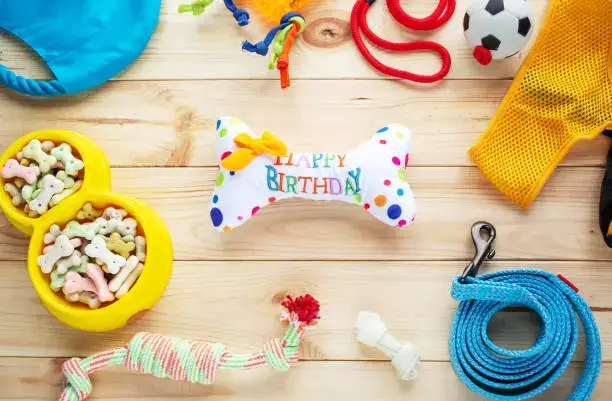
Effective DIY toys focus on sensory variety—integrating scent, sound, and texture.
The goal of homemade dog toys is to provide diverse cognitive challenges. By categorizing projects based on interaction types—Tug, Sniff, and Lick—you can create a balanced enrichment portfolio that manages your dog’s energy throughout the day.
DIY Toy Blueprints & Technical Tips
- 01. The Reinforced Denim Braid (Tug & Shake): Perfect for high-arousal play, denim provides the durability required for interactive tugging. Braid three 4-inch wide strips of old jeans tightly. Technical Tip: Tie “overhand knots” at both ends to create grip points. This toy supports proprioceptive development as the dog manages the resistance of the owner’s pull.
- 02. The Cardboard Foraging Maze (Sniff & Solve): Cardboard and paper are ideal for olfactory engagement. Create a “nesting puzzle” by placing high-value treats inside a toilet paper roll, folding the ends, and placing that inside a larger egg carton. Technical Tip: This mimics foraging behavior. The sound of the cardboard tearing adds an auditory layer to the satisfaction of the food reward.
- 03. The Cryogenic Sock Chew (Teething & Decompression): Licking and cold therapy are powerful tools for parasympathetic activation (calming). Soak a clean cotton sock in low-sodium broth, twist it into a firm knot, and freeze it. Technical Tip: The cold numbs inflamed gums in puppies, while the repetitive licking motion in adults lowers the heart rate, making it an excellent post-walk decompressor.
The Scale Factor: Adjusting for Anatomy & Life Stage
A DIY Dog Toy that is safe for a 5kg Chihuahua can be a lethal choking hazard for a 40kg German Shepherd. Engineering the “Scale” of your toy is as vital as selecting the material.
The Size-Safety Matrix
- Mouth Width Rule: Ensure all knots and toy bases are at least 1.5 times wider than the dog’s open jaw to prevent accidental swallowing.
- Density Control: For puppies, use soft fleece to avoid enamel fractures. For adults with high bite force, transition to multi-layered denim or canvas.
- Zero-Stuffing Policy: For shredders, eliminate all interior stuffing. Use “stuffing-free” designs where the fabric itself provides the bulk. This prevents gastric impaction if the toy is breached.
Maya’s Master Tip: The “Novelty” Effect
“At PetCareCompass, we emphasize that DIY Dog Toys should be used to combat ‘sensory habituation.’ Even the best homemade toy will lose its enrichment value if left on the floor 24/7. By rotating these items and varying the treat-density within them, you keep the dog’s problem-solving skills sharp and their boredom at bay. Remember: a toy is only as good as the interaction it inspires.” — Maya Mai, PetCareCompass Founder
Cognitive Enrichment: Strategic Treat-Based DIY Dog Toys
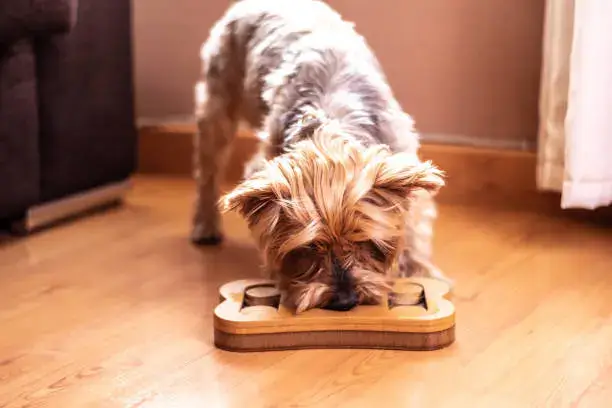
Treat-dispensing puzzles engage a dog’s foraging instincts, promoting dopamine release and mental clarity.
In the hierarchy of canine needs, mental stimulation is equivalent to physical exertion. DIY Dog Toys that incorporate food rewards utilize the foraging drive—an ancestral instinct that requires the dog to solve a “puzzle” to earn a high-value resource. This process doesn’t just pass time; it builds frustration tolerance and develops the prefrontal cortex, significantly reducing unwanted behaviors driven by boredom and anxiety.
Kinetic Problem-Solving: The Physics of Treat Dispensers
Mechanism: Kinetic Displacement (The Bottle Spinner & Treat Tube)
These toys require the dog to understand cause-and-effect. By spinning or rolling a recycled container, they receive an intermittent reward. Engineering Tip: Start with large holes for immediate success, then gradually reduce hole size to increase persistence duration. Always audit the plastic for sharp edges after each session.
Mechanism: Spatial Recognition (The Silicone Cup Flip)
Using food-grade silicone cups placed upside down forces the dog to use their muzzle or paws for precision manipulation. This low-arousal task is excellent for dogs with limited mobility or those who need to remain calm while eating.
Olfactory Stewardship: Foraging for Independent Work
A dog’s nose is their primary diagnostic tool. Encouraging independent scent work through DIY Dog Toys facilitates sensory grounding, which has a direct inhibitory effect on the nervous system’s stress response.
The Advanced Foraging Protocol
- Towel Roll-Up (Layered Difficulty): Instead of a flat roll, try a “Snuffle Knot.” Place treats in a towel, roll it, and then tie it into a loose knot. This adds a multi-step problem-solving layer before the scent can be reached.
- Scatter Feeding (Texture Variations): Move beyond the grass. Scatter kibble inside a tray filled with “safe clutter” like clean cardboard scraps or tennis balls to increase tactile stimulation during the search.
- Scent-Only Search: Hide treats inside multiple cardboard boxes, but only one box has the reward. This forces the dog to rely 100% on their olfactory bulb rather than visual cues.
Decompression Strategies: Frozen & Lick-Based Enrichment
Licking is a self-soothing behavior in dogs that releases endorphins. When we integrate licking into homemade dog toys, we create a tool for active decompression—ideal for post-training sessions or during high-stress environmental events like storms.
| DIY Lick Format | Enrichment Value | Recommended Fillers |
|---|---|---|
| Silicone Muffin Tray | High precision; slow ingestion. | Natural yogurt, mashed pumpkin. |
| Frozen Broth Blocks | Hydration + Thermal Cooling. | Low-sodium beef/chicken broth. |
| Peanut Butter Caps | Sustained focus; energy-dense. | Xylitol-free peanut butter, blended banana. |
Maya’s Master Tip: Managing the “Frustration Threshold”
“At PetCareCompass, we observe that many owners make DIY puzzles too difficult, too fast. If a dog cannot access the reward within the first 30 seconds, they may disengage or resort to destructive shredding. Always scale the difficulty according to your dog’s current skill level. Enrichment should be a series of ‘wins’ that build cognitive confidence, not a frustrating barrier to survival.” — Maya Mai, PetCareCompass Founder
The Neophilia Effect: Why Strategic Rotation is a Requirement

A managed toy inventory prevents sensory habituation and maintains the high-value status of each enrichment tool.
In canine ethology, the concept of Neophilia—the innate attraction to novel objects—is a driving force behind engagement. When a dog has access to their entire collection of DIY Dog Toys simultaneously, they experience sensory habituation. The objects become “background noise” in the environment, losing their ability to stimulate the dopaminergic reward pathways. Strategic rotation is the technical solution to preserve the enrichment value of homemade items without the need for constant production.
The Strategic Advantages of Toy Rotation
Advantage 01: Sustained Cognitive Novelty
By reintroducing a “hidden” toy after a 7-day absence, the dog perceives it as a new resource. This triggers an immediate exploratory response, encouraging the dog to reinvestigate textures and scents with renewed intensity.
Advantage 02: Structural Integrity & Biosecurity
Rotation periods provide owners with a mandatory window for sanitization and structural audits. Removing toys from the floor reduces the accumulation of environmental allergens and prevents bacteria from deep-seating in porous fabric fibers.
The Rotation Blueprint: Mapping Functional Variety
To build a successful canine enrichment routine, you must categorize your DIY inventory by functional modality. Rotating by “type” ensures the dog doesn’t become over-stimulated by one form of play (like high-arousal tugging) while neglecting others (like low-arousal licking).
Example: The 3-Bin Rotation System
- Bin A (High Arousal): Denim tug braids, fleece ropes, and bottle spinners. Focus: Physical energy and proprioception.
- Bin B (Cognitive Solving): Cardboard snuffle boxes, egg carton puzzles, and treat tubes. Focus: Scent work and problem-solving.
- Bin C (Decompression): Frozen broth socks, silicone lick mats, and soft comfort items. Focus: Lowering cortisol and promoting rest.
The Maintenance Audit: Preserving Tool Longevity
Between rotations, your DIY Dog Toys require a “clinical cleanup.” Because homemade items often lack the industrial sealants of commercial toys, they are more susceptible to organic buildup.
The Inter-Rotation Checklist:
- Thermal Sanitization: Launder fabric braids in hot water (without harsh detergents) to neutralize saliva enzymes.
- Mechanical Deburrying: Inspect denim and towels for loose threads—trim any fiber longer than 1 inch to prevent intestinal entanglement.
- Desiccation Audit: Ensure any toys used for frozen treats are 100% dry before being stored in an enclosed bin to prevent mold colonization.
- Structural Stress Test: Pull firmly on all knots; if the material has become “brittle” or over-stretched, retire the item immediately.
Maya’s Master Tip: Matching Toys to the Day’s Schedule
“At PetCareCompass, we teach owners to use DIY Dog Toys as behavioral ‘switches.’ On rainy days when outdoor exercise is limited, rotate in the Cognitive Solving bin to burn mental energy. On days with high environmental stress (like vet visits or visitors), prioritize the Decompression bin. A strategic rotation isn’t just about fun— it is a strategic way to help your dog proactively regulate their emotional state and energy levels.” — Maya Mai, PetCareCompass Founder
DIY Dog Toys: Professional FAQ & Safety Audit
Q1: Are DIY dog toys clinically safe for all breeds?
Safety is dependent on masticatory matching. While DIY toys are excellent for enrichment, aggressive chewers require higher-density materials like double-layered denim. Always perform a structural integrity audit before and after each play session to prevent accidental ingestion.
Q2: Which household materials pose the highest risk of intestinal blockage?
Avoid “linear foreign bodies” such as yarn, thin string, and ribbon. These can cause intussusception—a life-threatening condition where the intestine telescopes in on itself. Also, steer clear of brittle plastics and foam stuffing which lack biosecurity.
Q3: How often should fabric-based DIY toys be sanitized?
Fabric toys act as reservoirs for salivary enzymes and bacteria. Launder cotton and fleece items weekly in high-temperature water (without harsh perfumes) to maintain a hygienic enrichment environment.
Conclusion: The Future of At-Home Enrichment

Effective DIY toys bridge the gap between biological instincts and domestic living.
Successfully integrating DIY Dog Toys into your pet’s life is an act of proactive stewardship. By combining masticatory relief, olfactory engagement, and cognitive problem-solving, you create a balanced psychological landscape that fosters confidence and reduces stress. The sustainability of homemade enrichment lies in its adaptive nature—allowing you to evolve the difficulty and texture as your dog’s needs change across their lifespan.