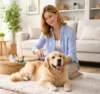
Why Home Grooming Is a Health Necessity: A Paradigm Shift
Why home grooming is a health necessity is a question that transcends the boundaries of simple aesthetics. In the evolving landscape of modern pet ownership, we are witnessing a fundamental Paradigm Shift. No longer is the act of brushing or clipping viewed as a mere “beauty treatment” performed every few months at a commercial salon.
Instead, it is being recognized as a sophisticated form of Clinical Stewardship—a non-negotiable pillar of preventative veterinary-aligned care.
Deconstructing the Aesthetic Misconception
For decades, the mainstream narrative suggested that grooming was an optional luxury, often outsourced to professionals solely for the purpose of “looking good.” This narrow perspective ignores the biological reality of our domestic companions. Every strand of fur, every millimeter of nail growth, and every square inch of the dermal layer serves a physiological function. When we ask why home grooming is a health necessity, we are acknowledging that the owner is the first line of defense against biological decay.
Defining Systemic Stewardship
Systemic Stewardship is the practice of intentional, frequent, and high-integrity monitoring of a pet’s physical state. Unlike a professional groomer who may see your pet once every eight weeks, a home steward performs micro-audits daily or weekly. This frequency is the key to identifying the subtle shifts in health that occur between veterinary visits.
- Proactive vs. Reactive: Home grooming identifies issues before they require surgical intervention.
- Biological Integrity: Maintaining the coat’s natural function as a thermal and antimicrobial barrier.
- The Diagnostic Window: Using the grooming session as a 360-degree health scan.
The Owner as the Primary Care Provider
By integrating professional-grade techniques into a domestic setting, owners move from “passive observers” to “active stewards.” This shift is vital for long-term domestic health. A professional groomer operates under time constraints and high-volume pressure, whereas home grooming allows for the Precision Care necessary to notice a small lump, a patch of thinning hair, or a slight change in skin temperature that could signal underlying inflammation.
Expert Verdict: The E-E-A-T StandardAt PetCareCompass, we architect our protocols based on the principle that home grooming is a health necessity because it secures the “Metabolic Window.” A calm pet, groomed in a familiar environment, maintains lower cortisol levels, allowing for a more accurate assessment of their true physical and psychological state.
As we navigate this guide, we will explore the specific biological systems—from the musculoskeletal to the integumentary—that rely on consistent home maintenance to function at peak capacity. Stewardship is not a chore; it is a commitment to the longevity and vitality of the companions who depend entirely on our touch.
Advance your stewardship skills:
II. The Early Warning System: Tactile Diagnostics
Tactile diagnostics: The owner’s hands acting as high-precision health sensors.
The most profound reason why home grooming is a health necessity lies in the power of touch. In a clinical setting, a veterinarian has perhaps fifteen minutes to palpate your pet’s body. In contrast, a home grooming session provides an extended period of Tactile Diagnostics—a systematic, hands-on audit of the musculoskeletal and integumentary systems. By running your hands through the coat and across the skin weekly, you become an expert in your dog’s “topographical norm,” making you the first to identify life-saving anomalies.
1. Detecting Lumps, Bumps, and Neoplasia
The canine body is prone to a variety of growths, ranging from benign lipomas (fatty tumors) to aggressive mast cell tumors or sarcomas. Early detection is often the difference between a simple outpatient excision and a complex, life-threatening oncological event.
During dog grooming at home, your fingers act as high-precision sensors. You aren’t just looking for visible masses; you are feeling for:
- Subcutaneous Fixation: Does a lump move freely under the skin, or is it “fixed” to the muscle or bone? Fixed masses require immediate professional veterinary audit.
- Changes in Texture: Has a previously soft area become hard, irregular, or “gravelly” to the touch?
- Symmetry Audits: Comparing the left and right sides of the body. A swelling on only one side of the ribcage or limb is a significant diagnostic signal.
2. Identifying Localized Hyperthermia (Heat Spots)
Heat is the primary biological indicator of inflammation or infection. While a dog’s overall core temperature is managed internally, localized hyperthermia—areas that feel noticeably warmer than the surrounding tissue—can signal deep-seated issues that are invisible to the eye.
By performing home grooming as a health necessity, you can identify:
🦴 Joint Inflammation
Heat radiating from a hock or elbow often precedes visible limping, signaling early-stage arthritis or a soft-tissue strain.
🦠 Subdermal Abscesses
A localized “hot spot” under thick fur can indicate an infected puncture wound or a foreign body (like a foxtail) migrating beneath the skin.
3. Parasite Detection and Mechanical Mitigation
External parasites like ticks and fleas are more than a nuisance; they are vectors for systemic diseases such as Lyme, Ehrlichia, and Anaplasmosis. In a professional grooming environment, these may be missed if the pet is rushed through a bath.
When you embrace systemic stewardship, your grooming kit becomes a de-contamination station. The use of a fine-toothed flea comb or a stainless steel grooming comb during your session allows for the mechanical removal of parasites before they have the chance to transmit pathogens. This is particularly vital in sensitive areas where parasites congregate:
- The thin skin behind the ears and around the neck.
- The “armpits” (axillary regions) and groin where heat is concentrated.
- Between the digits (toes), where ticks often hide in the interdigital webbing.
✅ The Steward’s “Hands-On” Checklist
During every grooming session, perform this 60-second tactile scan before turning on your clippers:
- Mandibular & Scapular Nodes: Feel for swelling under the jaw and in front of the shoulders.
- Spinal Alignment: Run fingers down the vertebrae; watch for “flinching” which indicates hidden back pain.
- Abdominal Tension: Gently palpate the belly. A “tucked” or hard abdomen suggests internal discomfort or GI distress.
- Paw Pad Integrity: Check for cracked pads or hidden thorns between the toes.
“Touch is the most diagnostic tool in an owner’s arsenal. To groom is to listen to what your pet’s body is saying through the skin.”
III. Dermal Integrity and the Biological Barrier
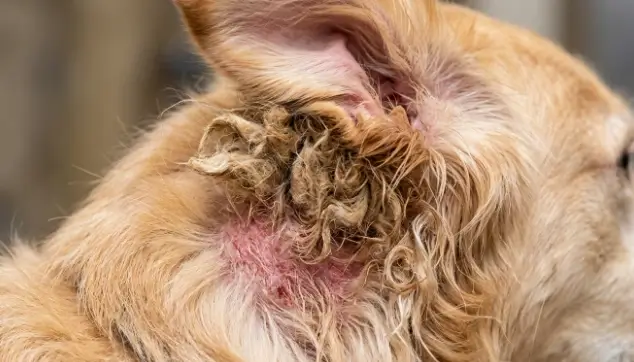
Severe matting: A gateway for infection and orthopedic strain.
The skin is the largest organ of the canine body, acting as a dynamic shield against the external world. When discussing why home grooming is a health necessity, we must address the maintenance of Dermal Integrity. Without regular human intervention, this biological barrier can quickly degrade, transforming from a protective wall into a gateway for infection and systemic illness.
1. The Sebum Distribution Mechanism
Canine skin produces Sebum, a complex lipid secretion that waterproofs the coat and maintains the “acid mantle”—a slightly acidic layer that inhibits the growth of harmful bacteria and fungi. In the wild, movement through brush and natural self-grooming would distribute these oils. In a domestic setting, brushing is the mechanical substitute for this process.
The Biological Benefit: Consistent brushing with a high-quality pin or boar-bristle brush redistributes sebum from the follicle down the hair shaft. This prevents “clogged pores” (folliculitis) and ensures the entire coat remains vibrant and moisture-resistant.
2. The Pathological Danger of Matting
To the untrained eye, a “mat” is just a tangle. To a veterinary steward, a mat is a biological hazard. Severe matting causes a cascade of health failures that cannot be ignored:
- Hematoma Risk: Tight mats pull the skin taut, restricting blood flow to the capillaries. When these mats are finally removed, the sudden rush of blood can cause “Ear Hematomas” or bruising—a painful condition for the pet.
- Moisture Traps (Hot Spots): Mats trap moisture, urine, and environmental debris against the skin. This creates an anaerobic environment—the perfect breeding ground for Staphylococcus and yeast, leading to Acute Moist Dermatitis.
- Restricted Mobility: Mats located in high-friction areas (axilla/armpits and groin) act like physical shackles, causing the dog to alter its gait to avoid the “pinch,” which leads to secondary orthopedic strain.
3. Keratinized Layer Management (Shedding)
For double-coated breeds, why home grooming is a health necessity becomes an issue of Thermal Regulation. Dead undercoat that isn’t mechanically removed (deshedded) becomes “impacted.” This impacted fur prevents air from reaching the skin, effectively destroying the dog’s ability to cool itself in summer or insulate in winter.
🛡️ The Aeration Factor
Regular removal of dead keratin (fur) ensures proper “skin breathing.” This prevents the accumulation of dander and allergens that can cause chronic itching and self-mutilation.
🛡️ The Sensory Buffer
A clean, tangle-free coat acts as a sensory buffer. Matted hair is “noisy” and painful, constantly sending stress signals to the nervous system. Grooming restores neurological peace.
Stewardship Strategy: Focus your brushing sessions on the “high-velocity” areas first: behind the ears, the collar line, and the tail base. These are the primary sites where dermal integrity first begins to fail.
IV. Orthopedic Health and Mobility
One of the most overlooked aspects of why home grooming is a health necessity is its profound impact on the musculoskeletal system. A dog’s posture, gait, and long-term joint health are directly influenced by the condition of their paws and nails. When grooming is neglected, the physiological repercussions extend far beyond the surface, leading to chronic skeletal misalignment.
1. The Biomechanics of Overgrown Nails
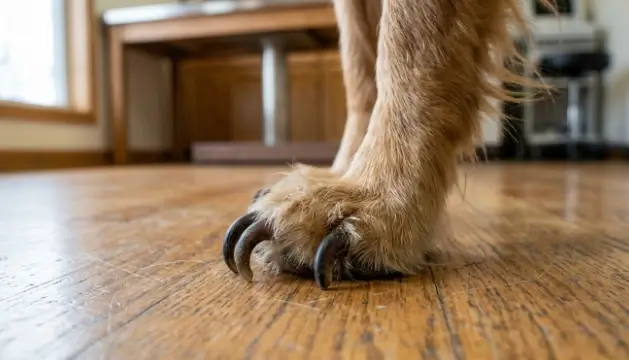
In a natural environment, various substrates act as abrasive agents that file down a dog’s nails. In modern domestic settings, hardwood floors and carpets offer no such resistance. When nails grow too long, they force the weight of the dog backward onto the metatarsal and metacarpal bones.
This shift in the center of gravity causes a chain reaction of orthopedic stress:
- Hyperextension: Constant pressure on the toe joints leads to premature arthritis and ligament strain.
- Spinal Loading: To compensate for the “back-heavy” posture, the dog curves its spine (roaching), leading to chronic lower back pain.
- Proprioceptive Interference: Overgrown nails send “false” sensory feedback to the brain regarding ground contact, making the dog less stable and more prone to falls.
2. Interdigital Health and Traction Control
Home grooming provides the opportunity to manage Interdigital Hair—the fur that grows between the paw pads. For many breeds, this hair can grow so long that it covers the pads, effectively turning the dog’s paws into “slippery socks” on smooth indoor flooring.
🐾 Slip Prevention
Trimming interdigital hair restores the traction of the natural paw pads, preventing acute injuries like ACL (Cruciate) tears caused by “splaying” on hardwood floors.
🐾 Debris Shielding
Excessive paw hair traps burrs, foxtails, and ice-melting salts. Weekly trimming prevents these irritants from embedding into the sensitive webbing of the paw.
3. The Senior Mobility Protocol
For aging pets, home grooming as a health necessity takes on a palliative role. Senior dogs often suffer from arthritis, making the journey to a professional groomer physically taxing and painful. By maintaining their hygiene at home, you allow them to remain in a supportive, non-slip environment while you address specific geriatric needs:
- Sanitary Trimming: Preventing urine scalding and fecal matting in dogs with reduced mobility or incontinence.
- Joint Support: Grooming while the pet is lying down to avoid the strain of standing on a grooming table for hours.
- Weight Monitoring: Feeling the ribs and spine to detect “Sarcopenia” (muscle wasting) or obesity that may be hidden by a thick coat.
Expert Tip: Always follow up paw maintenance by checking the Dewclaws. Since these nails never touch the ground, they are the most likely to curl back and pierce the leg, causing severe infection and orthopedic distress.
V. Sensory Mitigation: The Psychological Health Aspect
The conversation regarding why home grooming is a health necessity often focuses on the physical, yet the psychological implications are equally profound. A pet’s mental state is inextricably linked to their physiological health. Chronic stress, often triggered by “forced” professional grooming environments, can lead to suppressed immune function and heightened behavioral reactivity.
1. Lowering the Cortisol Threshold
Professional grooming salons, while efficient, are high-sensory environments filled with the scents of other stressed animals, high-velocity dryers, and unfamiliar handling. For many dogs, this triggers a sustained release of Cortisol—the primary stress hormone. High cortisol levels inhibit the body’s ability to heal and can mask underlying pain.
The Domestic Advantage: Home grooming allows the steward to operate within the pet’s Sensory Threshold. By grooming in a familiar space, you maintain metabolic stability, ensuring that the grooming session remains a “non-event” rather than a traumatic episode.
2. Oxytocin and the Stewardship Bond
Grooming is a primitive form of social bonding (allo-grooming) found across many mammalian species. When performed calmly at home, the process triggers the release of Oxytocin—the “affiliation hormone”—in both the dog and the owner.
- Trust Reinforcement: Frequent, gentle touch desensitizes the pet to physical handling, making future veterinary exams significantly less stressful.
- Neurological Peace: A clean, brushed coat removes the constant “pull” of tangles, reducing the “background noise” of physical discomfort that can lead to irritability or aggression.
3. Eliminating “Learned Helplessness”
In many high-volume grooming shops, dogs are restrained to ensure safety and speed. While necessary in those contexts, it can lead to Learned Helplessness—a state where the animal “shuts down” emotionally because they have no control over their environment.
🧘 Cooperative Care
Home grooming facilitates “Cooperative Care” protocols, where the dog can walk away or signal a need for a break. This autonomy builds immense confidence and emotional resilience.
🧘 Predictability
Establishing a routine (e.g., grooming every Sunday at 4 PM) provides a sense of security. Dogs thrive on predictability, which lowers environmental anxiety.
Psychological Safety Tip: Always end a home grooming session while the dog is still calm. Never wait for them to reach their “breaking point.” This ensures the last memory of the session is positive, securing psychological safety for the next encounter.
VI. The Economic vs. Health Trade-off
When evaluating why home grooming is a health necessity, many owners initially focus on the financial savings. While the reduction in professional grooming fees is substantial, the true economic value lies in Preventative Cost Avoidance. By investing in high-quality tools and your own education, you are effectively creating a financial shield against the high costs of reactive veterinary medicine.
| Home Maintenance Task | Preventative Benefit | Potential Vet Cost Avoided |
|---|---|---|
| Weekly Brushing | Prevents hematomas & moist dermatitis | $250 – $600 (Sedation & antibiotics) |
| Nail/Paw Trimming | Prevents joint strain & ACL tears | $3,000 – $5,000 (TPLO Surgery) |
| Tactile Ear Checks | Early detection of yeast/mites | $150 – $400 (Ear flushing & labs) |
The “Biological Longevity” Dividend
Beyond the immediate invoices, home grooming contributes to the long-term domestic health of your pet. A dog that is not burdened by chronic skin irritation, matted fur, or painful nails has a lower systemic “allostatic load.” This means their immune system is better equipped to handle aging and external pathogens, potentially extending their lifespan by reducing the physical and psychological toll of chronic neglect.
VII. The Master Checklist for Weekly Health Audits
To transform your grooming session into a true Clinical Stewardship session, utilize this structured framework. This checklist ensures that no biological system is overlooked, reinforcing why home grooming is a health necessity.
👁️ Phase 1: Sensory Check
- Eyes: Check for discharge or “clouding” of the lens.
- Ears: Sniff for yeast odors; check for redness or excessive wax.
- Mouth: Lift the lips; check for gum inflammation (gingivitis) or fractured teeth.
🐕 Phase 2: Structural Check
- Spine: Run hands from neck to tail; note any muscle twitching or flinching.
- Nodes: Check under the jaw and armpits for unusual swelling.
- Skin: Part the fur to check for “flea dirt” (black specks) or red bumps.
The Stewardship Protocol: Keep a digital “Grooming Journal.” Documenting when a small lump was first found or the date of the last nail trim provides your veterinarian with invaluable data, moving your pet care from anecdotal to evidence-based.
Expert FAQ: Navigating the Health Necessities of Home Grooming
Q: Can home grooming truly replace professional veterinary skin checks?
Home grooming is not a replacement for veterinary medicine, but rather a supplementary diagnostic tool. Because you groom more frequently than a vet sees your pet, you are more likely to catch early-stage lumps or skin shifts that can be professionally audited before they become critical.
Q: Is it dangerous to groom a dog with existing skin irritations at home?
If the skin is broken, oozing, or inflamed, you should consult a vet first. However, gentle home grooming—such as clearing away matted fur—is often a health necessity to allow medication to reach the skin and to improve dermal aeration.
Q: How does home grooming impact a dog’s long-term joint health?
By maintaining short nails and trimmed paw pads at home, you ensure your dog maintains correct orthopedic alignment. This prevents the skeletal “roaching” and joint hyperextension that lead to chronic arthritis and mobility failure.
Q: What is the most common health risk of neglecting home grooming?
The most immediate risk is Severe Matting. Mats can act as tourniquets, cutting off blood flow to the skin and trapping bacteria/moisture, which leads to painful infections known as Acute Moist Dermatitis (Hot Spots).
Q: Can grooming at home help with my dog’s seasonal allergies?
Yes. Brushing removes environmental allergens (pollen, dust) trapped in the fur before they can penetrate the skin barrier. This mechanical decontamination significantly reduces itching and self-trauma during high-pollen seasons.
Q: Why is psychological safety considered a ‘health necessity’ in grooming?
Chronic stress raises cortisol, which weakens the immune system. By grooming in a familiar, low-stress domestic environment, you preserve your pet’s metabolic stability and emotional resilience, which are core components of overall health.
VIII. Conclusion: Precision Care for Lifelong Companions
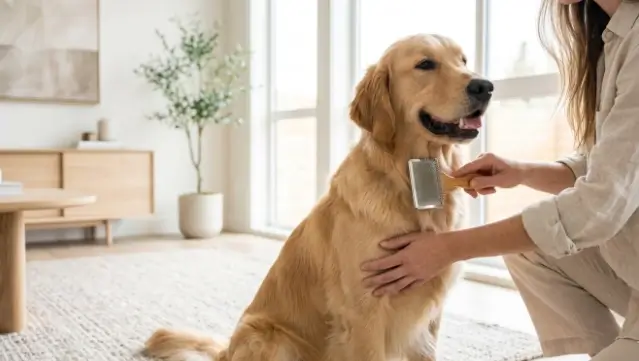
Grooming at home is a sophisticated form of preventative clinical stewardship.
In summarizing why home grooming is a health necessity, we must conclude that the act of grooming is the ultimate expression of Systemic Stewardship. It is the bridge between clinical veterinary medicine and daily domestic life. By choosing to perform these tasks at home, you are not merely “cutting hair”—bypassing the high-stress environments of commercial salons and replacing them with a data-driven, bond-centric health protocol.
The benefits we have explored—from the early detection of neoplasia to the preservation of orthopedic alignment—demonstrate that grooming is a high-integrity medical intervention that any owner can master. It neutralizes the silent threats of biological decay and ensures that your pet’s “golden years” are defined by mobility and comfort rather than chronic pain and dermatological crisis.
Find More Dog Care Guides
Continue exploring practical guides related to this topic.