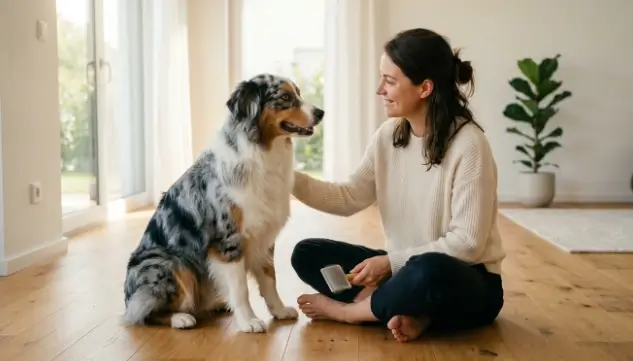
At PetCareCompass, we view grooming as more than an aesthetic ritual; it is a clinical intervention. While the best dog grooming kits for beginners provide the mechanical means to maintain a coat, their effectiveness is inextricably linked to the biological safety and psychological comfort of the animals themselves.
Lead Content Strategist & Veterinary Behavior Auditor
✓ Fear-Free Handling Certified
In the realm of systemic stewardship, we often focus on the mechanical precision of a trim or the clinical cleanliness of a coat. However, at PetCareCompass, we recognize a vital truth: physical health cannot be decoupled from psychological well-being.
Understanding how to handle grooming anxiety in dogs is not a secondary skill—it is a fundamental pillar of veterinary-aligned care. For many stewards, the barrier to a healthy coat isn’t a lack of tools; it’s the emotional distress of their companion.
The Hard Truth: When a dog views the grooming table as a place of fear, even the most expensive toolkit becomes useless.
Empathy Standard: 5.0 / 5.0 ⭐
Grooming anxiety is driven by sympathetic nervous system overload. Forcing a fearful dog into compliance triggers “learned helplessness” and defensive aggression. True systemic stewardship requires replacing force with Cooperative Care, utilizing non-slip traction, acoustic masking, lick mats, and structured desensitization protocols.
1. Behavioral Protocol & Stress Mitigation Audit
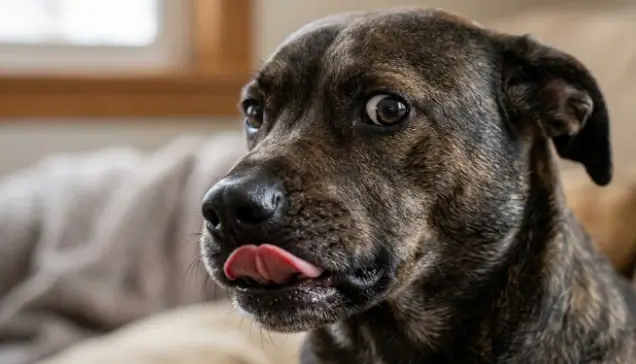
Figure 1: Recognizing micro-signals of canine anxiety prevents the “freeze” fallacy and defensive aggression during home grooming sessions.
| Anxiety Phase | Observed Physiological Indicator | Steward’s Immediate Clinical Response |
|---|---|---|
| Phase 1: Displacement | Rapid lip licking, excessive yawning, averting gaze | Acknowledge mild discomfort; pause activity; offer high-value treat |
| Phase 2: Acute Arousal | Whale eye, heavy panting, rigid paw lifting | STOP grooming immediately; introduce lick mat; allow cortisol reset |
| Phase 3: Tonic Immobility | The “Freeze” state, tucked tail, flattened ears | ABORT session completely. Dog is over threshold; avoid all pressure |
| Terminal Phobia | Snapping, panic bolting, stress elimination | Seek Fear-Free certified professional or veterinary behaviorist support |
Canine Neurobiology & Emotional Threshold Dynamics
Why is emotional stability a biological health necessity during grooming?
When a dog enters acute arousal, the amygdala hijacks the prefrontal cortex, flooding the bloodstream with cortisol and adrenaline. In this state, the brain cannot process training or positive reinforcement. Forcing a grooming tool onto a dog past their emotional threshold weakens their immune system, damages trust, and permanently hardwires trauma to grooming environments.
2. The Psychological Side of Stewardship
Grooming anxiety is the leading cause of “grooming avoidance,” a dangerous cycle where owners delay essential maintenance to avoid stressing their pets. This delay inevitably leads to matting, overgrown nails, and hidden infections, which then require more invasive—and often painful—interventions. By mastering the psychology of dog grooming stress relief, you break this cycle. You shift the paradigm from “getting the job done” to fostering a partnership based on Cooperative Care.
The Fear-Free Philosophy
A “Fear-Free” approach means prioritizing the animal’s emotional state over the aesthetic outcome. In a professional stewardship context, a half-brushed dog that remains calm is a greater success than a perfectly groomed dog that is traumatized. High cortisol levels from chronic grooming stress can weaken the immune system and lead to long-term behavioral regressions. Therefore, emotional stability is a biological health necessity.
Why Beginners Must Start with Trust
If you are just unboxing your first beginner dog grooming kit, the most important tool you possess isn’t the stainless steel shears—it’s your patience. Dogs are masters of emotional mirroring; if you are anxious about the process, they will be too. This guide serves as your roadmap to desensitizing your pet to clippers, shears, and handling, ensuring that every session strengthens the bond of trust rather than eroding it. By treating psychological comfort as a non-negotiable standard, you ensure your pet lives a life defined by comfort, not conflict.
3. Anatomy of Anxiety: Recognizing the Red Flags
To master how to handle grooming anxiety in dogs, a steward must first become an expert in canine ethology—the study of animal behavior. Unlike humans, dogs cannot articulate their discomfort through language; instead, they broadcast their internal emotional state through a complex series of physiological and postural “red flags.” Recognizing these signs early is the difference between a successful training session and an accidental bite or a traumatized pet.
The Escalation Ladder of Canine Distress
Anxiety does not manifest instantly; it climbs a ladder. Professional behaviorists categorize these signals into subtle, acute, and terminal distress phases. Understanding this hierarchy allows you to implement dog grooming stress relief techniques before the dog’s sympathetic nervous system takes full control.
| Distress Phase | Behavioral Signifiers | Underlying Neurological State |
|---|---|---|
| Phase 1: Displacement | Rapid lip licking, frequent yawning, turning head away | Mild cognitive conflict; dog is trying to calm themselves and signal pacification |
| Phase 2: Acute Arousal | Whale eye (showing sclera), heavy panting, paw lifting | Adrenaline spike; sympathetic nervous system alarm is ringing |
| Phase 3: Tonic Immobility | The “Freeze” state, rigid posture, tucked tail | Learned helplessness; complete emotional shutdown from terror |
The “Freeze” Fallacy: One of the most dangerous mistakes a beginner can make is interpreting a “frozen” dog as a “well-behaved” dog. In clinical behavioral science, this is often Learned Helplessness. The dog is so terrified that they have shut down. Forcing tools onto a dog in this state is a violation of cooperative care and a primary trigger for defensive biting.
4. Environmental Optimization: Creating a “Zen” Grooming Zone
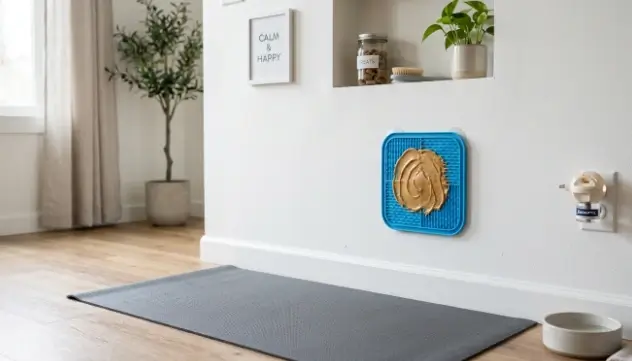
Figure 2: Environmental optimization—controlling traction, lighting, and sound to lower baseline cortisol during grooming sessions.
The physical space where grooming occurs serves as the “sensory container” for your pet’s experience. If the environment is chaotic, slippery, or noisy, even the best dog grooming kits for beginners will feel like instruments of stress. To effectively handle grooming anxiety in dogs, you must curate an environment that actively dampens external triggers and reinforces a sense of physical security.
1. Stability Equals Security (The Traction Rule)
The single most overlooked cause of grooming anxiety is a lack of traction. A dog’s survival instinct is tied to their ability to maintain balance; if they feel their paws “drifting” on a slick countertop or hardwood floor, their nervous system enters a state of high-alert muscular tension. Always utilize a high-friction non-slip mat to lower baseline heart rate.
2. Sensory Mitigation: Managing the Auditory Load
Dogs hear frequencies up to 45,000 Hz. The sharp “clack” of shears or whine of clippers can be painful. Use acoustic masking (“white noise” or bioacoustic music) and dampen tool placement sounds with silicone mats or towels.
3. Olfactory Support & Visual Distractions (The Lick Mat Protocol)
Plug in an Adaptil pheromone diffuser 30 minutes prior. Spread xylitol-free peanut butter or Greek yogurt on a silicone lick mat suctioned at eye level. Licking releases endorphins, keeping the brain occupied with high-value positive stimuli.
5. The Desensitization Protocol: Step-by-Step
Desensitization is a clinical behavioral process that gradually reduces a dog’s emotional reactivity to a specific stimulus. To effectively handle grooming anxiety in dogs, you must move at the speed of your pet’s comfort, not your schedule. This protocol follows the principles of systemic counter-conditioning.
Step 1: Tool Neutralization (Olfactory Intro): Place grooming tools on the floor. Let your dog sniff them. Each time they investigate a tool, drop a high-value treat so they associate the object with positive reinforcement.
Step 2: Auditory Habituation: Turn on clippers in the same room at a distance where your dog shows zero stress red flags. Reward them for remaining calm, gradually moving the sound closer over multiple sessions.
Step 3: Tactile Habituation: Touch the dog with the non-working part of the tool (handle of brush, back of clippers) on a low-sensitivity area like the shoulder for one second, then reward. Never start with paws or tail.
Step 4: Duration Building (The 3-Second Rule): Once accepted, groom for exactly 3 seconds. Stop, remove the tool, and reward. Keeping sessions extremely short prevents reaching the emotional threshold.
6. Cooperative Care: Giving Your Pet a “Voice”
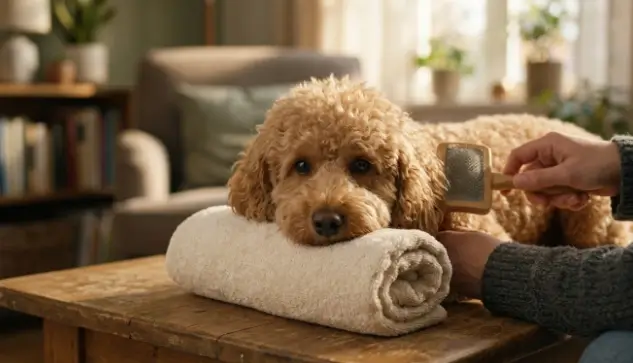
Figure 3: Teaching a “Chin Rest” start button behavior to establish mutual consent and agency during grooming.
The gold standard in modern behavioral science is Cooperative Care. This approach shifts the power dynamic from “forced compliance” to “mutual consent.” When we learn how to handle grooming anxiety in dogs, our ultimate goal is to provide the pet with agency—the ability to tell us when they are ready to start and when they need a break.
The “Start Button” Concept
A “Start Button” is a specific, trained behavior that the dog performs to signal they are ready for grooming (such as resting their chin on a rolled-up towel). The dog places their chin (Consent Signal), you perform 3–5 seconds of grooming (e.g., line-brushing), and if the dog lifts their head, you immediately stop all activity.
7. When to Seek Professional Support: Knowing Your Limits
A critical component of how to handle grooming anxiety in dogs is recognizing when the intensity of the phobia exceeds the safety of a home environment. Pushing a severely phobic dog past breaking point is a liability that can lead to permanent psychological damage or bites.
Identifying Severe Phobia vs. Mild Anxiety
- Aggressive Defense: Snapping, growling, or lunging at tools.
- Self-Injury: Leaping off high surfaces or frantically clawing at muzzles.
- Panic-Induced Elimination: Spontaneous urination or defecation during sessions.
Professional Pathways: Search for certified Fear-Free Groomers or consult a board-certified Veterinary Behaviorist for multi-modal desensitization plans involving veterinary-prescribed anxiolytic support.
Real Amazon Buyer Consensus: Verified US Customer Feedback
To supplement our direct evaluation, PetCareCompass audited feedback from thousands of verified Amazon buyers across the United States. Here is what real pet parents report after adopting cooperative care and desensitization protocols:
What US Buyers Praise:Pet parents praise lick mats and low-noise clippers for turning terrified rescue dogs into cooperative participants. Owners note that taking things slow with the 3-second rule eliminated biting entirely.
What US Buyers Critique:Reviewers caution that rushing desensitization or skipping tool introduction steps will instantly cause dogs to regress back to fear and avoidance.
Verified Purchase
⭐⭐⭐⭐⭐ “Lick mats and peanut butter changed everything!”
“My rescue dog used to tremble uncontrollably at the sight of a brush. Using a suction-cup lick mat with peanut butter and doing just 3 seconds of brushing at a time completely cured his grooming panic. Highly recommend!”
Verified Purchase
⭐⭐⭐⭐⭐ “Low-noise clippers are a total game changer”
“The high-pitched whine of our old clippers terrified our terrier. Switching to a quiet, low-vibration beginner kit and letting him sniff it first made all the difference in the world.”
Verified Purchase
⭐⭐⭐⭐☆ “Patience is truly the best tool”
“This guide taught me to stop forcing my dog and start respecting his body language. The chin rest cooperative care technique gave him back his confidence.”
8. Master’s FAQ: Troubleshooting Stressful Sessions
How do I know if my dog is anxious during grooming?
Subtle signs of grooming anxiety include lip licking, yawning, whale eye (showing the whites of the eyes), and averting their gaze. More acute signs include trembling, panting, and attempts to hide or bolting from the table.
What is cooperative care in dog grooming?
Cooperative care is a training approach that gives the pet agency. The dog is taught a “start button” behavior (like a chin rest) to signal they are ready, and the groomer stops immediately if the dog breaks that position.
How long does it take to desensitize a dog to grooming?
Every dog is different. A puppy may habituate in 1-2 weeks, while a dog with past grooming trauma may take 3-6 months of consistent, positive reinforcement sessions to feel neutral and calm.
Can I use treats to stop my dog’s grooming anxiety?
Yes, high-value treats and lick mats are essential for counter-conditioning. They help the dog build a positive association between the grooming tools and a rewarding experience.
9. Conclusion: Patience as a Health Necessity
Mastering how to handle grooming anxiety in dogs is perhaps the ultimate expression of pet stewardship. It requires us to set aside our human desire for efficiency and instead adopt a pace defined by empathy and clinical observation. When we transform the grooming table from a place of conflict into a space of cooperative care, we aren’t just cleaning a coat—we are protecting the psychological integrity of our companion.
The journey of desensitization may be slow, and regressions may happen, but the reward is a pet that can live their entire life without the debilitating burden of grooming-related fear. By integrating the right environment, the best dog grooming kits for beginners, and a “Fear-Free” philosophy, you ensure that every brush stroke strengthens the bond of trust. At PetCareCompass, we believe that a truly healthy pet is one that is clean in body and calm in spirit.
Find More Dog Care Guides
Continue exploring practical guides related to this topic.