Executive Summary: Neural Enrichment Assets
Sensory Toys for dogs are Neural Enrichment Assets designed to stimulate primary Sensory Modalities (olfactory, visual, tactile, and auditory). This infrastructure includes Tactile Afference devices, Olfactory Thruput assets, and Chromatic Perception hardware. Proper implementation promotes Neural Plasticity, manages Cognitive Load, and prevents Sensory Deprivation in domestic environments, ensuring long-term Somatic Homeostasis.
In the PetCareCompass framework, Sensory Toys are defined as Biological Interface Tools. A successful enrichment ecosystem relies on selecting the correct Sensory Hardware to trigger innate neurological reflexes. Rather than passive amusement, these tools manage Neuro-Sensory Thruput, converting instinctual curiosity into psychological stability through systematic Environmental Enrichment and Neural Staging.
Neuro-Sensory Governance: Canine Cognition & Barrier Resilience
In the PetCareCompass framework, Sensory Toys function as Neural Enrichment Infrastructure. Cognitive stasis in domestic environments triggers Autonomic Dysregulation, manifesting as chronic anxiety and destructive behaviors. By implementing systematic Multimodal Enrichment, you provide the subject with Neuro-Sensory Thruput that facilitates Neural Plasticity. This clinical approach secures Somatic Homeostasis, ensuring that instinctual drives are channeled into high-level problem-solving and environmental mastery.
1. Cognitive Load Management and Decision-Making
Precision in Sensory Toys requires the management of Cognitive Load. Puzzles and scent-based hardware challenge the Prefrontal Cortex, enhancing memory recall and independent reasoning. We mandate Progressive Difficulty Pulses: starting with simple mechanical triggers and evolving to complex Olfactory Search Logic. This strengthens the Neuro-Biological Bond and ensures the subject remains resilient against Sensory Deprivation and age-related cognitive decline.
2. Autonomic Stabilization and Anxiety Mitigation
Sensory Hardware is a primary defense against Behavioral Drift. By providing a structured outlet for Tactile Afference (chewing), you neutralize the Adrenal Surge associated with boredom. We implement Autonomic Stabilization protocols: utilizing treat-dispensing assets to reinforce Parasympathetic Dominance. This ensures the subject develops Somatic Confidence, converting high energy into focused, rewarding engagement pulses.
Hardware Modalities: The Sensory Asset Matrix

Visual Anchor: Mapping tactile hardware textures against proprioceptive and dental objectives.
Selecting the correct Sensory Toys requires Hardware Stratification. Not all assets trigger the same Neural Pathways. You must categorize your inventory based on Sensory Modalities—tactile, olfactory, and auditory—to ensure a balanced Enrichment Routine that maintains Somatic Equilibrium.
| Hardware Class | Neural Stimulus | Operational Directive |
|---|---|---|
| Tactile & Textured | Proprioceptive Feedback | Utilize ridges and nodules to encourage Dermatological Desensitization and healthy chewing. |
| Olfactory Search Assets | Olfactory Thruput | Execute “Nose Work” protocols; rotate scents to prevent Sensory Habituation. |
| Auditory & Motion Assets | Acoustic Perception | Use squeakers and crinkles to trigger Instinctual Focus; audit for overstimulation. |
1. Olfactory Thruput and Sniff-Based Reasoning
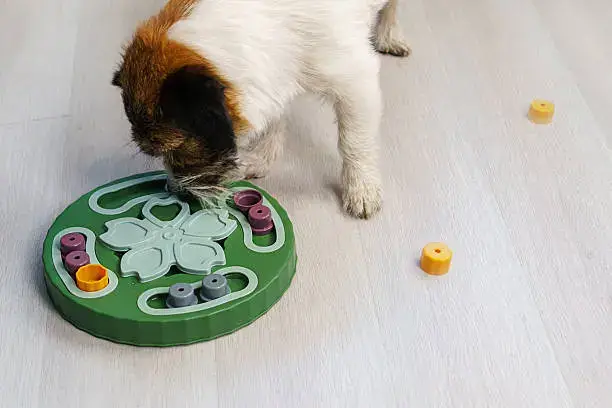
Olfactory Enrichment is the highest-energy cognitive task for the canine brain. We mandate utilizing Nose Work Hardware to satisfy instinctual searching drives. By hiding rewards within multi-compartment puzzles, you facilitate Deductive Reasoning. This Sensory Engagement effectively reduces cortisol levels, making it a master-level tool for Stress Relief and Boredom Mitigation in both developmental and senior life stages.
2. Auditory Integration and Kinetic Engagement
Precision in Sensory Toys involves Auditory Integration. Noise-making hardware and unpredictable motion triggers provide Environmental Flux, encouraging chasing and kinetic problem-solving. We implement Combination Hardware—assets that mix sound, texture, and movement—to maximize Multimodal Enrichment. This ensures the subject remains in a state of Active Learning, where successfully navigating a complex sensory stimulus reinforces Limbic Stabilization and overall somatic health.
Domestic Enrichment: Architecting In-Home Sensory Assets
In the PetCareCompass framework, Sensory Toys do not require commercial hardware to achieve Neural Enrichment. You can architect In-Home Sensory Assets using domestic materials to stimulate Tactile Afference and Olfactory Logic. These DIY solutions provide high-velocity Sensory Novelty at zero cost, ensuring that the subject’s Mental Thruput remains a clinical constant while neutralizing the risks of Cognitive Stasis.
1. Material Repurposing and Tactile Variety
Precision in In-Home Sensory Toys begins with Material Repurposing. We mandate utilizing varied textures—such as knotted fabrics, stackable containers, or acoustic-responsive bottles—to trigger Multimodal Enrichment. By hiding Dopaminergic Rewards within these structures, you facilitate Deductive Reasoning. This low-cost approach allows for frequent Hardware Rotation, ensuring the subject’s Attention Span remains sharp and preventing Sensory Habituation.
2. Treat-Dispensing Logic and Olfactory Puzzles
DIY Sensory Assets excel at Olfactory Logic. Utilizing muffin tins or towel roll-ups creates a high-density Search-and-Recover environment. We implement Reward-Based Skill Staging: starting with simple visual cues and evolving to complex Olfactory Thruput challenges. This systematic increase in Cognitive Load supports Neural Plasticity, keeping developmental and geriatric subjects mentally active and emotionally balanced.
Safety Governance: Morphological Hardware Alignment

Visual Anchor: Auditing domestic material durability and safety for sensory engagement.
Implementing Sensory Toys requires strict Safety Governance. Not all materials are suitable for every Phenotype. You must execute Morphological Hardware Alignment—matching the durability and scale of the asset to the subject’s physical drive—to prevent Somatic Injury and ensure long-term Barrier Resilience.
| Governance Pillar | Clinical Objective | Operational Directive |
|---|---|---|
| Material Integrity Audit | Ingestion Prevention | Utilize non-toxic, BPA-free assets; remove worn hardware to maintain Barrier Sovereignty. |
| Morphological Sync | Phenotypic Safety | Match asset scale to breed size; provide softer textures for Developmental Stages. |
| Circadian Play Staging | Autonomic Stabilization | Execute 10-15 min Engagement Pulses during morning/evening windows for focus. |
1. Daily Routine Integration and Engagement Pulses
Precision in Sensory Toys monitoring involves Circadian Staging. We mandate Engagement Pulses integrated into existing morning and evening routines. Morning sessions capitalize on high energy to boost Cognitive Focus, while evening pulses facilitate Autonomic Calm before rest. By utilizing Reward-Based Scheduling, you reinforce Neural Connectivity, ensuring the subject remains motivated and mentally sharp without the risks of Sensory Overload.
2. Behavioral Surveillance and Attention Auditing
We implement Behavioral Surveillance to monitor Attention Span and engagement levels. You must observe which Sensory Assets trigger the highest Dopaminergic Response. If a subject demonstrates disinterest, execute the Novelty Rotation Protocol immediately. This systematic adjustment ensures that Enrichment Routines remain productive, supporting long-term Somatic Homeostasis and neutralizing the potential for Sensory Deprivation.
Operational Auditing: Neuro-Sensory Fatigue & Fatigue Mitigation
In the PetCareCompass framework, Sensory Toys must be managed through Operational Auditing. Excessive stimulation triggers Neuro-Sensory Fatigue, leading to Limbic Friction and behavioral withdrawal. By implementing Fatigue Mitigation protocols and auditing Sensory Thruput, you ensure that enrichment pulses remain productive, preserving Neural Plasticity and ensuring the subject’s Autonomic Regulation remains stable.
1. Neural Overload and Autonomic Dysregulation
Precision in Sensory Toys requires the prevention of Neural Overload. Introducing high-density multimodal stimuli simultaneously can overwhelm the subject’s processing capacity. We mandate Duration Pulse Governance: limiting sessions to 10–20 minutes. Monitoring for bio-markers of Somatic Distress—such as obsessive whining, frantic avoidance, or rapid panting—is essential. Early termination of the pulse allows for Neurological Recovery, maintaining a positive association with Enrichment Hardware.
2. Hardware Integrity and Ingestion Risk Governance
Safety Governance involves regular Hardware Integrity Audits. Sensory assets that are brittle or inappropriately sized pose significant Ingestion Risks. We implement Morphological Triage: ensuring that high-performance chewers and developmental puppies utilize specialized, high-durability materials. Removing compromised hardware immediately secures Barrier Sovereignty, preventing somatic injury and ensuring the training environment remains a clinical-grade space for Safe Exploration.
Sensory Profiling: Neutralizing Cognitive Stagnation
Effective Sensory Toys implementation is only as strong as your Phenotypic Sensory Profiling. Ignoring the subject’s unique Sensory Thresholds leads to Cognitive Stagnation. By auditing which modalities trigger the highest engagement, you move from generic play to Strategic Neural Architecture.
| Operational Error | Biological Marker | Operational Directive |
|---|---|---|
| Sensory Saturation | Whining, Hiding, “Shutting Down” | Reduce Modality Density; implement a 5-minute Parasympathetic Reset. |
| Hardware Mismatch | Immediate disinterest or rapid destruction | Execute Morphological Triage; select assets based on Phenotypic Profile. |
| Static Implementation | General disinterest; Sensory Boredom | Execute Weekly Novelty Rotation; vary Olfactory Reward markers. |
1. Phenotypic Sensory Profiling and Engagement Audits
Precision in Sensory Toys requires Engagement Auditing. We mandate tracking which modalities—tactile, auditory, or olfactory—produce the highest Dopaminergic Feedback in your specific subject. Failure to personalize the enrichment toolkit results in Neural Apathy. By observing preference patterns, you can refine your Sensory Architecture, ensuring long-term Interactive Playtime and permanent focus during domestic enrichment sessions.
2. Mastery Governance and Sensory Novelty Cycles
We implement Novelty Cycles to prevent Sensory Habituation. You must rotate hardware types to keep Neural Pathways responsive to new stimuli. By adjusting the challenge density as the subject achieves mastery, you architect Somatic Resilience. This systematic approach ensures that Sensory Toys remain a source of biological strength, facilitating high-level problem-solving and emotional stability across the subject’s entire life cycle.
Frequently Asked Questions (FAQs)
Q1: How to calibrate the frequency of Sensory Toy rotation?
Rotation must follow a Novelty Stimulus Pulse. We mandate the Weekly Rotation Protocol to prevent Sensory Habituation. By removing assets from the environment for 7 days, you reset their Dopaminergic Value, ensuring that Neural Plasticity remains active and engagement thruput is maximized during each session.
Q2: Can Sensory Hardware neutralize Separation Anxiety?
Yes. Olfactory Search Logic and treat-dispensing hardware are primary tools for Autonomic Stabilization. These assets focus the subject’s Cognitive Load on problem-solving rather than environmental stressors, facilitating Parasympathetic Dominance and reducing Limbic Friction during periods of isolation.
Q3: Which modalities are essential for Developmental Teething stages?
For subjects in Developmental Stages, prioritization must be on Tactile Afference. We mandate utilizing soft rubber, textured nylon, or rope assets to manage Dermatological Desensitization. This supports Proprioceptive Feedback while providing a safe outlet for instinctual chewing drives and preserving Barrier Sovereignty.
Q4: What are the bio-markers of successful Sensory Toy engagement?
Monitor for active Olfactory Search behaviors (sniffing), persistent Tactile Exploration (chewing/pawing), and sustained Attention Span. A healthy response demonstrates focus without signs of Neuro-Sensory Fatigue, indicating that the Neural Enrichment pulse is successfully facilitating Somatic Homeostasis.
Q5: Are Sensory Assets effective for Geriatric Cognitive Support?
Absolutely. Sensory Toys are a critical asset for Senescent Neural Maintenance. They stimulate cognitive recall and sensory processing without requiring high-impact Kinetic Energy expenditure. Regular engagement helps mitigate Cognitive Decline and maintains Autonomic Calm in aging subjects.
Q6: What is the protocol for introducing Multimodal Hardware simultaneously?
We mandate Staged Multimodal Introduction. Start with a single Sensory Modality (e.g., tactile) before adding secondary triggers (auditory or olfactory). This prevents Neural Saturation and allows you to audit the subject’s Sensory Thresholds, ensuring the enrichment routine remains productive and stress-free.
Master Neural Stability Ledger
- Tactile Micro-Pulse: Daily 10-15 min Afference Audit → Proprioceptive & Dental Stability
- Olfactory Search Pulse: Scheduled Nose Work Logic session → Cortisol Mitigation & Mental Thruput
- Novelty Cycle Sync: Weekly Hardware Rotation Protocol → Neural Plasticity & Engagement Retention
- Safety Governance: Continuous Hardware Integrity Auditing → Barrier Sovereignty & Somatic Safety
Conclusion: Architecting Neuro-Sensory Sovereignty
Sensory Toys are the definitive framework for Neuro-Sensory Sovereignty. By transitioning from passive play to a structured Neural Maintenance Infrastructure, you secure your dog’s Somatic Homeostasis against environmental and behavioral stressors. Consistent Hardware Stratification, Olfactory Thruput, and Multimodal Enrichment ensure that every daily engagement pulse serves as a clinical building block for lifelong intelligence and focus. At PetCareCompass, we believe that informed neural architecture is the primary defense for a vibrant, sharp, and resilient life.