

Keeping dogs comfortable on wet days is mostly about preparation and the right rainy day gear. Many owners are unsure how to protect their dogs from heavy rain, mud splashes, and slippery sidewalks without resorting to complicated tools. The goal is not fashion—it’s dryness, safety, and easy post-walk cleanup.
In this guide, we break down how to choose suitable equipment, how to set it up quickly before a walk, and how to keep your dog relaxed during rainy weather. Everything is designed for beginner dog owners, works with common household items, and avoids medical claims. By the end, you’ll know how to create a simple wet-weather routine that fits real life—whether you’re doing 10-minute potty walks or longer neighborhood loops.
Choosing Essential Rainy Day Gear for Everyday Walks
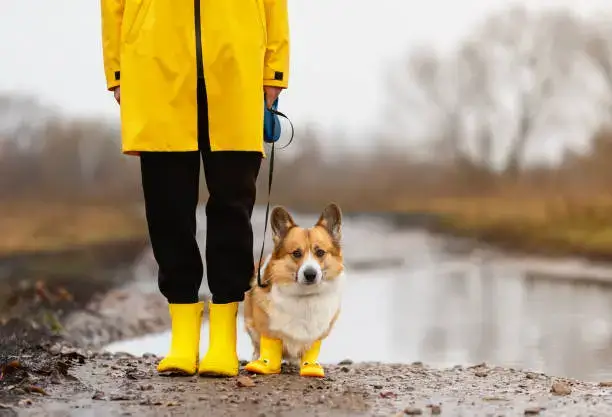
Selecting the right rainy day gear makes wet-weather walks smoother, cleaner, and less stressful. For beginners, the best approach is to focus on coverage, traction, and quick cleanup, rather than buying every accessory available. Most dogs only need one to three well-fitting items to stay reasonably dry on typical neighborhood walks.
Owners should prioritize gear that is lightweight, breathable, and easy to put on, so the dog doesn’t resist wearing it. Fit also matters; loose jackets or boots may twist, scrape, or trap water instead of protecting against it. Below are the three categories of gear most helpful for short to moderate walks.
Raincoats and chest coverage
Dog raincoats help protect the shoulders, chest, and back from direct rainfall and splashing. Look for materials labeled waterproof fabric rather than water-resistant; the difference becomes clear during longer walks. Coats with chest coverage provide better splash protection, especially for small breeds close to the ground.
A well-fitting raincoat should stay close to the body without restricting movement. Many models include adjustable straps to secure the fit and prevent sliding. For anxious or gear-sensitive dogs, start with short trial sessions indoors to build comfort.
Example tip:
If your dog dislikes over-the-head designs, choose a coat that attaches along the side or belly with hook-and-loop closures for easier handling.
Waterproof boots and paw protection
Waterproof boots protect paws from puddles, small debris, and wet surfaces. They also help with paw protection when sidewalks become slick and gritty. Not every dog will tolerate boots immediately, so short, positive introductions are important.
Good boots should have:
- Non-slip soles for traction control
- Flexible cuffs that don’t pinch
- Quick-dry interior lining
- Secure closures to prevent rotation
Some owners only use boots on the front paws because those get the most splash exposure. This optional approach still reduces cleanup time and wet dog smell after walks.
Example scenario:
A small dog walking near parked cars will encounter puddles and runoff. Boots help reduce irritation between the paw pads and make post-walk drying easier.
Umbrella attachments and harness compatibility
For dogs that dislike coats, handheld or pole-style dog umbrella attachments can create a dry pocket above the body. These connect to a leash or slip-resistant dog harness so both pieces move together. They work better for short-bodied dogs where the canopy can effectively cover the trunk.
Owners should prioritize umbrella attachments that:
- Allow leash adjustment
- Maintain canopy stability in light wind
- Offer visibility through clear panels
Umbrella setups are best used during light to moderate rain. They are less suitable during windy conditions, because the canopy may tilt and lose coverage.
Example tip:
During short potty breaks, an umbrella attachment can keep the coat and head dry enough to skip a full toweling later.
Preparing Your Dog Before Going Out in Wet Weather
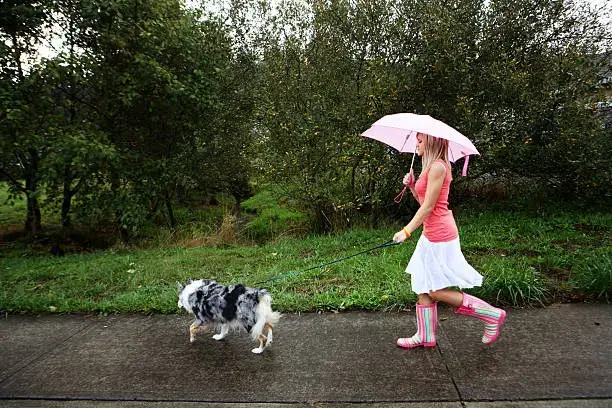
Preparing before stepping outside makes rainy walks smoother and less chaotic. A quick 2–3 minute routine helps prevent slipping, gear malfunction, and soggy coat discomfort. Many of these steps use basic household items and don’t require professional grooming tools. The goal is to keep the walk short, safe, and controlled without overwhelming the dog.
Indoor prep also reduces the amount of mud and moisture tracked back into the house. Dogs that experience structured pre-walk routines tend to be calmer and more cooperative outdoors because they already know what to expect.
Checking weather and surface conditions
Rainy days change the environment quickly. Before heading out, owners should check surface conditions around driveways, sidewalks, and apartment hallways. Wet tile, metal grates, and painted concrete get slippery and increase the risk of falls for both dog and owner.
Useful pre-walk checks include:
- Look for drainage surface areas to avoid deep puddles
- Check for cars splashing runoff at curb edges
- Monitor temperature; wet cold feels harsher than dry cold
- Check for construction zones that create mud traps
A simple real-life approach:
If sidewalks are coated with runoff, plan a shorter route around buildings or covered areas. This keeps paws cleaner and minimizes stress, especially for older dogs with limited traction.
Adjusting harness and traction setups
Harness fit matters more in the rain because gear shifts when wet. A slightly loose chest strap indoors may become too loose outdoors once moisture reduces friction. Before leaving, check that the harness sits securely across the shoulders and chest without rubbing.
Key setup considerations:
- Confirm all buckles are closed properly
- Tighten one notch if straps loosen when wet
- Avoid long leashes in rain; slack increases slipping risk
- Pair a harness with boots for improved traction control
Small dogs benefit from slip-resistant dog harness models that stabilize the body when they pull forward or hesitate at puddles. Larger breeds may benefit from a shorter leash to maintain balance on slick pavement.
Example tip:
During rainy school drop-off hours, sidewalks get busy and slippery. A short leash + stable harness setup prevents sudden lunges that could make the owner slip.
Applying odor control and coat protection
Rain increases moisture retention around the chest, belly, and legs. These areas trap dirt, which leads to that familiar wet dog smell. A quick pre-walk wipe with a damp cloth removes loose dirt and reduces how much grime sticks during the walk.
Useful household options:
- Light towel rub along belly and legs
- Gentle brushing to remove loose hair
- Layering a breathable material raincoat for coat protection
Avoid heavy grooming sprays before rain; they may trap moisture closer to the skin. The priority is keeping the coat clean enough to dry quickly afterward.
Example scenario:
A medium-sized dog with feathered legs collects mud quickly. A 30-second wipe + raincoat reduces post-walk cleanup significantly, keeping the indoor floor cleaner and lowering odor buildup.
Managing Outdoor Walks During Rain Safely
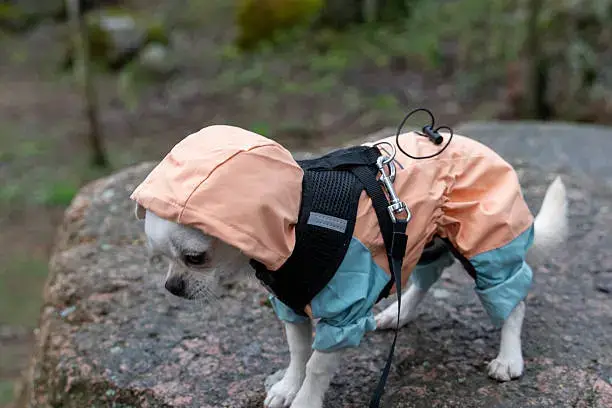
Even with proper preparation, rainy walks still require active management. Dogs move differently when surfaces are wet: some speed up to escape the rain, others freeze or avoid puddles. Owners should focus on route safety, leash control, and time limits to prevent panic or slipping. None of this is about forcing long exercise sessions—just controlled outdoor relief with minimal risk.
Well-managed rainy walks also reduce cleanup effort later. Avoiding deep puddles and muddy turf areas means fewer towels, less drying time, and a calmer post-walk routine indoors.
Selecting safe walking routes with drainage
Not all sidewalks handle water the same way. Areas with poor drainage surface design collect puddles that soak gear and paws. Choosing a better route makes the walk cleaner and faster.
Safe rainy day route elements include:
- Covered walkways along buildings
- Parking garages with drains
- Apartment breezeways with airflow
- Sloped sidewalks that shed water
Example scenario:
A short loop around a parking structure may be cleaner than a long loop through a park. The dog still completes a bathroom break, avoids heavy puddles, and stays calmer with less sensory overload.
Controlling leash tension on slippery surfaces
Leash handling becomes more important when sidewalks turn slick. Sudden pulling increases fall risk for both the dog and the owner. Shorter leashes offer better control on slippery tile, painted concrete, and smooth stone surfaces.
Practical leash control strategies:
- Keep the leash short at crosswalks
- Slow down before curb edges
- Use gentle leash pressure rather than yanking
- Allow sniffing breaks under overhangs
If the dog wears boots, friction pads on the sole add stability. Dogs without boots benefit from shorter steps and steady pace instead of jogging or rapid sniffing patterns.
Keeping sessions short and low stress
Rainy walks don’t need to be long. 5–10 minute bathroom breaks are perfectly appropriate during heavy rain. Shorter durations reduce cold exposure, irritation, and slipping incidents.
Low-stress strategies include:
- Avoid off-leash play in wet fields
- Skip crowded sidewalks during rush hours
- Use treats for calm walking, not speed-ups
- Pick quiet residential loops instead of busy streets
Example tip:
If the dog tries to run home, stop under an overhang for a brief pause. This helps reset the pace and keeps the walk controlled instead of chaotic.
Drying and Grooming Routines After Using Rainy Day Gear
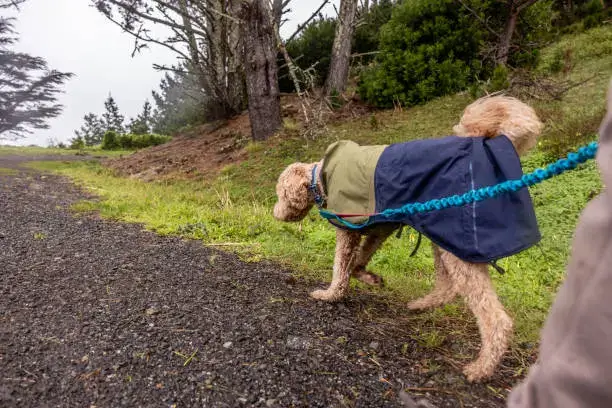
Drying routines matter because rainy day gear only keeps part of the dog dry. Coats, paws, ears, and tails still collect water and mud. A simple 3–5 minute post-walk routine prevents odor, reduces indoor mess, and keeps long coats from tangling. This routine is realistic for busy owners and doesn’t require salon tools. The goal is comfort, cleanliness, and predictable habits after using rainy day gear. The routine also helps dogs that dislike grooming because it stays short and consistent.
Well-structured drying also extends the life of rainy day gear by preventing mildew and buildup. When towels, mats, and jackets are handled together, the dog learns that rainy walks end with a calm grooming sequence instead of chaos. This makes future walks smoother and improves cooperation during wet seasons.
Using towels and quick-dry techniques after walks
Start drying immediately after removing rainy day gear. Microfiber towels absorb more moisture without rough rubbing, which benefits double-coated breeds. Begin with shoulders and back, where most water collects, then move down to belly and legs where mud splashes stick.
Key towel tips:
- Press towels along the body instead of scrubbing
- Wrap the dog briefly like a blanket for better absorption
- Use a second towel for paws and tail
- Keep towels near the door for faster routine execution
Example:
A spaniel returning in rainy day gear might be dry on the torso but soaked on legs. A 30-second towel session prevents water drips around the home and reduces odor later.
Checking ears, paws, and tail for trapped moisture
Moisture hides in small spaces even when rainy day gear fits correctly. Ears, paws, and the underside of the tail are common trouble areas. Check between toes for grit and small stones; these stick easily when wet. If the dog wore boots, remove them immediately and wipe paws before storage.
Areas to check:
- Ear flaps and folds
- Paw pads and nails
- Tail base and feathering
- Armpits and inner thighs
Extra airflow helps evaporation. Let the dog stand on a mat for a minute while you finish wiping. This keeps wet paws off floors and carpets when rainy day gear is still drying nearby.
Odor control and coat management
The familiar wet dog smell comes from damp oils activated by water. Even clean coats smell stronger after rain. Quick drying and brushing once dry reduce trapped moisture. Brushing should only happen after the coat is mostly dry to avoid frizzing or matting.
Coat-friendly odor prevention tips:
- Brush lightly after towel drying
- Use airflow instead of heat for comfort
- Keep entryway mats clean to avoid recontamination
- Clean towels after each session to prevent mildew
When rainy day gear becomes part of the routine, dogs stay drier overall, reducing odor and improving coat texture during rainy seasons. Consistency is more important than perfection.
Long-Term Care When Using Rainy Day Gear Frequently
Daily rain exposure accumulates over time. Coats can mat, indoor floors become damp, and mildew can form on rainy day gear if storage routines are inconsistent. Long-term care doesn’t require special tools—it’s about airflow, cleaning, and predictable habits. Dogs adapt well to structure, so repeated rainy routines reduce stress and confusion. This benefits active dogs that walk twice daily even during storms.
Owners should consider how rainy day gear interacts with coat type, indoor flooring, and local climate. Humid regions need more airflow. Cold rain needs more insulation. Muddy suburbs require more paw care than paved urban environments. Aligning habits with these variables keeps things manageable and comfortable.
Cleaning gear to maintain waterproofing and durability
Waterproofing breaks down when dirt and oils accumulate on the surface of rainy day gear. Light cleaning increases lifespan and keeps jackets and boots performing well. After muddy walks, rinse gear and let it air dry fully to avoid mildew. Boots may need inside-out drying if they trap moisture.
Recommended care:
- Rinse jackets after mud exposure
- Avoid fabric softeners that damage coatings
- Check seams and reflective strips periodically
- Store in dry, ventilated areas
Example:
Without cleaning, rainy day gear loses water-beading properties and becomes heavy and soaked on future walks. Simple rinsing preserves performance and reduces replacement costs.
Supporting coat and skin comfort during rainy periods
Humidity slows drying and encourages odor in dense coats. Dogs with double coats may take longer to dry, especially if rainy day gear only covers the upper body. Airflow prevents lingering dampness, especially around belly and legs.
Helpful approaches:
- Natural airflow > heated dryers
- Brush once coat is dry, not when wet
- Keep indoor mats clean and absorbent
- Choose breathable material for long walks
Breed example:
A corgi in rainy day gear may still have wet belly fur due to short legs. A quick towel + airflow session keeps odor down and reduces matting potential.
Protecting indoor environments from moisture and mud
Entryway setups save time and prevent slipping hazards. Damp hardwood, tile, or laminate surfaces become dangerous for dogs and humans. Using mats, hooks, and baskets keeps rainy day gear organized while separating wet items from clean ones.
Effective indoor setup:
- Absorbent mats near doors
- Hooks for jackets and towels
- Boot trays for dripping items
- Small basket for wipes, brushes, and treats
Real-life scenario:
In apartments without yards, dogs return in rainy day gear, step onto a mat, and get dried immediately. This prevents mud tracks through hallways and reduces odor from wet coats drying on furniture.
Drying & Post-Walk Care After Using Rainy Day Gear

After using rainy day gear during wet walks, the post-walk routine matters just as much as staying dry outdoors. This section covers a beginner-friendly system for drying your dog, preventing discomfort, and keeping rainy day gear in good condition without special equipment. The goal is practical home care, not medical treatment or diagnosis.
Towel Drying & Paw Checks
Once you remove rainy day gear, start with towel drying. Focus on the areas that trap moisture easily:
- Chest and belly
- Armpits and groin
- Paw pads and between toes
- Neck and behind the ears
Use gentle, downward strokes to avoid tangling the coat. For heavy or long coats, using two towels can make the process faster.
Example:
After a quick potty trip in light rain, the dog returns damp around the belly and paws. The owner uses one towel for the body and a separate one for the paws, preventing puddles across the floor.
After drying, check the paws for tiny pebbles, mulch, or wet leaves. These can get stuck during walks, even when wearing rainy day gear.
Warm-Air Drying (Optional & Gentle)
If the coat still feels damp, you can use gentle warm air. The goal is not to fully blow-out the coat, just to remove lingering moisture that the rainy day gear didn’t completely block.
Helpful guidelines:
- Use low heat or warm air
- Keep 12–18 inches of distance
- Avoid blowing directly into ears
- Keep sessions short
If your dog dislikes dryers, simply laying a microfiber towel over the back for a few minutes can help absorb remaining moisture.
Example:
A Golden Retriever wearing rainy day gear returns with a slightly damp neck area. The owner uses warm air from a safe distance for 3–4 minutes and the coat dries comfortably.
Drying & Storing Rainy Day Gear Properly
Proper drying extends the lifespan of rainy day gear and prevents mildew. Use this simple routine:
- Wipe dirt and mud with a damp cloth
- Hang items on a wall hook or laundry rack
- Avoid direct, intense sunlight
- Make sure Velcro and zippers are open
Never store rainy day gear in a sealed bin or bag while damp. Boots may need to be unlined or opened to allow airflow. Rain jackets usually dry well when hung in a ventilated spot.
A useful trick is setting up a “wet gear station” by the entryway to keep the rest of the home clean while preparing the rainy day gear for the next outing.
Frequently Asked Questions (FAQ) About Rainy Day Gear
Below are common beginner questions about rainy day gear, focusing on comfort, practicality, and usage during everyday rainy conditions.
H3 FAQ List (8–10 questions)
- Does rainy day gear make dogs uncomfortable?
It depends on the fit and materials. Most dogs adjust after a few sessions. - Do I need rainy day gear in light drizzle?
For long or dense coats, rainy day gear helps prevent damp odors and long drying times. - Are rain boots necessary for dogs?
Not required, but helpful on muddy paths or areas treated with chemicals. - Will a rain jacket make my dog too warm?
Most jackets are thin and breathable. Fit and walk duration matter more than temperature alone. - Can dogs use human rain jackets?
No. Human jackets restrict leg movement, lack belly coverage, and rarely fit securely. - What if my dog refuses rainy day gear?
Introduce it gradually in short sessions with calm praise. - Does rainy day gear lose waterproofing over time?
It can. Cleaning and proper drying help retain performance. - What materials work best for rainy day gear?
Light, flexible, water-repellent fabrics that allow comfortable walking. - Do rain boots change how dogs walk?
At first, yes. Most dogs adapt after several short sessions. - Do I need to clean rainy day gear after every walk?
Not always. Wiping mud and letting items dry is usually enough.
Conclusion
Using rainy day gear allows dogs to stay comfortable, dry, and active during wet weather. The key is choosing items that fit well, following simple drying routines, and treating rainy walks as normal rather than disruptive. None of the steps require professional tools — just towels, warm airflow, and consistent habits. When owners understand their dog’s movement and coat type, rainy day gear becomes a practical solution rather than an inconvenience.
To explore seasonal dog care and equipment beyond rainy day gear, visit the PetCareCompass pillar page:
👉 Seasonal Dog Care and Equipment
This resource helps owners adjust routines and gear for weather changes throughout the year, making rainy, hot, or cold conditions easier to manage.
Additional trusted reading:
For a broader look at safe outdoor routines during wet or cold days (with or without rainy day gear), pet owners can review veterinary-backed guidance from the American Kennel Club. Their educational articles offer balanced, non-commercial insights on walking conditions, paw safety, and coat care in wet climates:
These supplementary resources can help reinforce good habits, prevent common discomforts related to rain, and support thoughtful use of rainy day gear during unpredictable weather.
