

Essential Rainy Day Gear for Active Dogs: Protection Beyond Aesthetics
For an active canine, a storm shouldn’t mean a day of confinement. However, navigating the elements requires more than just a standard coat. High-quality Rainy Day Gear is a critical investment in your dog’s dermatological health and overall comfort. Beyond keeping the fur dry, the right equipment prevents the accumulation of environmental allergens and bacteria that flourish in damp conditions.
This guide evaluates the essential components of a wet-weather kit, focusing on material science, ergonomic fit, and safety features. Whether you are navigating a light drizzle or a torrential downpour, choosing the correct Rainy Day Gear ensures that your outdoor excursions remain a source of enrichment rather than a catalyst for stress or illness.
Core Essentials: The Anatomy of a Wet-Weather Kit
Effective protection is layered. To choose the best Rainy Day Gear, owners must evaluate the specific needs of their dog’s coat type and local climate intensity.
🧥 Waterproof Raincoats
Look for Breathable Membranes (like Gore-Tex equivalents) that allow heat to escape while blocking external moisture.
🐾 All-Terrain Boots
Protects paws from chemical runoff on wet pavement and prevents “mud-clumping” in long-haired breeds.
💡 Visibility Safety
Reflective piping and LED attachments are non-negotiable for low-light, rainy conditions to ensure motorist awareness.
🧪 Information Gain: Hydrostatic Head Ratings
Technical Detail: High-end dog rain gear often features a “Hydrostatic Head” rating. A rating of 5,000mm is sufficient for light rain, but for prolonged exposure or heavy storms, look for 10,000mm+. This indicates the amount of water pressure the fabric can withstand before leaking.
🛍️ Choosing Essential Rainy Day Gear for Everyday Walks
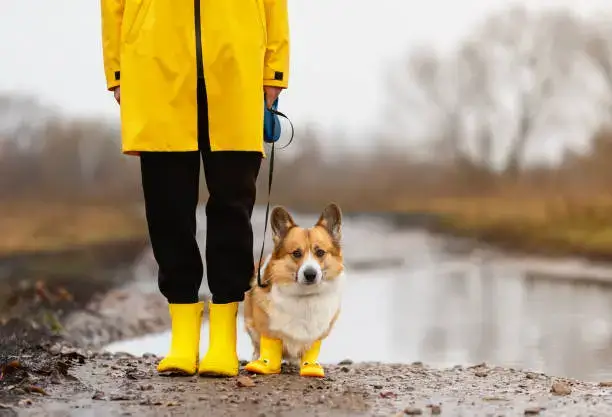
Lightweight rain jackets provide core belly protection from pavement splash-back.
Selecting the right rainy day gear makes wet-weather walks smoother, cleaner, and less stressful. For modern owners, the best approach focuses on Mechanical Integrity—ensuring the gear maintains its protective function without restricting natural movement. Most dogs require only a minimalist kit of one to three well-fitting items to mitigate the risks associated with typical neighborhood rainfall.
Raincoats and Dynamic Chest Coverage
A dog raincoat should act as a secondary skin. Beyond basic water resistance, owners must prioritize Chest Coverage, especially for low-profile breeds. This prevents “Road Spray”—the mixture of water and pollutants kicked up from the pavement—from saturating the sensitive underbelly fur.
The Fitment Checklist
- Shoulder Mobility: Ensure the leg openings do not chafe during the stride.
- Leash Access: A reinforced portal for harnesses or collars is essential to maintain a waterproof seal.
- Belly Closures: Favor hook-and-loop (Velcro) for dogs sensitive to over-the-head designs, allowing for a Low-Stress Entry.
Waterproof Boots: Traction and Paw Integrity
Wet surfaces significantly increase the risk of slippage and pad irritation. High-quality waterproof boots provide more than just dry paws; they offer Traction Control on slick, gritty city surfaces. For dogs new to footwear, we recommend Systematic Introduction—starting with the front paws to build proprioceptive comfort.
👞 Non-Slip Soles
Rubberized outsoles prevent rotation and provide grip on wet metal grates or polished stone.
🔄 Secure Closures
Look for dual-strap systems that lock the boot in place, preventing water from leaking in through the ankle cuffs.
💡 Maya Mai’s Tip: The “Two-Paw” Compromise
Information Gain: If your dog is boot-sensitive, try protecting only the front paws. The front legs receive the majority of “splash-back” from puddles. This optional approach still drastically reduces “Wet Dog Smell” and post-walk cleanup without over-stressing a sensory-sensitive dog.
Fit Rule: Gear that is too loose traps moisture; gear that is too tight restricts the spirit of the walk. Seek the “Snug-Dry” balance.
Umbrella Attachments and Harness Compatibility
For dogs with sensory sensitivities who resist traditional coats, a dog umbrella attachment offers a non-contact solution. By creating a Micro-climate Canopy, these tools protect the head and trunk from direct vertical rainfall without the tactile pressure of a garment. For maximum stability, these should always be paired with a slip-resistant dog harness to ensure the canopy remains centered over the dog’s spine during movement.
🛠️ Selection Criteria for Canopies
- Clear-View Panels: Essential for maintaining the dog’s line of sight and reducing anxiety in tight spaces.
- Adjustable Shank: Allows for leash-length calibration to prevent the handle from bumping the dog’s neck.
- Wind-Shear Stability: Best utilized in light drizzle; high winds can cause Aerodynamic Drag, potentially startling the dog.
🚿 Preparing Your Dog Before Going Out in Wet Weather
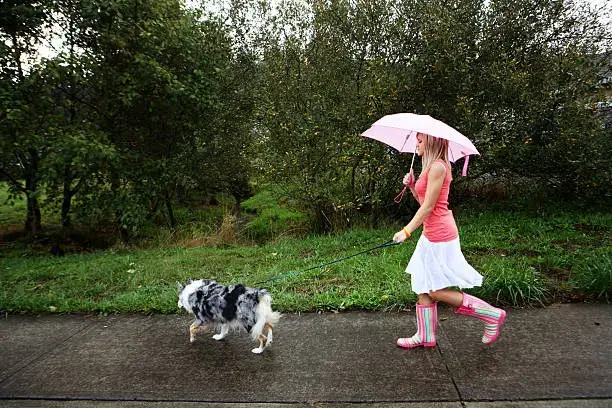
Checking ground temperature and traction before stepping out prevents wet slipping.
A successful rainy walk is won in the hallway. Implementing an Operational Pre-Walk Routine helps transition your dog from a state of indoor relaxation to outdoor readiness. This 2–3 minute ritual focuses on Safety Auditing—ensuring gear is secured and the environment is scouted before the first paw hit the wet pavement.
Environmental Scouting: Checking Surface Conditions
Rainy days transform ordinary surfaces into hazards. Before exiting, conduct a quick Surface Integrity Check. Wet tile, painted concrete, and metal grates undergo a dramatic reduction in Coefficient of Friction, which can lead to slips, strains, or ligament injuries.
🌊 Drainage Awareness
Identify deep puddles and runoff zones. Standing water often masks hidden debris or sharp objects that can puncture boots or paw pads.
🌡️ Thermal Assessment
“Wet Cold” is more dangerous than “Dry Cold” due to Evaporative Cooling. If temperatures are near freezing, limit exposure time to prevent hypothermia.
🧪 Information Gain: The “Chemical Runoff” Factor
Expert Fact: During the first 15 minutes of rainfall, oil, antifreeze, and salts rise to the surface of the asphalt. This creates a toxic Chemical Runoff that can irritate paws and is dangerous if licked. Always scout for “rainbow-colored” puddles and guide your dog away from these high-risk areas.
Scouting Tip: For senior dogs or those with mobility issues, a ‘shorter, dry path’ beats a ‘long, wet walk’ every time.
Adjusting Harness and Traction Setups
Wet conditions demand a higher standard of Equipment Calibration. Many nylon and fabric harnesses are subject to Hydro-Expansion—a phenomenon where fibers absorb water and expand, causing a once-snug fit to become dangerously loose. A loose harness not only increases the risk of “slipping” but also creates friction points that can lead to skin chafing on a damp coat.
🔧 Rain-Ready Traction Protocol
- The “One-Notch” Rule: Consider tightening the harness by one notch if the material is prone to stretching when saturated.
- Short-Leash Dynamics: Minimize leash slack to maintain a Low Center of Gravity. A long, wet leash increases drag and can trip both the dog and the owner on slick surfaces.
- Stabilization: For small breeds, a slip-resistant dog harness with a top-handle allows for quick stabilization if they lose footing near deep puddles.
Applying Odor Control and Coat Protection
The notorious “Wet Dog Smell” is not caused by water itself, but by the activation of micro-organisms (bacteria and yeast) living in the fur. When moisture hits the coat, it releases volatile organic compounds from these microbes. Managing this requires a proactive Microbial Barrier strategy—minimizing the organic debris that traps moisture and fuels odor production.
🧼 Pre-Walk Debris Removal
A quick brush-through removes loose “undercoat” hair. Fewer hairs mean less surface area for moisture to cling to, speeding up the drying process later.
🧥 Breathable Layering
Utilizing a raincoat made of breathable material ensures that body heat can escape while water stays out, preventing the “sauna effect” that triggers yeast overgrowth.
🧪 Maya Mai’s Insight: Avoid Pre-Walk Grooming Sprays
Technical Note: Avoid silicone-based grooming sprays right before a rainy walk. These can trap moisture underneath the chemical layer, keeping the skin damp even after the top coat appears dry. Stick to clean, dry fur protected by a high-quality physical barrier for the best coat protection.
🛤️ Managing Outdoor Walks During Rain Safely
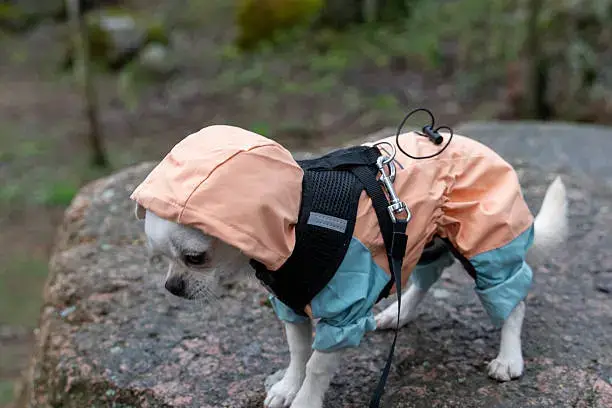
Maintaining a short leash protocol provides active stabilization on slippery surfaces.
Even with advanced rainy day gear, the execution of the walk dictates the safety outcome. Rain alters a dog’s Proprioceptive Feedback—the way they sense their body’s position in space. Slippery surfaces can cause a dog to panic-bolt or freeze, making active leash control and strategic time limits non-negotiable. The goal shifts from “high-mileage exercise” to Controlled Outdoor Relief, prioritizing stability over distance.
Low-Exposure Routing: Selecting Safe Surfaces
Success during a storm depends on your ability to identify high-integrity drainage surfaces. By choosing routes that minimize “Standing Water” exposure, you protect the mechanical function of your dog’s boots and maintain the dryness of their underbelly, significantly reducing post-walk Thermal Stress.
🗺️ Tactical Route Selection
- Building Overhangs & Breezeways: These provide “Dry Windows” for bathroom breaks, reducing the time the coat is exposed to direct vertical rainfall.
- Managed Slopes: Favor sidewalks with a clear “Crown” (a higher center point) that sheds water to the gutters. Avoid “Bowl-shaped” depressions where stagnant water collects chemical runoff.
- Parking Structures: In urban settings, open-air garages offer excellent Acoustic Shielding from the loud “Splashing” noise of traffic, which can be sensory-overloading for anxious dogs.
Managing Sensory Overload in the Rain
Rain creates a unique Acoustic Reflectivity—sound bounces off wet surfaces differently than dry ones. For a dog, the hiss of tires on wet asphalt or the heavy drumming of rain on a raincoat can be disorienting. Maintain a Short Leash Protocol to provide physical reassurance and prevent sudden lunges into deep puddles or muddy turf traps.
🧠 Expert Insight: The “Turf Avoidance” Strategy
Information Gain: During rain, grassy areas act as Saturated Sponges, holding onto moisture and dirt far longer than pavement. If your dog is comfortable, encourage them to eliminate on gravel or mulch areas near the sidewalk. This keeps the boots cleaner and prevents the “Mud-Caking” effect between paw pads that can cause long-term skin irritation.
Controlling Leash Tension on Slippery Surfaces
On rain-slicked surfaces, leash tension acts as a communication wire between owner and dog. Improper tension can destabilize the dog’s Center of Mass, leading to slips on painted concrete or smooth stone. Transitioning to a Short-Leash Protocol provides immediate feedback, allowing you to anchor the dog’s movement and prevent the sudden lateral lunges that are the primary cause of rainy-day falls.
🚜 High-Traction Handling Strategies
- Proactive Deceleration: Consciously slow your pace 5 feet before curb edges or metal grates. This allows the dog to adjust their Paw Placement before the surface change.
- Gentle Impulse Control: Use steady, low-level pressure rather than sharp yanks. Abrupt corrections on wet surfaces can cause the dog’s friction pads to lose grip instantly.
- Overhang Anchoring: Utilize building awnings as “Safe Harbors” for sniffing breaks. This prevents the dog from rushing through their business due to sensory discomfort.
🐾 Maya Mai’s Insight: The “Short-Step” Gait
Expert Tip: For dogs without boots, encourage a “Short-Step” gait by keeping your own walking stride small. This keeps the dog’s paws directly under their body, maximizing their Traction Control and reducing the probability of “splooting” or slipping on slick urban tiles.
🧼 Drying and Grooming Routines After Using Rainy Day Gear
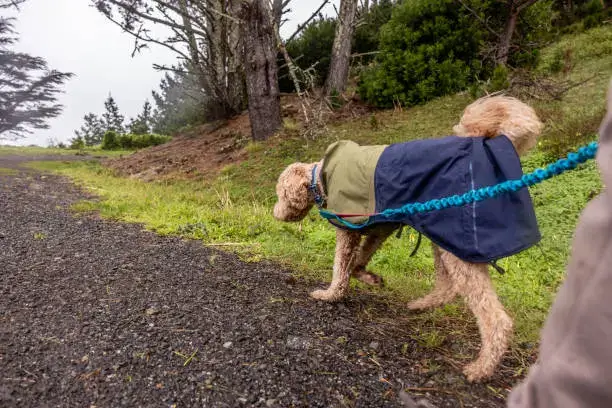
Proper post-walk drying prevents undercoat matting and skin infections.
The utility of rainy day gear does not end at the doorstep. A strategic Post-Walk Restoration Routine is essential to prevent the latent risks of prolonged moisture exposure, such as coat matting and microbial proliferation. By implementing a 3–5 minute sequence focusing on Hydro-Extraction and hygiene, you transition your dog from outdoor dampness to indoor comfort, preserving both their coat integrity and your home’s cleanliness.
Advanced Moisture Extraction: The Blotting Technique
Standard scrubbing with a towel can damage the hair cuticle and push moisture deeper into the undercoat. Instead, utilize Towel Blotting—applying firm, steady pressure to allow Capillary Action to draw water into the microfiber. This is particularly critical for double-coated breeds where trapped moisture can lead to “Hot Spots” or fungal infections.
🚿 High-Efficiency Drying Protocol
- Zonal Priorities: Start with the spine and shoulders (the primary water-shedding areas), then focus on the belly and legs where mud splashes are most concentrated.
- The “Burrito” Method: Wrap your dog briefly in a dry towel to stabilize their core temperature and maximize initial absorption.
- Microfiber Superiority: Use high-density microfiber towels; they hold up to 7x their weight in water compared to standard cotton.
Detailed Inspection: Managing Hidden Moisture Traps
👂 Ear & Tail Folds
Gently wipe the inner flap and base of the tail. Moisture in these areas is the primary catalyst for yeast-related odors.
🐾 Interdigital Cavities
Check between the toes for trapped grit or ice-melt chemicals. If boots were used, ensure the paw is wiped dry to prevent “Pruning” of the pads.
🛡️ Long-Term Care When Using Rainy Day Gear Frequently
Daily exposure to precipitation creates a cumulative effect on both canine health and equipment integrity. To ensure your rainy day gear remains a viable shield, owners must implement a long-term maintenance strategy focusing on Airflow Dynamics and fabric preservation.
Preserving Waterproofing: The DWR Maintenance Protocol
🧼 Gear Longevity Checklist
- Chemical Sensitivity: Avoid standard fabric softeners. These contain surfactants that strip the DWR coating, permanently damaging the jacket’s waterproof fabric integrity.
- The Rinse Habit: After mud exposure, perform a fresh-water rinse. This prevents grit from embedding in the seams, which can cause micro-abrasions over time.
- Ventilated Storage: Never store damp gear in a closed bag or closet. Without airflow, Mildew Colonization can begin within 24 hours, creating odors that are difficult to eliminate.
Material Science: Selecting the Right Shield
| Material Type | Breathability | Best For |
|---|---|---|
| Coated Polyester | Moderate | Light drizzles and short city walks. |
| Ripstop Nylon (DWR) | High | Active dogs, hiking, and long durations. |
| PVC / Vinyl | Low (Zero) | Heavy downpours (Very short duration only). |
❓ Frequently Asked Questions About Rainy Day Gear
Q1: Does rainy day gear make dogs uncomfortable?
Discomfort is usually linked to poor fit or Tactile Overstimulation. High-quality gear made of breathable material and ergonomic cuts allows for a full range of motion. Most dogs achieve Sensory Habituation after 3–5 short positive sessions.
Q2: Do I need gear for a light drizzle?
For double-coated or long-haired breeds, even a drizzle can saturate the undercoat, leading to long drying times and microbial odors. A lightweight shell is recommended to maintain Coat Protection.
Q3: Will a rain jacket cause my dog to overheat?
Only if the material lacks Atmospheric Porosity. Ensure you select rainwear designed with mesh linings or technical membranes that facilitate Thermal Regulation during exercise.
Q4: Can dogs use modified human rain jackets?
No. Human garments lack the Anatomical Contouring required for canine movement, specifically regarding Shoulder Clearance and belly-splash protection.
Q5: How often should I clean the gear?
A fresh-water rinse should occur after every muddy walk to prevent Abrasive Grit from degrading the Durable Water Repellent (DWR) coating. Deep cleaning is only necessary when “wetting out” occurs.
The Final Verdict: Embracing the Storm
Investing in rainy day gear is not a luxury; it is a commitment to your dog’s Dermatological Safety and long-term comfort. By bridging the gap between high-performance materials and consistent post-walk restoration, you transform a potentially stressful weather event into a predictable, enriching routine.
Find More Dog Care Guides
Continue exploring practical guides related to this topic.