Quick Summary: Lipid Distribution & Cuticle Integrity
Coat Shine Maintenance is a multi-dimensional protocol focusing on Lipid Distribution and Cuticle Integrity. Achieving a high-luster coat requires a balance of Omega Fatty Acid supplementation and the use of pH-Neutral Surfactants to preserve the Acid Mantle. Regular mechanical brushing further stimulates Sebaceous Glands for natural, systemic shine.
A dog’s coat is the ultimate Biometric Indicator of their internal physiological state. Coat Shine Maintenance transcends mere aesthetics; it is a clinical process of maintaining the Integumentary Barrier and ensuring Follicular Vitality. At PetCareCompass, we treat “shine” as the visible result of Nutritional Bioavailability and precise Topical Governance. This guide provides a vet-informed framework to restore luster and protect your dog’s epidermal health from the inside out.
Lipid Management
Optimizing Sebaceous Secretions to create a natural, antimicrobial high-luster shield.
Cuticle Integrity
Protecting the Keratin Structure of the hair shaft through pH-balanced topical care.
Mechanical Luster: Brushing as a Lipid Distribution Tool
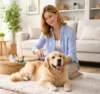
In the PetCareCompass Coat Shine Maintenance protocol, brushing is redefined as Mechanical Lipid Distribution. Beyond removing debris, the primary objective is to stimulate the Sebaceous Glands to secrete natural oils, which are then manually distributed along the Hair Shaft to seal the Cuticle. This process creates a natural, antimicrobial high-luster shield that protects the Integumentary System from environmental pollutants.
| Coat Phenotype | Primary Instrument | Shine Mechanism |
|---|---|---|
| Short-Haired | Natural Bristle Brush | Lipid Polishing & Buffing |
| Long/Silky Coats | Pin Brush + Steel Comb | De-tangling & Cuticle Alignment |
| Curly/Wiry Coats | Slicker Brush | Follicular Aeration & Matting Prevention |
1. Instrumentation Calibration
Effective Coat Shine Maintenance requires professional-grade tool selection. Bristle Brushes (preferably natural boar hair) are essential for short breeds to buff the epidermal surface. For long-haired breeds, Pin Brushes provide deep-tissue stimulation without causing Follicular Trauma. Inspect instruments every 90 days; compromised bristles introduce Micro-abrasions to the hair cuticle, causing dullness.
2. Tactical Brushing Flow
Execute the routine using Long-Axis Strokes, moving from the cervical region (neck) toward the tail. Always follow the direction of Hair Shaft Growth to maintain Cuticle Alignment. Pay meticulous attention to “High-Friction Zones”—axillary regions and behind the ears—where Matting-induced Friction often leads to localized Lipid Depletion and dull fur.
3. Mitigating Mechanical Trauma
Avoid Over-Brushing, which can trigger Compensatory Sebum Hyper-secretion or, conversely, strip the Integumentary Barrier. Stick to a Phenotypic Schedule (daily for long coats, bi-weekly for short). Never ignore sensitive mucosal margins; tangles in these zones increase Dermal Stress, ultimately impacting the visible luster of the surrounding coat.
Systemic Maintenance: Governing the Longitudinal Shine Cycle
Within the PetCareCompass Coat Shine Maintenance framework, consistency is categorized as Longitudinal Governance. A vibrant coat is the result of a stabilized Epidermal Cycle where nutrient delivery from within meets precise topical protection from without. By implementing a Tiered Maintenance Protocol—ranging from daily lipid distribution to seasonal calibration—owners can prevent Keratin Degradation and maintain high-definition luster year-round.
| Seasonal Variable | Environmental Stressor | Calibration Strategy |
|---|---|---|
| Winter (Low Humidity) | Static Electricity & Dermal Desiccation | Emollient-based Humectants & Lipid Oils |
| Summer (UV Exposure) | Photodamage & Oxidative Stress | UV-Protective Sprays & Increased Hydration |
| Transition (Shedding) | Follicular Impaction (Dead Hair) | High-Frequency Undercoat Aeration |
1. Daily Micro-Audits and Spot Checks
Effective Coat Shine Maintenance begins with 5–10 minute daily Micro-Audits. Focus on high-friction regions—cervical (neck) and tail base—to ensure even Lipid Distribution. Utilizing a pH-Neutral Detangling Agent on minor snags prevents Mechanical Trauma to the hair shaft, preserving the Cuticle’s Reflective Index before knots escalate into mats.
2. Specialized Lipid and Nutritional Loading
Weekly treatments should include Leave-in Humectants to lock in moisture, particularly for long-haired phenotypes. Concurrently, optimize Nutritional Bioavailability from within. Supplementing with Omega-3 Fatty Acids and Biotin provides the systemic building blocks for Keratin Synthesis, ensuring that new hair growth emerges with structural luster and strength.
3. Seasonal Environmental Calibration
Adapting to the Environmental Kinetic Load is vital. During winter, mitigate Dermal Desiccation by reducing bathing frequency to preserve natural Sebaceous Secretions. In peak summer, manage UV-induced Oxidative Stress using lightweight, breathable grooming tools. This Iterative Calibration ensures the coat remains resilient against external stressors throughout its lifecycle.
Chemical Calibration: Surfactant Selection for Luster Preservation
In the PetCareCompass Coat Shine Maintenance protocol, bathing is reclassified as Epidermal De-contamination. The objective is to remove accumulated pollutants without compromising the Acid Mantle. Selecting the correct pH-Neutral Surfactants is critical; improper chemical exposure triggers Transepidermal Water Loss (TEWL), leading to follicular brittleness and a systemic loss of luster.

| Ingredient Category | Benefit to Luster | Avoidance Criteria |
|---|---|---|
| Natural Lipids (Argan/Jojoba) | Cuticle Sealing & Light Reflection | Synthetic Mineral Oils |
| Colloidal Oatmeal/Aloe | Dermal Hydration & Soothing | Artificial Fragrances/Dyes |
| pH-Balanced Agents | Acid Mantle Preservation | Sulfates (SLS) & Parabens |
1. Surfactant Calibration & Hydration
Selecting Dog-Friendly Shampoos requires an audit of the lipid-restoring ingredients. Natural emollients like coconut or argan oil provide the necessary Lipid Loading to ensure the hair shaft remains hydrophobic and glossy. Avoid “human-grade” detergents; their acidic pH is incompatible with the canine Integumentary System, leading to immediate Keratin Stripping and chronic dullness.
2. Frequency and Phenotypic Variables
Establishing a Bathing Frequency must align with the dog’s Phenotypic Profile. Puppies require minimal chemical exposure to protect developing skin barriers. For long-haired breeds, a monthly Hygiene Audit is optimal, whereas short-haired dogs benefit from longer cycles to preserve Sebaceous Secretions. Over-bathing induces Follicular Desiccation, the primary cause of brittle, lusterless fur.
3. Precision Desiccation Techniques
Post-bath care is vital for Cuticle Integrity. Utilize Capillary Blotting (patting with soft towels) instead of aggressive friction, which fractures the hair shaft. For high-density coats, employ a Cool-Air Desiccator (blow dryer) to prevent Thermal Epidermal Stress. Brushing while slightly damp ensures even Lipid Distribution, locking in the shine before the Keratin Structure fully dries.
Bio-Lipid Synthesis: The Internal Architecture of Shine
In the PetCareCompass Coat Shine Maintenance framework, luster is viewed as a metabolic output. Topical treatments only manage the surface, but true Cuticle Radiance is driven by Lipid Bioavailability. By optimizing the intake of Essential Fatty Acids (EFAs) and trace minerals, owners can stimulate the Follicular Matrix to produce stronger, more reflective hair shafts that resist environmental degradation.
| Micronutrient | Biological Function | Deficiency Signal |
|---|---|---|
| Omega-3 (DHA/EPA) | Inflammation Mitigation & Follicle Strength | Brittle Fur & Dry Epidermis |
| Biotin (Vitamin B7) | Keratin Structure Fortification | Excessive Alopecia (Shedding) |
| Chelated Zinc | Cellular Repair & Protein Synthesis | Redness, Flakiness, & Chronic Dullness |
1. Essential Fatty Acid (EFA) Loading
To enhance Coat Shine Maintenance, the diet must be rich in high-bioavailability Omega-3 and Omega-6 sources. Fish oil and flaxseed provide the necessary Lipid Precursors to reduce systemic inflammation. While many commercial diets are enriched, manual supplementation should be performed under Veterinary Supervision to ensure a balanced Nutritional Profile and avoid metabolic drift.
2. Micronutrient Calibration for Follicles
Specific trace minerals act as catalysts for Keratin Synthesis. Vitamin E serves as a potent antioxidant, protecting the Dermal Matrix from Oxidative Stress, while Biotin ensures the structural integrity of each hair shaft. Recognizing early Deficiency Signals—such as brittle fur or epidermal flakiness—allows for rapid adjustment before long-term damage occurs.
Environmental Armor: Shielding the Coat from External Load
Luster preservation requires a proactive defense against the Environmental Kinetic Load. UV exposure, cold-induced desiccation, and mechanical friction are constant stressors that fracture the Hair Cuticle. By implementing Protective Grooming Techniques, owners can build a Biological Shield that maintains the coat’s reflective index throughout various seasonal cycles.
1. Mechanical Integrity & Matting Defense
Protecting the fur from Mechanical Trauma involves utilizing pH-Neutral Detangling Agents. Start grooming from the distal tips and work toward the roots to minimize Follicular Tension. For long-haired breeds, Protective Styling—such as loose braids—can significantly reduce High-Friction Tangles during active play, preserving the hair shaft’s structural luster.
2. Photodamage Mitigation
Excessive UV exposure causes Keratin Photolysis, leading to “sun-bleached” and brittle fur. For light-colored phenotypes, Dog-Safe Sunscreen Sprays are essential during peak summer hours. Limiting solar exposure protects the Melanin Integrity of the coat, ensuring the fur retains its deep, vibrant color and natural shine.
3. Thermal Desiccation Management
Cold, dry air triggers Transepidermal Water Loss (TEWL), stripping the coat of its protective Lipid Layer. Utilize Leave-in Humectants and maintain indoor humidity levels to stabilize the Dermal Environment. This prevents the “winter dullness” associated with oil depletion and static-induced cuticle damage.
Instrumentation Framework: Advanced Gadgets for Surface Luster
In the PetCareCompass Coat Shine Maintenance protocol, tool selection is treated as Instrumentation Calibration. Modern grooming gadgets are designed to minimize Follicular Stress while maximizing Lipid Distribution. Investing in ergonomic, professional-grade equipment ensures that Mechanical Grooming remains a restorative health intervention rather than a source of dermal trauma.

| Tool Category | Technological Advantage | Luster Impact |
|---|---|---|
| Self-Cleaning Slickers | One-Click Debris Ejection | Reduced Friction & Follicular Aeration |
| 360° Sprayer Attachments | Precision Surfactant Removal | Acid Mantle Preservation |
| De-matting Rakes | Serrated Blade Safety Nodes | Structural Keratin Integrity |
1. High-Precision Mechanical Deshedders
Effective Coat Shine Maintenance utilizes Self-Cleaning Brushes to minimize grooming latency. For thick-coated phenotypes, Dematting Tools are essential for non-invasive knot removal. These gadgets allow for deep-tissue Sebaceous Stimulation without causing the microscopic fractures in the hair shaft that typically lead to light diffusion and dullness.
2. Innovative Hydro-Grooming Stations
Transitioning to Sprayer Attachments with high-precision pressure control ensures thorough Surfactant Neutralization. By creating a dedicated, stress-free Grooming Station, you stabilize the dog’s Psychological Homeostasis during cleaning sessions. This environmental consistency is vital for maintaining the Epidermal Barrier and ensuring systemic radiant luster.
The Master Checklist: Accelerated Luster Protocols
- ✔ Execute 5–10 minute daily Mechanical Buffing sessions.
- ✔ Monitor High-Friction Zones (ears, legs) for matting.
- ✔ Calibrate tools based on Coat Phenotype requirements.
- ✔ Implement weekly Lipid-Restoring Humectants.
- ✔ Adjust Environmental Humidity seasonally to prevent desiccation.
- ✔ Optimize Bio-Lipid Synthesis via Omega-rich supplementation.
Environmental Calibration: Adapting to Seasonal Kinetic Loads
In the PetCareCompass Coat Shine Maintenance protocol, seasonal shifts are treated as External Stress Variables. Temperature fluctuations and humidity gradients directly impact Transepidermal Water Loss (TEWL) and Follicular Elasticity. By implementing Iterative Calibration, owners can stabilize the coat’s reflective index regardless of the environmental kinetic load.

| Seasonal Variable | Neurological/Dermal Impact | Corrective Protocol |
|---|---|---|
| Peak Summer (UV Focus) | Keratin Photolysis & Oxidative Stress | UV-Blocking Humectants & Lightweight Tools |
| Active Shedding Phase | Follicular Impaction (Dead Hair) | High-Frequency Mechanical Aeration |
| Winter (Arid Environment) | Cuticle Fracture & Static Desiccation | Indoor Humidity Stabilization & Lipid Oils |
1. Thermal and UV-Shielding Protocols
During high-UV months, Keratin Photolysis can bleach and weaken the hair shaft. Utilize Lightweight Moisturizing Sprays to establish a protective barrier without inducing Thermal Stress. Conversely, winter mandates Dermal Hydration via light oils to counter the desiccating effects of cold air, ensuring the coat maintains its Reflective index even in arid conditions.
2. Lifestyle Dynamics: Active vs. Indoor
The dog’s Lifestyle Profile dictates the frequency of Topical Governance. High-activity dogs exposed to environmental pollutants require systematic Surfactant Neutralization and post-outdoor inspections for matting. For indoor-centric dogs, the focus shifts to Mechanical Sebum Distribution to prevent follicular stagnation, ensuring luster remains a constant Biometric Feature.
Operational Intelligence: Coat Shine Maintenance FAQ
Effective Coat Shine Maintenance is a fusion of clinical nutrition and mechanical precision. This section addresses the Operational Friction Points faced by owners, providing Evidence-Based Solutions to stabilize the coat’s reflective index and structural integrity.
Q1: Mechanical Calibration Frequency
How often should I brush? For long-haired phenotypes, daily Mechanical Buffing is mandatory. Short-haired breeds require 3–4 sessions per week. Consistency in 5–10 minute bursts ensures constant Sebum Distribution without overtaxing the Integumentary Barrier.
Q2: Metabolic Synthesis of Shine
Does diet impact luster? Systemically, yes. Shine is a metabolic byproduct of Omega-3 and Omega-6 Bioavailability. If the coat remains dull despite topical care, it often signals a Lipid Deficiency or micronutrient imbalance in the Follicular Matrix.
Q3: Debugging Chronic Dullness
What if the coat won’t shine? Conduct a Grooming Audit. Check for pH-Incompatible Detergents or environmental stressors. If dullness is accompanied by Epidermal Flakiness, consult a veterinarian to rule out sub-clinical health issues affecting Nutrient Absorption.
Q4: Matting Defense Protocols
How do I prevent deep matting? Utilize pH-Neutral Detangling Agents and focus on High-Friction Zones (behind ears, axillary regions). For puppies, always prioritize Soft-Bristled Instrumentation to prevent Dermal Trauma during the early habituation phase.
The Daily Luster Roadmap: A Lipid Governance Checklist
- ☀ AM: 5-min Mechanical Buffing to distribute overnight sebum.
- ☯ Midday: Friction Audit in sensitive areas (ears, legs).
- ☽ PM: Topical Humectant Application if environment is arid.
- ◈ Weekly: Lipid-Restoring Conditioners & Nutritional audit.
- ⚙ Monthly: Instrument inspection and Follicular Calibration.
- ⚖ Seasonal: Modify Environmental Shielding based on UV/Aridity.
Find More Dog Care Guides
Continue exploring practical guides related to this topic.