A puppy without a schedule is a puppy destined for anxiety. Establishing a consistent Puppy Daily Routine is the single most effective tool for stabilizing your puppy’s biological clock, reducing destructive behaviors, and accelerating house-training.
This guide moves beyond basic tips, providing a professional-grade framework to manage your puppy’s feeding, training, and rest cycles for optimal development.
The Morning Launch: Setting the Tone
The first hour of the day is critical. Puppies wake up with a “full tank” of energy and a biological urgency to eliminate. A structured morning Puppy Daily Routine prevents accidents and channels that early energy into productive learning.
☀️ The Critical First 30 Minutes
- Immediate Potty Break: Carry your puppy to their designated spot the moment they wake up. This prevents “transit accidents” between the crate and the door.
- Cue Consistency: Use a neutral, repetitive verbal cue (e.g., “Go potty”). Once successful, reward with high-value praise immediately.
- Hygiene Audit: Use this time to check paws for debris and ears for odors. This desensitizes them to handling for future vet visits.
Strategic Morning Feeding
Nutrition timing is the remote control for your puppy’s bathroom schedule. Following a strict feeding Puppy Daily Routine makes their bowel movements predictable.
Measure meals exactly based on age and weight. Overfeeding leads to soft stools and disruptions in house-training.
Pick up the bowl after 15 minutes. This creates a “Metabolic Window,” ensuring they need to go potty at a predictable time later.
Cognitive Ignition: Training & Play
A puppy’s brain is most “plastic” and receptive in the morning. Use this window to burn off mental energy before you start your own workday.
- Micro-Training (5-10 mins): Work on core engagement commands like “Look at me” or “Sit.” Morning focus is higher than late afternoon.
- Tug or Fetch: Use interactive play to build your bond. Avoid “laser pointers” or overly frantic play that over-stimulates the nervous system.
- Handling Exercises: Gently touch ears, paws, and tail while rewarding with kibble to build trust.
Midday Maintenance: Balancing Growth and Socialization
Midday is the “bridge” of your Puppy Daily Routine. It is the prime time for sensory exploration and reinforcing that being alone is safe. Whether you are home or working, managing this 4-hour window effectively prevents future separation anxiety.
The Lunchtime Metabolism
Most puppies under 6 months require a midday meal to maintain steady blood sugar levels. However, this is also a high-risk time for “table scrap” begging.
- Consistency Check: Feed at the exact same time to keep their digestive “clock” on track for afternoon potty breaks.
- Zero-Tolerance for Scraps: Human food lacks essential puppy nutrients and encourages lifelong begging habits that disrupt your Puppy Daily Routine.
- Hydration Monitoring: Ensure the bowl is cleaned and refilled. Dehydration in midday heat can lead to lethargy.
Sensory Exploration & Socialization
Midday offers the best light and activity for “Low-Stress Socialization.” This isn’t just about meeting dogs; it’s about experiencing the world calmly.
Spend 15 minutes letting them sniff different surfaces (grass, gravel, pavement). Sniffing burns more mental energy than running!
Expose them to “scary” household sounds (vacuum, blender) at a distance while rewarding with kibble to build positive associations.
The “Power Down” Phase: Midday Naps
Over-stimulated puppies become “land sharks” (nipping and barking). Enforcing a midday nap in your Puppy Daily Routine is non-negotiable for emotional regulation.
- The Crate Sanctuary: Use a quiet, darkened room. This reinforces that midday isn’t a 24/7 party.
- Self-Soothing: Provide a safe chew toy (like a rubber Kong) to help them settle independently.
- Health Watch: If your puppy refuses to settle midday, audit their morning activity—they may be “over-tired” rather than “under-exercised.”
Need help structuring these rest periods? Check out our deep dive on the Puppy Nap Schedule.
The Afternoon Peak: Training & Physical Resilience
Late afternoon is often when puppies experience a spike in energy. Incorporating structured activities into your Puppy Daily Routine at this time prevents destructive “boredom behaviors” and builds the foundation for adult obedience.
🏃 “Low-Impact” Physical Play
Protect developing joints by avoiding repetitive jumping or long runs on hard pavement. Opt for short, sniff-heavy walks or gentle games of fetch on grass. Remember: A puppy’s growth plates are fragile until 12-18 months.
🧩 Mental Enrichment Strategy
Mental work is 3x more exhausting than physical exercise. Use puzzle feeders or “find the treat” games. This encourages independent problem-solving and significantly reduces separation anxiety.
Refining Basic Obedience
Afternoon training should focus on Generalization—practicing known commands in slightly more distracting environments (like the backyard or a different room).
- The 5-Minute Rule: Puppies have short attention spans. Stop the session while they are still successful to keep them wanting more.
- Visual Cues: Always pair verbal commands with distinct hand gestures. This speeds up command retention in your Puppy Daily Routine.
Routine Mastery: Pro Tips for Busy Households
| Challenge | Solution for your Puppy Daily Routine |
|---|---|
| Busy Work Schedule | Use smart-phone reminders or automated feeders to maintain meal consistency. |
| Unexpected Changes | Adjust gradually (10-15 mins per day) rather than a sudden 1-hour shift. |
| Inconsistent Behavior | Log energy spikes and accidents. Use data to “fine-tune” nap and potty timings. |
🌅 The Pre-Evening Transition
As the sun sets, begin the “decompression” phase. Switch to low-arousal activities like gentle brushing or slow petting. This signals the nervous system to shift from “active” to “rest,” ensuring your evening Puppy Daily Routine goes smoothly.
For a deep dive into mastering these phases, explore our guide on Daily Dog Care Routines.
The Evening Wind-Down: Preparing for Overnight Success
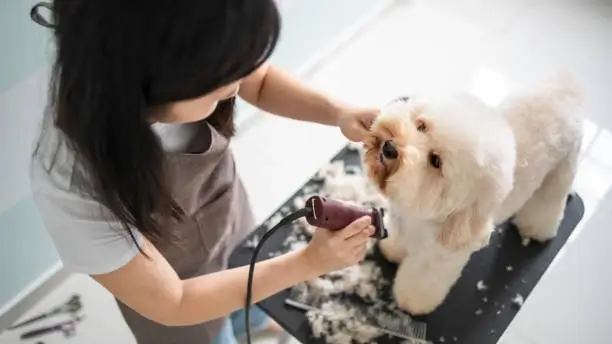
The evening segment of your Puppy Daily Routine serves two purposes: completing the day’s metabolic needs and lowering the puppy’s cortisol for sleep. A chaotic evening almost always leads to a restless night.
Mastering the Final Meal
Feeding timing is the most powerful tool for house-training. Puppies have a Gastrocolic Reflex, meaning eating often triggers the urge to eliminate within 15–30 minutes.
- The 7 PM Cut-off: Aim to feed the final meal at least 3 hours before bed. This ensures their digestive system has time to process the food while you are still awake to take them out.
- Portion Wisdom: Overfeeding at night can lead to midnight bowel movements. Keep the evening portion consistent and measured.
- The “Water Curfew”: To minimize 3 AM potty trips, consider picking up the water bowl 1.5–2 hours before final bedtime (unless your puppy is highly active or the weather is hot).
Gentle Engagement vs. Overstimulation
Many owners try to “exhaust” their puppy right before bed with intense fetch. In a professional Puppy Daily Routine, we do the opposite: we transition to low-arousal movement.
A slow, 10-minute sniff-walk around the block. This mental “news-reading” tires the brain more than physical sprinting.
Practice “Settle” or “Mat training.” Rewarding calm behavior in the evening teaches them that nighttime is for relaxation.
The Final Potty Protocol
Consistency here is what separates a house-trained puppy from one that has accidents. By making the final bathroom break a “non-event,” you prime them for sleep.
- The 15-Minute Rule: Take them out 15 minutes after dinner, and again right before they enter their crate for the night.
- Boring is Better: Use a leash even in a fenced yard. Do not play. This signals that this specific Puppy Daily Routine step is for utility, not fun.
- High-Value Reinforcement: A successful final potty trip should be rewarded quietly but generously to cement the habit.
Establishing these evening boundaries creates a predictable environment, significantly lowering separation anxiety and fostering long-term emotional stability.
Nighttime Mastery: Deep Sleep for Physical & Cognitive Growth
A puppy’s Puppy Daily Routine isn’t complete until the lights go out. Quality sleep is where the magic happens—it’s when the immune system strengthens and the brain consolidates everything learned during the day. Transitioning from “Active” to “Deep Sleep” requires more than just a crate; it requires a psychological shift.
Optimizing the “Den Instinct”
Puppies are biologically programmed to seek a safe, enclosed “den.” Setting up their sleeping area correctly is 90% of the battle against nighttime anxiety.
- Crate Placement: For new puppies, keeping the crate in your bedroom (at least for the first week) reduces the fear of isolation while maintaining the Puppy Daily Routine.
- Bedding Wisdom: Use snug, washable bedding. For teething puppies, ensure there are no loose threads or small parts they could swallow overnight.
- Sound & Light: Consider a white noise machine or a “Snuggle Puppy” (a toy with a simulated heartbeat) to mimic the comfort of their littermates.
The 20-Minute Bedtime Ritual
Consistency in the final moments of the day reinforces your puppy’s circadian rhythm. This ritual tells their nervous system: “The day is done; it is time to recover.”
Dim the lights and switch to a “whisper voice.” Avoid high-pitched “baby talk” which can trigger a second wind of energy.
Introduce a specific “night-only” plush toy. This becomes a powerful cue for sleep within your Puppy Daily Routine.
Handling Nighttime Awakenings
Most puppies under 4 months will wake once or twice for potty needs. How you respond determines whether this becomes a lifelong habit or a temporary phase.
- Keep it Boring: If they whine for a potty break, take them out on a leash, let them do their business, and put them back without play or extra treats.
- Whining vs. Urgency: Learn to distinguish between “I’m bored” whimpering and “I need to go” frantic scratching. Responding to every whimper reinforces barking as a tool to get attention.
- Data Adjustment: If they wake at 3 AM every night, try shifting the evening Puppy Daily Routine—specifically the “Water Curfew”—by 30 minutes.
Mastering the night is the final step in raising a healthy, confident dog. A well-rested puppy is a fast-learning puppy!
Weekend Flexibility: Adapting the Routine Without Breaking It
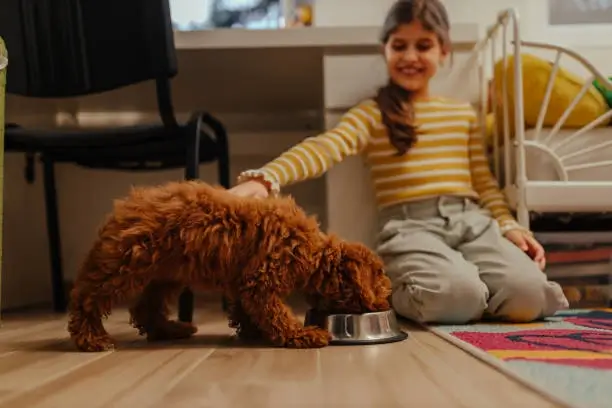
Life doesn’t always follow a 9-to-5 clock. While consistency is the bedrock of a Puppy Daily Routine, your puppy also needs to learn adaptive resilience. The goal is to maintain the “anchors” of the day (feeding and sleep) while safely introducing the variety that comes with weekends and travel.
Controlled Adventures: The 80/20 Rule
Avoid “Weekend Warrior Syndrome”—taking a sedentary puppy on a 3-hour hike on Saturday. This can lead to exhaustion and joint strain. Instead, follow the 80/20 rule: Keep 80% of the routine stable and use 20% for new experiences.
- Social Exposure: Use weekends to visit a pet-friendly cafe or a quiet park. The goal is “Neutrality”—teaching your puppy to be calm in new places, not just to play with everyone.
- Short Bursts: A 20-minute outing in a new environment is mentally equivalent to a 2-hour walk at home. Monitor for “Lip Licking” or “Yawning,” which are subtle signs of overstimulation.
Maintaining Nutritional Anchors
Travel and social events often disrupt meal times. To prevent digestive upset in your Puppy Daily Routine, treat feeding times as non-negotiable anchors.
Try not to shift meals by more than 60 minutes. If you are traveling, bring pre-measured portions to avoid the temptation of overfeeding.
New environments can cause “stress-diarrhea.” Stick to their regular food and avoid introducing new, rich treats during weekend trips.
Generalizing Training in the Real World
The weekend is the perfect time for Environmental Proofing. Can your puppy “Sit” at a busy park just as well as they do in your kitchen?
- Keep it Simple: Only ask for commands they have 100% mastered at home. Introducing a new, complex trick in a distracting park is a recipe for frustration.
- The “Watch Me” Command: Make this your weekend priority. It builds focus on you regardless of what’s happening in the environment.
- Reward Calmness: Sometimes the best training is just sitting on a bench and rewarding your puppy for doing… nothing. This reinforces the Puppy Daily Routine of being a well-adjusted companion.
Cognitive Resilience: Socialization & Enrichment
Socialization isn’t just a “bonus” in your Puppy Daily Routine; it is a developmental requirement. The window for social learning is short, and exposing your puppy to diverse stimuli now prevents a lifetime of fear-based reactivity.
Quality Over Quantity: Social Play
One bad experience can outweigh ten good ones. When arranging playdates, focus on the quality of interaction rather than the number of dogs met.
- The “Vaccination” Shield: Only permit play with dogs known to be fully vaccinated and socially stable.
- Bite Inhibition Training: Play is the primary way puppies learn “mouth pressure” control. If play gets too intense, use a “Time-out” in your Puppy Daily Routine to reset their arousal levels.
- Body Language Monitoring: Watch for the “Play Bow.” If one dog is constantly pinned down without a role reversal, intervene calmly to maintain a positive association.
Sensory Enrichment: Building a “Bomb-Proof” Dog
A “bomb-proof” dog is one that isn’t startled by the world. Use your Puppy Daily Routine to systematically introduce new textures and sounds.
Ditch the food bowl. Use snuffle mats or puzzle feeders. This forces the puppy to use their nose and brain, which is far more tiring than a 1-mile walk.
Play low-volume recordings of fireworks, thunder, or city traffic during meal times to create a positive “food + sound” link.
The Daily Health Audit
Because puppies can’t tell us when they feel unwell, your Puppy Daily Routine must include a 2-minute physical check. Early detection is the difference between a minor fix and an emergency vet visit.
🔍 The “Nose-to-Tail” Checklist:
⚠️ Document everything: Any deviation in appetite or energy should be logged immediately for your veterinarian.
The Health Audit: Integrating Wellness into Your Routine

A successful Puppy Daily Routine serves as an early warning system. Because puppies grow at an exponential rate, their health status can change in hours. By documenting daily vitals, you move from reactive care to proactive wellness management.
The 2-Minute Daily Body Scan
Incorporate a “Nose-to-Tail” inspection into your evening winding-down ritual. This not only detects issues early but also desensitizes your puppy to being handled—a critical skill for future grooming and vet visits.
- Hydration Check: Gently pinch the skin between the shoulder blades. If it snaps back instantly, they are well-hydrated.
- Gum Inspection: Gums should be bubblegum pink and moist. Pale or tacky gums require immediate veterinary attention.
- The “Lump & Bump” Audit: Run your hands over their coat to feel for ticks, burrs, or unusual swellings that may have occurred during afternoon play.
Veterinary Synergy & Preventive Care
Your Puppy Daily Routine should align with your veterinarian’s vaccination and parasite prevention schedule. Use these visits not just for shots, but as “Happy Visits” to build a positive association with the clinic.
Ensure the routine includes recovery time after core vaccines (DHPP, Rabies). Some puppies may be lethargic for 24 hours post-visit.
Note the dates for heartworm and flea/tick preventatives in your calendar to maintain a seamless protection cycle.
The Science of Growth: Monitoring Weight
Rapid growth is healthy, but excessive weight gain can strain developing joints, especially in large breeds. Integrate a weekly weigh-in into your Puppy Daily Routine.
Rather than just the number on the scale, look for the “Hourglass” shape. You should be able to feel their ribs easily under a thin layer of fat, but they shouldn’t be visibly protruding. Adjust your Puppy Daily Routine feeding portions if this silhouette disappears.
Consistency in care leads to a lifetime of health.
Safety Protocols: Protecting Your Growing Puppy
Puppies explore the world with their mouths. This natural curiosity makes safety an active, non-negotiable part of your Puppy Daily Routine. Proactive safety measures don’t just prevent accidents; they save lives and minimize high-cost emergency vet visits.
Tactical Puppy-Proofing
The “Puppy Eye Level” Rule: Get down on your hands and knees to see the world from their perspective. You’ll notice dangling cords, loose staples, or toxic plants hidden behind furniture.
- Cord Management: Puppies love the “chew-feel” of electrical cords. Use bitter sprays or protective cord covers to prevent electrocution.
- Chemical Lockdown: Cleaning supplies, laundry pods, and human medications must be stored in elevated cabinets or behind baby-proof latches.
- Kitchen Toxins: Be aware that common foods like grapes, raisins, onions, and chocolate are highly toxic. Ensure your Puppy Daily Routine includes keeping these out of reach.
Emergency Readiness: The 5-Minute Setup
In a crisis, every second counts. Your Puppy Daily Routine should include a monthly check of your emergency supplies.
Save the primary vet, the 24/7 emergency clinic, and the Animal Poison Control Center in your phone contacts under “EMERGENCY VET.”
Include sterile gauze, self-adhesive bandages, hydrogen peroxide (only under vet advice), and a digital thermometer in your puppy’s kit.
Outdoor Vigilance & Identification
Safety outside the home requires a balance of exploration and strict boundaries. Never trust a puppy’s “recall” (coming when called) until they are fully mature.
- The Double-ID Method: Always use a collar with a physical ID tag and ensure their microchip information is up to date in a national database.
- Thermal Safety: Puppies cannot regulate body temperature as well as adults. Check the pavement with your palm; if it’s too hot for you, it’s too hot for their paws.
- Environmental Hazards: Be wary of standing water (puddles) which can harbor Leptospirosis, a dangerous bacteria for unvaccinated puppies.
Safety is the silent foundation of a happy life. By integrating these habits, you ensure your puppy’s routine remains a joyful journey of discovery.
Psychological Growth: Training & Behavioral Framework

Training is not a 30-minute chore; it is a way of communicating that should be woven into every interaction of your Puppy Daily Routine. By focusing on positive reinforcement, you don’t just teach commands—bonds are built on trust rather than fear.
The Foundation: Core Obedience
A puppy’s brain is like a sponge, but it’s also easily exhausted. Use “Micro-Sessions” throughout the day to keep learning fun and effective.
- The “Big Four” Commands: Focus on Sit, Stay, Come, and Leave It. These aren’t just tricks; they are essential safety behaviors in your Puppy Daily Routine.
- Marker Training: Use a specific word (like “Yes!”) or a clicker at the exact moment your puppy performs the correct action. This “marks” the behavior for them.
- Generalization: Practice “Sit” in the kitchen, then the backyard, then the sidewalk. Dogs don’t naturally realize that “Sit” means the same thing everywhere until you show them.
Strategic Socialization: Beyond Dog Parks
Socialization is about exposure, not necessarily interaction. Your Puppy Daily Routine should aim for “Neutrality”—teaching your puppy to observe new things without overreacting.
Introduce them to umbrellas, people in hats, skateboards, and different floor textures (tile, carpet, metal grates).
Let them sniff a new person or dog for 3 seconds, then call them away. This prevents overstimulation and keeps interactions polite.
Problem Solving: Redirection vs. Punishment
Puppies don’t “misbehave” to be spiteful; they are simply being dogs. Effective behavioral management in your Puppy Daily Routine relies on Redirection.
- Chewing Management: If they chew a shoe, don’t just scold. Replace the shoe with a high-value chew toy and praise them when they bite the toy.
- Barking Audit: Identify the trigger. If it’s boredom, increase mental enrichment. If it’s fear, work on desensitization.
- Crate Confidence: Never use the crate as punishment. It should always be a high-value “safe zone” filled with treats and calm vibes.
The Ultimate Puppy Daily Routine Checklist
A structured routine is the fastest way to turn a chaotic house into a happy home. Use this quick-reference guide to stay on track throughout the day.
| Time of Day | Key Focus Areas |
|---|---|
| 🌅 Morning | Immediate potty break, hygiene check, breakfast, and a 10-minute training session while they are alert. |
| ☀️ Midday | Enforced nap (2-3 hours), socialization (new sounds/sights), and a small snack or meal. |
| 🌤️ Afternoon | Physical play (fetch/walk), obedience practice in new environments, and mental puzzles (puzzle feeders). |
| 🌆 Evening | Final meal, “Water Curfew” setup, gentle walk, and a digestive potty break. |
| 🌙 Nighttime | Dimming lights, white noise/comfort toy setup, and final calm potty break before crating. |
Frequently Asked Questions (FAQ)
How often should I feed my puppy?
Puppies under 6 months generally need 3–4 meals daily to prevent blood sugar drops. As they grow toward their first year, you can transition to 2–3 meals depending on their activity level and breed.
What if my puppy has accidents at night?
Nighttime accidents are usually caused by a late “Water Curfew” or an over-excited evening meal. Ensure the last potty break is as “boring” as possible to keep them in a sleep state.
How do I handle a “Weekend Warrior” schedule change?
Stick to the 80/20 Rule: keep 80% of the anchors (food/sleep) the same. If traveling, use pre-measured meals and portable crates to maintain a sense of security.
Pro-Tips for Lifelong Success
- Unity is Strength: Ensure every family member uses the same cues and timing. Confusion is the enemy of consistency.
- Patience is a Virtue: Behavioral development isn’t a straight line. Expect occasional setbacks as part of the Puppy Daily Routine.
- Reward the Silence: Don’t just reward “Sit” or “Stay”—reward your puppy when they are naturally being calm and quiet.
A Foundation for Life
Mastering the Puppy Daily Routine is a short-term investment for a long-term reward. By providing structure, health monitoring, and love, you aren’t just raising a dog—you’re building a bond that will last a lifetime.
Ready to dive deeper into care? Check out our Daily Dog Care Routines guide.
Find More Dog Care Guides
Continue exploring practical guides related to this topic.