
Persistent Nighttime Barking is rarely a simple act of defiance; it is a complex nocturnal vocalization triggered by environmental stressors, physiological needs, or a disruption in the canine circadian rhythm. When a dog barks during rest hours, they are communicating a state of neurological arousal that requires a systematic, clinical approach to resolve.
💡 The Sleep Stewardship Mandate: Effective resolution of nighttime disturbances begins with Root Cause Analysis. By transitioning from reactive “hushing” to proactive environmental engineering, you can restore a state of restorative sleep for both your household and your dog.
Throughout this professional guide, we decode the underlying triggers of nighttime distress. You will learn to differentiate between fear-based barking, attention-seeking behaviors, and age-related cognitive shifts, while implementing proven strategies to foster a calm sleep sanctuary.
“At PetCareCompass, we define Nighttime Barking as a physiological distress signal. Our objective is not to ‘silence’ the dog, but to address the arousal triggers at their source. A quiet night is the natural byproduct of a mentally satisfied and secure dog.”
— Maya Mai, Founder
Decoding the Narrative: What Nighttime Barking Really Means
In the canine lexicon, Nighttime Barking is rarely an act of random noise-making. Instead, it serves as a biological distress signal or an emotional release valve. When the house falls silent, your dog’s internal world becomes louder. This behavior is a direct manifestation of their physiological state—ranging from acute sensory overload to circadian anxiety. Solving the issue requires us to move beyond the sound and into the neurobiology of why it occurs.
The Diagnostic Split: Alert Barking vs. Nocturnal Distress
It is vital to differentiate between a functional “Alert” and a dysfunctional “Nocturnal Loop.” While both involve vocalization, their neurological origins are vastly different.
Triggered by specific external stimuli (a passing car, a neighbor’s gate). It is short-duration and characterized by an “Alert-Evaluate-Dismiss” cycle. Once the stimulus vanishes, the dog’s heart rate returns to baseline quickly.
Often lacks an obvious trigger. The dog may bark at shadows, “nothing,” or internal discomfort. This is often accompanied by pacing, panting, or repetitive whining, indicating a state of chronic hyper-arousal that prevents the dog from self-soothing.
The Sensory Shift: How Instincts Evolve After Dark
As light levels diminish, a dog’s sensory processing undergoes a tactical shift. Without the visual clutter of the daytime, their auditory and olfactory senses become the primary data streams. In a quiet house, the hum of a refrigerator or the settling of floorboards is amplified.
The Biological Trigger: Hyper-Vigilance
For dogs prone to anxiety, this heightened awareness triggers a state of hyper-vigilance. Their brain remains in the Sympathetic Nervous System (Fight or Flight) instead of transitioning to the Parasympathetic (Rest and Digest). This sensory “static” makes it impossible for the dog to fall into deep REM sleep, leading to a cycle of irritability and vocalization.
Why “Ignoring” Behavior Can Backfire
Common training advice often suggests “extinction”—ignoring the behavior until it stops. While effective for simple attention-seeking barking, applying this to fear-based or discomfort-based nighttime barking can be psychologically damaging.
- The Cortisol Spike: A dog barking from fear who is ignored will experience a massive spike in cortisol (the stress hormone). This reinforces the neural pathway that nighttime is a time of danger and isolation.
- Habitual Hardwiring: The longer a dog barks in a state of panic, the more “hardwired” the behavior becomes. It transforms from a reaction into a compulsive habit.
- Erosion of Trust: For social sleepers (like dogs), being left to “bark it out” can increase separation distress, making the problem worse the following night.
The Ripple Effect: Sleep Deprivation and Reactivity
Nighttime Barking is not just a nuisance; it is a health risk. Chronic sleep deprivation in dogs leads to cognitive decline and increased daytime reactivity. A dog that doesn’t sleep well at night is statistically more likely to react aggressively to stimuli during the day because their threshold for stress has been severely lowered.
Maya’s Master Tip: The “Timing” Diagnostic
“At PetCareCompass, we look at the timestamp of the bark. Barking that starts immediately after you leave the room is almost always Separation Anxiety. Barking that starts at 3 AM is often related to external noises or physiological needs (the need to potty). Barking in senior dogs that happens sporadically is a classic sign of Canine Cognitive Dysfunction (CCD). Listen to the clock—it’s giving you the answer.”
— Maya Mai, PetCareCompass Founder
Root Cause Analysis: Why Your Home Triggers Nighttime Barking
To eliminate Nighttime Barking, we must look beyond the symptom and perform a forensic audit of the dog’s internal and external environment. Canine behavior is a response to stimuli; when the household settles, the lack of primary stimulation (interaction) often forces the dog to focus on secondary, low-level stimuli that they would ignore during the day.
1. Follicular Energy & The “Static” Mind
A common misconception is that a physically tired dog is a sleeping dog. While physical exertion is necessary, mental depletion is the true key to nocturnal silence. Dogs that lack cognitive engagement during the day enter the evening in a state of neurological “static.”
- Unspent Working Drive: Intelligent breeds (Shepherds, Collies, Terriers) require a “job.” Without one, they will invent a job at 2 AM—usually “guarding” the house against invisible threats.
- The “Active-Rest” Paradox: Short, repetitive walks don’t challenge the brain. This leaves the olfactory bulb under-stimulated, causing the dog to remain hyper-vigilant to nighttime scents and sounds.
🔬 Maya’s Investigative Protocol: Crate-Induced Vocalization
“When a dog barks specifically in their crate at night, we must investigate the Spatial Association. Is the crate a ‘Safety Anchor’ or a ‘Stress Trigger’? If the barking is sudden, check for Thermal Discomfort or Negative Acoustic Reflection within the crate’s location. We don’t just ‘ignore’ crate barking; we audit the environment to ensure the dog’s Baseline Anxiety is neutralized before the lights go out.” — Maya Mai
2. Nocturnal Isolation & Separation Distress
For many dogs, the transition from evening social time to “bedtime” feels like a sudden social abandonment. Nighttime Barking in this context is a “contact call”—an instinctual attempt to reunite the pack.
This distress is often amplified by the spatial layout of the home. If the dog is relegated to a distant laundry room or kitchen, the physical barrier creates a psychological “vacuum.” The bark becomes a tool to bridge that distance, seeking a vocal response from the owner to confirm safety.
3. The Invisible Soundscape: Sensory Triggers
Human hearing is limited to approximately 20 kHz, whereas dogs can detect frequencies up to 45 kHz or higher. Sounds that we perceive as “silence” are often a cacophony of ultrasonic interference for our pets.
The high-pitched hum of a refrigerator, distant rodent activity in walls, or the expansion of water pipes during temperature shifts can trigger a startle response. In the quiet of night, these sounds have a higher signal-to-noise ratio, making them impossible to ignore.
Shadows from streetlights, the blue flicker of an air purifier’s LED, or reflections in a window can trigger visual reactivity. Dogs lack our ability to rationalize a “shadow” as just a car passing by; to them, it is a dynamic movement in their territory.
4. Circadian Rhythm Disruption: Routine Inconsistency
Biological clocks govern a dog’s internal chemistry, specifically the release of melatonin (the sleep hormone). When the bedtime routine is erratic—varying by hours or involving inconsistent pre-sleep activities—the dog’s brain fails to prepare for sleep.
The Biological Consequence: Cortisol Stacking
Without a predictable “wind-down” period, the dog remains in a state of Cortisol Stacking—where the stress hormones from the day have not had time to dissipate. This leads to restless sleep cycles where the dog is easily awoken by the slightest stimuli, resulting in frustrated, repetitive barking.
Maya’s Master Tip: Audit Your Dog’s Ears
“At PetCareCompass, I always tell clients: spend 10 minutes sitting in the dark where your dog sleeps. Don’t look at your phone. Just listen. You’ll be shocked by the ‘hidden’ noises—the buzzing of an old router, the drip of a faucet, or the neighbor’s AC. If it’s annoying to you, it’s deafening to your dog. Identifying these environmental ‘leaks’ is 50% of the solution to Nighttime Barking.”
— Maya Mai, PetCareCompass Founder
The Beginner’s Trap: Why Traditional Reactions Fuel Nighttime Barking

Emotional reactions from owners often provide the very engagement the dog is seeking, creating a self-sustaining barking loop.
For first-time owners, Nighttime Barking is often perceived as a problem to be “stopped” immediately, usually out of a desperate need for sleep. This reactive mindset leads to several behavioral fallacies that unknowingly strengthen the barking habit. To resolve nocturnal disturbances, we must transition from an emotional reflex to a strategic intervention based on canine psychology.
1. The Paradox of Scolding: Emotional Mirroring
When a dog barks at 3 AM, the human response is often loud, firm, and frustrated. While “No!” or “Quiet!” feels like a correction to the owner, to a dog, it is social barking. In the canine world, when one pack member vocalizes and another joins in with high energy (even in anger), it confirms that there is indeed something to be agitated about.
The Neurological Reality: Yelling increases the dog’s cortisol levels and triggers the Sympathetic Nervous System. This makes it physiologically impossible for the dog to settle down, as their body is now primed for an emergency rather than rest.
2. The “Slot Machine” Effect: Accidental Reinforcement
Beginners often struggle with intermittent reinforcement—the most powerful form of habit-building. If you ignore the bark for 30 minutes but finally give in and let the dog out, you haven’t “stopped” the bark; you have taught the dog that they simply need to bark for 30 minutes to achieve their goal.
Even negative attention (shouting) or neutral attention (eye contact/touch) can be a functional reward for a lonely dog. Any interaction effectively resets the dog’s “persistence clock.”
Letting a dog out of their crate or bedroom while they are vocalizing reinforces the “Bark to Exit” strategy. This creates a learned dependency on barking to change their environment.
3. Neglecting “Canine Sleep Hygiene” Protocols
Many beginners treat sleep as a passive event that “just happens.” In reality, healthy canine sleep is a skill that must be trained. Without a Sleep Hygiene Protocol, a dog never learns the difference between “Alert Hours” and “Restorative Hours.”
Elements of a Professional Sleep Audit:
- Sensory Neutralization: Beginners often leave dogs in environments with high visual or auditory “leakage” (e.g., windows without blackout curtains or silence that amplifies house noises).
- Bedtime Predictability: Inconsistent schedules prevent the melatonin-triggering response in the canine brain, leaving them in a state of twilight wakefulness.
- Location Management: Placing the dog’s sleep area too far from the owner can trigger ancestral isolation distress, especially in “velcro” breeds.
4. Viewing Nighttime Barking in Isolation
The most significant struggle for beginners is failing to see that nighttime behavior is a reflection of daytime management. Nighttime Barking is the “symptom,” but the “disease” is often a lack of mental enrichment, physical exercise, or general household structure.
As explored in our comprehensive guide to dog care at home, behavior is holistic. If a dog’s primary needs for safety and stimulation are met during the 16 hours of daylight, they are biologically primed to be quiet for the 8 hours of darkness.
Maya’s Master Tip: The “Neutrality” Rule
“At PetCareCompass, we teach the Neutrality Rule: Your dog should never feel that barking changes your emotional temperature. If you must go to your dog (for a potty break or safety check), do it like a ‘boring robot.’ No eye contact, no soothing talk, no anger. By being uninteresting, you remove the social reward of the bark, allowing them to return to a calm state much faster.”
— Maya Mai, PetCareCompass Founder
The Evening Wind-Down: Engineering a Sleep-Ready Nervous System
Reducing Nighttime Barking begins long before the lights go out. A dog’s nervous system requires a deliberate transition from the high-arousal state of daytime activity to the low-arousal state required for restorative sleep. This transition is governed by the circadian rhythm and the biological synthesis of melatonin. Without a structured evening routine, a dog may remain in a state of “vigilance,” where every creak of the house is perceived as a threat.
The 90-Minute Decompression Zone
Consistency is the most powerful anxiolytic (anxiety-reducer) for a dog. A predictable sequence of events lowers cortisol levels and signals the brain to begin the “settling” process.
A Professional Evening Sequence:
- T-90 Minutes: Cognitive Satiety. Engage in low-impact mental work, such as a snuffle mat or a slow-feed puzzle. This “burns” remaining mental energy without spiking physical adrenaline.
- T-60 Minutes: The Sensory Shift. Dim the household lights and reduce volume on televisions/radios. Visual and auditory cues are vital for biological synchronization.
- T-30 Minutes: The Last Opportunity. A calm, on-leash “boring” potty break. No play, no sniffing new trails—just a functional bio-break to ensure bladder comfort throughout the night.
- T-0 Minutes: The Settle Signal. Use a specific, low-frequency verbal cue paired with a high-value, long-lasting chew (like a stuffed kong) to encourage licking and chewing—behaviors that naturally release calming endorphins.
Behavioral Conditioning: Training the “Settle” Response
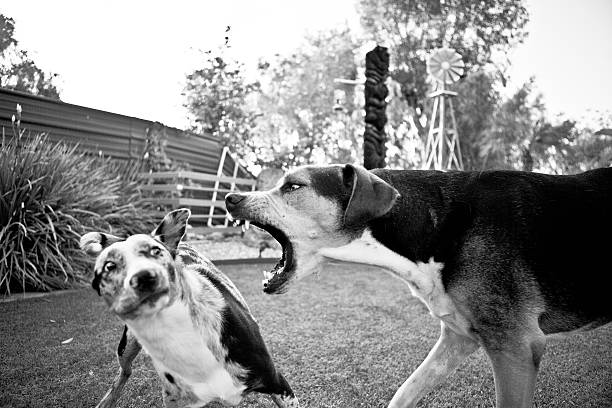
Training for nighttime peace focuses on emotional self-regulation rather than active command-following.
Nighttime training is distinct from daytime obedience. While daytime work focuses on action, nighttime work focuses on neutrality. You are teaching your dog that “nothing happening” is safe, predictable, and rewarding.
The Counter-Productivity of Aversive Correction
Applying punishment (shouting, spray bottles, or collar corrections) to Nighttime Barking is a critical error for beginners. Because nighttime barking is often rooted in fear or isolation, aversive corrections confirm the dog’s suspicion that the darkness is indeed a time of stress and conflict.
Behavioral Backfire: Aversives trigger Flashbulb Memories. The dog may stop barking briefly due to shock, but the underlying anxiety is magnified, leading to more intense vocalizations or destructive behaviors (like chewing the door frame) in the following nights.
Capturing Calm: The Science of Reinforcing Silence
To stop the bark, we must reward the absence of barking. This technique, known as “Capturing Calm,” involves marking and rewarding the dog when they choose to lie down and relax on their own.
Practice “Place” training or the “Settle” command in high-light, low-stress environments first. The dog must master the physiological state of relaxation before they can apply it in the dark.
For dogs with separation distress, use duration-based separation. Start with 1 minute of quiet behind a closed door, rewarding only when the dog is silent. Gradually build to hours over several weeks.
When Behavior Requires Clinical Intervention
If Nighttime Barking persists despite environmental optimization and consistent training, it may indicate an underlying medical issue or a severe anxiety disorder. Conditions like Canine Cognitive Dysfunction (CCD) in seniors or generalized anxiety require a multidisciplinary approach involving a veterinarian and a certified behaviorist.
Maya’s Master Tip: The “White Noise” Buffer
“At PetCareCompass, we recommend the Auditory Buffer strategy. If your dog barks at night sounds, a white noise machine or a fan placed near their bed can neutralize environmental ‘leakage.’ This provides a consistent auditory floor, making it harder for the dog to hear the distant triggers that usually spark a bark. It’s a simple environmental hack that supports your training efforts immediately.”
— Maya Mai, PetCareCompass Founder
The Sleep Sanctuary: Engineering the Ideal Nocturnal Environment
Environmental factors are the most common triggers for Nighttime Barking in beginner households. A dog’s nervous system is highly reactive to sensory “leakage”—subtle cues of light, sound, and temperature that we often ignore. By applying environmental engineering, we can neutralize these triggers, effectively lowering the dog’s state of vigilance and allowing them to enter deep, restorative sleep cycles.
1. Strategic Sleeping Geometry: Proximity vs. Stimulation
The physical location of your dog’s bed is a tactical decision. For dogs prone to separation distress, being relegated to a distant laundry room or kitchen creates a “social vacuum.” Conversely, sleeping in a hallway or near a front door places the dog in a “sentry position,” where they feel biologically obligated to guard the entrance.
The “Safe Zone” Audit:
- The Bedroom Compromise: For high-anxiety dogs, placing their bed inside the owner’s bedroom (but not on the bed) provides the necessary olfactory and auditory reassurance to prevent contact-seeking barking.
- Low-Traffic Corridors: Avoid placing crates near appliances that hum or kick on at night (fridges, HVAC units). These micro-vibrations can startle a dog in a light sleep phase.
2. Sensory Neutralization: Managing Light and Sound
Dogs have a higher density of rods in their retinas, making them exceptionally sensitive to movement in low light. Visual triggers—such as headlights sweeping across a wall or the blue flicker of an air purifier—can be misinterpreted as territorial intrusions.
Sudden noises (a car door slamming, a pipe knocking) have a high signal-to-noise ratio in a quiet house. A white noise machine or a dedicated canine relaxation frequency creates an “auditory floor” that masks these spikes, preventing the dog from being startled awake.
Utilizing blackout curtains or covering electronic LEDs removes visual static. For dogs that bark at “nothing” in the corner, total darkness or a very dim, warm-toned nightlight can prevent the brain from “filling in the blanks” with perceived threats.
03. Thermodynamic Stability: The Impact of Temperature
Discomfort is a primary driver of Nighttime Barking. If a dog is too hot or too cold, they will pace, whine, and eventually bark to seek relief. Dogs with thick double coats (Husksies, Shepherds) often bark because they are overheating on plush bedding.
Expert Tip: Ensure the sleeping area allows for postural adjustment. A dog should be able to move from a warm, cushioned surface to a cooler floor (like tile or a cooling mat) if they become thermically overloaded.
4. The Psychology of Containment: Crates vs. Open Space
The debate between crate training and open-space sleeping hinges on the individual dog’s “denning” instinct. A properly introduced crate serves as a neurological safety bunker—it physically limits the dog’s view of triggers and provides a confined, predictable space that lowers anxiety.
Reduces visual scanning, prevents pacing, and provides a clear boundary for rest. Covering the crate with a breathable fabric can further enhance the sensory deprivation effect.
For dogs with confinement anxiety, a designated “place” (like a bolster bed) with scent-anchoring (an unwashed t-shirt of the owner) can provide a similar psychological anchor.
Maya’s Master Tip: The “Scent Anchor” Strategy
“At PetCareCompass, we use Olfactory Anchoring to combat nighttime isolation. A dog’s sense of smell is their most powerful emotional tether. Placing a worn t-shirt inside their bed provides a constant, 24/7 signal that ‘the pack is here.’ This simple, zero-cost hack can reduce separation-based barking by up to 60% in high-attachment breeds. It’s not just a shirt; it’s an invisible safety blanket.”
— Maya Mai, PetCareCompass Founder
The Path to Silence: Permanent Strategies for Reducing Nighttime Barking
Achieving a permanent reduction in Nighttime Barking requires a shift from reactive management to proactive behavioral conditioning. Quick fixes, such as scolding or temporary distractions, fail because they do not address the underlying neurological state of the dog. To secure long-term results, we must implement a holistic protocol that reshapes the dog’s perception of the nighttime environment through consistency, biological fulfillment, and emotional self-regulation.
1. Mastering the Evening Wind-Down: Synchronizing the Internal Clock
Dogs are creatures of biological predictability. Their internal systems, including heart rate and hormone production, align with established routines. A permanent solution to nighttime disturbances begins with a Sleep Induction Routine that triggers the parasympathetic nervous system at the same time every evening.
The 3-Step Induction Sequence:
- Step 1: The Nutritional Trigger. Feeding a slightly larger portion of the daily ration or a protein-rich snack in the evening can encourage post-prandial somnolence (food-induced sleepiness).
- Step 2: The Olfactory Anchor. Engaging in a 5-minute “scent search” indoors provides mental exhaustion without physical adrenaline, lowering the arousal floor before crating or bedding.
- Step 3: The Auditory Signal. Consistently playing the same calming frequency or white noise signals to the brain that the “active” phase of the day has officially concluded.
2. Correcting the Energy Imbalance: Daytime Satiety
A primary cause of persistent Nighttime Barking is “Accumulated Arousal.” If a dog is under-stimulated during the day, they enter the night in a state of follicular energy surplus. Permanent quiet is achieved not by more exercise, but by higher-quality cognitive enrichment.
Achieving “Mental Satiety”:
Focus on low-impact foraging and problem-solving. A 15-minute snuffle mat session is equivalent to an hour of walking in terms of mental fatigue. By ensuring the dog’s “cognitive cup” is full, you reduce the likelihood of nocturnal hyper-vigilance where the dog seeks external stimulation through barking.
3. Environmental Hardening: Reducing External Triggers
Permanent behavior change requires an environment that supports success. Environmental Hardening involves removing the variables that spark the initial bark. If the dog cannot hear or see the trigger, the neural pathway for “Barking at Night” begins to weaken—a process known as Long-Term Depression (LTD) in neuroscience.
Utilizing blackout curtains or crate covers to remove visual stimuli from windows. Moving the bed away from “high-leakage” sound areas like shared walls or front doors prevents startle-response barking.
Monitoring the micro-climate of the sleeping area. A dog that is too warm will pace and vocalize. Providing breathable bedding and optimal airflow is a clinical requirement for sustained sleep.
4. Developing Emotional Resilience: The Self-Soothing Skillset
Self-soothing is the ability of a dog to transition from an aroused state back to a neutral state without human intervention. This is a muscle that must be trained during daylight hours before it can be relied upon during the night.
Independence Training Protocol:
- Gradual Desensitization: Practice “The 1-Minute Rule.” Leave the dog in their sleep area for 1 minute while you are in another room, rewarding only silence. Slowly increase this to 30 minutes over two weeks.
- Capturing Calm: Reward your dog whenever you catch them relaxing on their bed during the day. This builds a positive emotional association with the sleeping spot as a place of high-value rest.
- Licking & Chewing: Provide safe, edible chews during the evening wind-down. The mechanical action of licking lowers the heart rate and naturally induces a state of neurological calm.
Maya’s Master Tip: The “Success Tracker”
“At PetCareCompass, I remind owners that permanent change takes 21 to 30 days of absolute consistency. Use a simple habit tracker to log the evening routine and any barking episodes. You’ll likely see the intensity of the bark decrease before the frequency does. This data is vital—it shows you that the neural rewiring is working even on nights when it feels slow. Don’t give up on Day 10; your dog’s brain is just beginning to learn that ‘Quiet is the new normal’.”
— Maya Mai, PetCareCompass Founder
Beyond Behavior: When Nighttime Barking Signals a Medical Issue

Distinguishing between behavioral frustration and physiological distress is a critical duty for every pet owner.
While environmental optimization and training resolve the majority of cases, Nighttime Barking can occasionally serve as a diagnostic marker for systemic health issues. In these instances, the bark is not a behavioral “choice” but a vocalization of physical or cognitive distress. Identifying these red flags early can prevent long-term suffering and ensure your dog receives the appropriate clinical intervention.
1. Silent Pain and Physiological Disruption
Pain is often more acute at night when external distractions vanish. Dogs suffering from osteoarthritis, gastrointestinal reflux, or urinary tract infections may bark because they cannot find a comfortable resting position.
The Sudden Onset Rule: If an otherwise quiet dog suddenly begins Nighttime Barking without any change in environment or routine, skip the trainer and go straight to your veterinarian. This is frequently a cry for relief from nociceptive pain (physical pain) rather than an attention-seeking behavior.
2. Canine Cognitive Dysfunction (CCD) & Sun-Downing
For geriatric dogs, nighttime can be terrifying. Canine Cognitive Dysfunction (CCD), often compared to Alzheimer’s in humans, disrupts the sleep-wake cycle. Senior dogs may experience “Sun-Downing,” where they become disoriented, anxious, and vocalize specifically as the sun sets.
Support for these dogs involves sensory stabilization. Gentle nightlights, pheromone diffusers (like DAP), and maintaining a strict, unchanging spatial layout for their bed can reduce the “fog” of nighttime confusion and lower the frequency of distress barking.
Frequently Asked Questions
1. How to stop a dog from barking in their crate at night?
First, ensure the crate isn’t a source of Thermal Stress. Use Acoustic Masking (Brown Noise) to buffer hallway sounds and place an Olfactory Anchor (your scent) inside to lower Hyper-vigilance.
2. How to utilize Decompression Walks for sleep?
Replace high-arousal play with a 15-minute Decompression Walk. Sniffing activates the Parasympathetic Nervous System, achieving Cognitive Satiety and biological readiness for rest.
3. Why did my dog suddenly start barking at night?
Sudden barking is a Clinical Red Flag. It often indicates Acute Somatic Pain, changes in environment, or early Cognitive Dysfunction. A sudden shift requires a Diagnostic Audit immediately.
4. How to counter-condition hallway triggers?
Use Classical Counter-Conditioning: reward the dog before they react to simulated noises. This re-wires the stimulus from a threat to a reward, breaking the Reactive Barking Loop.
5. When should I ignore nighttime barking?
Only ignore barking if it is confirmed Demand-Based. If it’s Biological Urgency or Anxiety, ignoring it will escalate cortisol. Perform a Metabolic Audit first to rule out physical needs.
6. How to help a senior dog with Sundowning?
Use dim nightlights to reduce shadow-induced fear and maintain Routine Anchoring. This reduces Decision Fatigue and grounds their fading cognitive map for a peaceful night.
The Comprehensive Nighttime Prevention Audit
Daily Stewardship Checklist:
- Audit Cognitive Satiety: Did the dog solve at least one puzzle or scent game today?
- Protocol Check: Was the 90-minute evening wind-down routine followed exactly?
- Environmental Scan: Are blackout curtains closed and white noise machines active?
- Thermal Check: Is the room temperature optimized for your dog’s specific coat type?
- The Neutrality Rule: Am I prepared to respond with “robotic neutrality” if a bark occurs?
- Medical Screening: Are there any new signs of stiffness, excessive licking, or GI distress?
The Philosophy of Quiet Care
“At PetCareCompass, we believe every Nighttime Bark is a conversation. When you listen with empathy instead of frustration, you unlock the ability to truly heal the behavior. Restful nights are built on the foundation of trust, predictable routine, and a safe environment. You’re not just stopping a noise; you’re building a nocturnal bond of peace.”
— Maya Mai, PetCareCompass Founder
Find More Dog Care Guides
Continue exploring practical guides related to this topic.