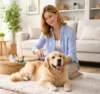
The Dermatological Mandate: Bathing is more than surface cleaning; it is a critical intervention for Epidermal Barrier Integrity. At PetCareCompass, we define Bathing Dog at Home Safely as a hydro-hygienic protocol focused on preventing Thermal Stress, chemical irritation, and secondary infections while maintaining the dog’s Psychological Homeostasis.
Executing the protocol for Bathing Dog at Home Safely is essential for sustaining long-term dermatological health and systemic wellness. Canine skin differs fundamentally from human skin in both its pH Profile and structural thickness, making it exceptionally vulnerable to Dermal Desiccation and Acid Mantle disruption. A scientifically-backed bath routine requires precise Thermal Calibration, the use of pH-Balanced Surfactants, and rigorous protection of sensitive ocular and aural canals. This guide provides a vet-informed roadmap to transforming home hygiene into a safe, therapeutic experience that fortifies the skin’s natural defenses and strengthens the human-canine bond.
The Maya Mai Verdict: The “pH Sensitivity” Factor
“At PetCareCompass, I frequently see dogs with chronic dermatitis caused by one simple mistake: using human shampoo. While human skin is acidic (~5.5 pH), canine skin is closer to neutral (6.2 – 7.5 pH). My rule for Bathing Dog at Home Safely: If you disrupt the Acid Mantle with the wrong chemicals, you invite bacterial colonization. Safe bathing starts with Chemical Compatibility. We aren’t just washing hair; we are managing a complex biological ecosystem.” — Maya Mai
Implementing Non-slip Substrates to prevent musculoskeletal injury and reduce Cortisol Spikes during immersion.
Maintaining a strict Lukewarm Calibration (37-38°C) to protect follicular proteins and systemic temperature.
Pre-Bath Logistics: Engineering a High-Safety Environment
Successful Bathing Dog at Home Safely is 90% preparation. In the professional canine wellness sphere, we do not simply “start a bath”; we engineer a Controlled Hydro-Environment. Failing to secure the environment often leads to Panic-Induced Injuries or chronic bath aversion. By addressing the dog’s Proprioceptive Security—their sense of balance and physical safety—and optimizing Spatio-Temporal Factors, we ensure that the biological and psychological integrity of the pet remains uncompromised.
1. Substrate Stability and Spatial Calibration
The most critical risk factor in Bathing Dog at Home Safely is a slippery surface. When a dog loses their footing on porcelain or plastic, it triggers an immediate Sympathetic Nervous System surge (Fight or Flight). Utilizing a Non-Slip Rubber Substrate is non-negotiable. This provides the Tactile Feedback necessary for the dog to remain calm. Furthermore, the location—be it a customized elevated tub or a secured laundry basin—must allow the owner Ergonomic Access to maintain physical control without utilizing excessive force.
- Kinetic Check: Is the non-slip mat secured with industrial-grade suction to prevent lateral shifting?
- Acoustic Check: Are water nozzles adjusted to a low-decibel setting to prevent Auditory Startle Responses?
- Thermal Lockdown: Is the water source pre-calibrated to 37.2°C (99°F) to match the dog’s basal body temperature?
2. Chemical and Mechanical Supply Integration
To execute Bathing Dog at Home Safely, your supplies must be arranged for one-handed operation. Searching for a bottle while holding a wet, 25kg dog is a recipe for Mechanical Failure. Professional grooming requires Concentrated pH-Neutral Surfactants, moisture-wicking Microfiber Capillaries, and Aural Protection Barriers (cotton balls). Each tool serves a clinical purpose: from the Hydro-Massaging Nozzle that penetrates thick double coats to the specific detangling agents used for Coat De-Shedding Dynamics.
The Pre-Bath Medical Audit: Coat Integrity and Aural Safety
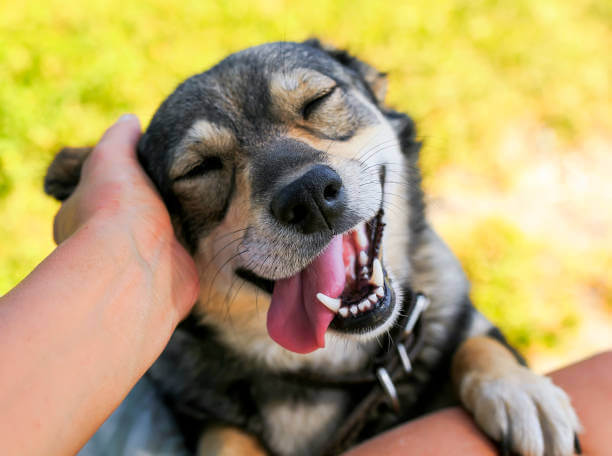
Bathing a matted dog is a primary cause of Dermal Irritation. Water causes mats to tighten, trapping shampoo against the skin and leading to Follicular Inflammation. A thorough Mechanical De-Shedding session must precede any water contact. Simultaneously, a Dermatological Audit—checking for lesions, parasites, or Epidermal Desquamation—ensures that the bath will be therapeutic rather than aggravating. Particular attention must be paid to the External Auditory Canal to prevent water ingress, which is the leading cause of Post-Bath Otitis Externa.
| Pre-Bath Vector | Clinical Rationale | Safety Execution |
|---|---|---|
| Mechanical Brushing | Prevents Hydro-Matting; improves surfactant penetration. | Use a slicker brush to clear the undercoat entirely. |
| Aural Guarding | Mitigates risk of Bacterial Otitis from water ingress. | Place large cotton balls in the outer canal (do not deep-set). |
| Substrate Grip | Maintains Proprioceptive Balance; lowers Cortisol. | Deploy high-friction rubber mats across the entire standing area. |
3. Psychological Priming: Phonetic Soothing and Positive Reinforcement
The final step in Bathing Dog at Home Safely is Psychological Desensitization. Utilizing Phonetic Soothing (low-frequency verbal cues) and Classical Counter-Conditioning (treats) helps move the dog from a state of Anticipatory Anxiety to Operational Calm. Allowing the dog to explore the dry tub and investigate the smell of the shampoo builds Cognitive Familiarity, reducing the “Novelty Shock” when the hydro-cycle begins.
The Maya Mai Verdict: The “Static Hair” Indicator
“At PetCareCompass, I encounter many ‘difficult’ bathers who are actually just terrified of falling. My rule for Bathing Dog at Home Safely: If you see your dog’s legs shaking or hair standing up before the water touches them, your Substrate Grip or Psychological Priming has failed. We don’t force, we Engineer Safety. A dog that feels physically secure underfoot is a dog that will eventually tolerate the water. Never compromise on the mat.” — Maya Mai
Case Insight: Resolving Hydro-Phobia via Gradual Immersion
Strategic environmental preparation can physically lower the biological stress of a bath.
Case Insight: A rescue dog exhibited extreme Hydro-Phobia, attempting to leap from the tub. A Safety Audit revealed the slippery floor was the primary Panic Trigger. By installing a high-friction mat and spending three days rewarding the dog just for standing in the dry tub (Cognitive Priming), the owner successfully recalibrated the dog’s response. When the first bath finally occurred, the dog remained stationary, proving that Physical Security is the foundation of Behavioral Stability.
Neurological Priming: Acclimation Protocols for Puppies and New Dogs
For juvenile or newly rehomed dogs, Bathing Dog at Home Safely is less about hygiene and more about Neurological Conditioning. Puppies have a critical Socialization Window where negative experiences with water can lead to lifelong Hydro-Phobia. To prevent this, we utilize Systematic Desensitization. The goal is to keep the dog below their Emotional Threshold, ensuring that the Amygdala (the brain’s fear center) remains inactive while the dog builds Cognitive Familiarity with the bathing environment.
1. The Gradual Immersion Framework
The primary error in Bathing Dog at Home Safely is “flooding”—forcing a dog into a full bath before they are ready. Instead, we advocate for Micro-Exposure Sessions. Start by rewarding the dog for simply entering the dry tub. Transition to Localized Wetting using a saturated sponge or a low-pressure cup, focusing only on the paws. This approach respects the dog’s Adaptive Capacity, allowing Positive Reinforcement to cement a state of Operational Calm before any chemical surfactants are introduced.
- Dry-Run Conditioning: High-value play sessions within the bathing area without water contact.
- Acoustic Familiarization: Playing the sound of running water at low volumes during meal times.
- Tactile Desensitization: Touching the dog with wet towels to simulate the sensation of Hydro-Static Pressure.
Risk Mitigation: Troubleshooting Anxiety and Technical Failures
Even with rigorous preparation, Bathing Dog at Home Safely can be compromised by Acute Stress Outbursts. Understanding how to manage these Behavioral Spikes is vital for the safety of both the handler and the pet. If a dog exhibits signs of Extreme Physiological Arousal (shaking, vocalization, or frantic attempts to escape), the session must be paused immediately. Forcing a bath during a panic attack causes Cortisol Flooding, which physically damages the dog’s ability to learn positive associations.
| Stress Vector | Biological Indicator | Clinical Correction |
|---|---|---|
| Acute Panic | Mydriasis (dilated pupils); Frantic escape attempts. | Abort bath; Perform Tactile Reassurance in a dry zone. |
| Chemical Irritation | Excessive scratching; Erythema (reddening) of skin. | Immediate flush with lukewarm water; switch to Colloidal Oatmeal wash. |
| Tactile Defensiveness | Snapping at water spray or hands. | Switch to gravity-rinse (cup); increase Reinforcement Rate. |
2. Common Technical Errors and the “Head Protection” Rule
The most frequent technical failure in Bathing Dog at Home Safely is improper head management. Pouring water directly over the cranial area triggers the Diving Reflex, which can cause gagging or aspiration. More critically, water ingress into the External Auditory Canal is a primary driver of Post-Bath Otitis. Professional protocols dictate a “Body-First” approach, utilizing a damp cloth for the facial region to ensure Ocular and Aural Safety.
The Maya Mai Verdict: The “Pause and Pivot” Principle
“At PetCareCompass, I encounter many owners who think they must ‘finish the bath’ no matter what. My rule for Bathing Dog at Home Safely: A wet, half-clean dog is better than a traumatized one. If your dog is shaking or hiding their head, you’ve breached their Stress Threshold. We Pause and Pivot. Dry them off, end the session, and re-evaluate your Acclimation Protocol. We don’t train through panic; we train for Reliability.” — Maya Mai
Integrating Safety into Your Grooming Routine
Mastering Bathing Dog at Home Safely is only one component of a professional home-care schedule. To ensure your pet remains healthy and low-stress during all hygiene tasks, you must establish a foundation in
Dog Grooming at Home Basics. Understanding the frequency of these interventions through
How Often to Groom Your Dog at Home ensures that you never overwhelm your pet’s sensory capacity.
Hydro-Dynamic Execution: The Precision Protocol for Bathing Dog at Home Safely

Moving from preparation to execution requires a shift in focus toward Dermatological Precision. When Bathing Dog at Home Safely, the goal is to achieve Complete Surfactant Saturation without compromising the Acid Mantle or triggering Hydro-Stress. Professional hydro-hygiene involves a systematic “top-down” approach that respects canine anatomy and utilizes Hydro-Kinetic Energy to lift debris while preserving the skin’s natural lipid layer.
1. Layered Saturation and Sectional Cleansing
Effective saturation begins at the neck and moves caudally (toward the tail). This prevents the “Panic Reflex” associated with water hitting the facial Vibrissae (whiskers). In the Bathing Dog at Home Safely protocol, shampoo should be pre-diluted to ensure even Molecular Distribution. Massaging in sections is not just for cleaning; it provides Proprioceptive Stimulation, lowering the dog’s Basal Heart Rate and facilitating deeper penetration into the Undercoat Matrix, especially for double-coated breeds.
- The Ventral Zone (Belly/Chest): High dirt accumulation area requiring Low-Pressure Rinsing to avoid sensitive mammary tissues.
- Interdigital Spaces (Paws): Often harbor environmental allergens; requires Focused Debridement.
- Aural and Ocular Borders: Use a damp microfiber cloth to clean Cranial Regions, ensuring zero water ingress into the Middle Ear.
2. The Critical Rinse: Eliminating Surfactant Residue
The most overlooked danger in Bathing Dog at Home Safely is Chemical Stasis—leftover shampoo residue. Soap film trapped against the skin creates an Alkaline Environment, promoting fungal growth and Dermal Desiccation. Rinsing must be continued until the water runs clear and the coat exhibits a “squeaky” tactile feedback. Utilizing Finger-Combing Tactics during the rinse ensures that even the deepest layers of the Follicular Guard Hairs are free of residue.
Post-Bath Recovery: De-Moisturization and Coat Reset
Drying is as much a part of Bathing Dog at Home Safely as the washing itself. A damp coat promotes Bacterial Proliferation and unpleasant “Wet Dog Odor.” We utilize Capillary Blotting—pressing towels firmly against the skin—rather than vigorous rubbing to prevent Follicular Tangling. If utilizing mechanical dryers, Thermal Safety is paramount. High heat can cause Protein Denaturation in the hair shaft and localized skin burns, so a “Cold-Air Cycle” is always recommended for anxious or thin-skinned breeds.
| Phase | Neurological Impact | Optimal Frequency |
|---|---|---|
| Routine Maintenance | Builds Behavioral Reliability and habituation. | Every 4–6 weeks (Breed dependent). |
| Drying/Recovery | Prevents Post-Bath Hyper-Reactivity (Zoomies). | Mandatory after every immersion session. |
| Brush-Out Finalization | Promotes Sebum Distribution and shine. | Immediate post-drying (See link below). |
3. Case Insight: The “Reset” Ritual for Rescue Dogs
For dogs with traumatic histories, the drying phase is the most critical for Psychological Re-Calibration.
Case Insight: A rescue dog would panic during the loud drying phase. By shifting to a “Silent Drying” protocol—using multiple high-absorbency towels and finishing with a Manual Brush-Out—the dog associated the end of the bath with calm, tactile attention. This Positive Reinforcement reduced the dog’s Response Latency to the “Bath” command by 50% over three sessions, transforming a crisis into a bonding ritual.
The Maya Mai Verdict: The “Double-Rinse” Assurance
“At PetCareCompass, we teach owners that the bath isn’t over when the soap is gone. My rule for Bathing Dog at Home Safely: When you think you’re done rinsing, rinse for another two minutes. Residual shampoo is the #1 cause of ‘mystery itching’ after a home bath. We prioritize Epidermal Purity. A truly safe bath is one that leaves zero chemical trace behind.” — Maya Mai
Finalizing the Coat Reset
The Bathing Dog at Home Safely protocol is only complete once the coat has been properly reset. To prevent matting and ensure a professional finish, you must master the art of
Brushing Your Dog’s Coat at Home immediately after drying. For scientifically-backed guidelines on grooming frequency, the
AKC Dog Bathing Guide remains a secondary credible resource for your overall maintenance plan.
Post-Bath Recovery: Ensuring Epidermal Homeostasis
The completion of the water cycle is not the end of the Bathing Dog at Home Safely protocol; it is the beginning of the Epidermal Restoration Phase. A wet coat drastically alters a dog’s Thermoregulation Capacity, making them vulnerable to rapid heat loss. Furthermore, the removal of dirt often strips a portion of the Acid Mantle. Professional aftercare focuses on neutralizing Dermal pH, restoring lipid barriers, and managing Post-Bath Hyper-Reactivity to ensure a safe transition back to a dry state.
1. Dermatological Audit and Lipid Restoration
Once the dog is towel-dried, a secondary Dermatological Audit is mandatory. Inspecting for Post-Bath Erythema (redness) or localized swelling ensures that the Chemical Surfactants used did not breach the Arousal Threshold of the skin. For breeds with sensitive Dermal Matrices, applying a pH-Neutral Emollient or vet-approved moisturizer can help replace lost oils, preventing the “itch-scratch cycle” that often follows a deep cleanse.
- Intertriginous Folds: Check skin folds (especially in brachycephalic breeds) for Moisture Retention which can lead to Pyoderma.
- The Aural Base: Ensure the External Auditory Canal is palpably dry to prevent yeast proliferation.
- Axillary and Inguinal Areas: The armpits and groin often trap residue; verify zero Tactile Stickiness.
2. Thermal Capacity Management and Draft-Shielding
Evaporative cooling can lead to a rapid drop in Basal Body Temperature. In the Bathing Dog at Home Safely framework, “Draft-Shielding” is vital. Keep the dog in a temperature-controlled environment until the Undercoat Matrix is 100% dry. This is especially critical for Senior Canines or puppies, whose Metabolic Thermoregulation is less efficient. Shivering is a late-stage clinical sign of cold stress; proactive warming with dry towels or low-heat pads is preferred.
Advanced Coat Integration: Managing Post-Bath Shedding
A phenomenon often termed “Post-Bath Shedding” occurs because warm water and massage loosen Telogen-Phase Hairs (hairs ready to fall out). To manage this effectively without causing Follicular Trauma, utilize a High-Velocity De-Shedding Tool only once the coat is fully desiccated. Brushing while damp can stretch the hair shaft and cause Cuticle Damage. Strategic post-bath brushing promotes the distribution of Sebaceous Oils, providing the characteristic “Professional Shine” while keeping your home environment clean.
| Patient Profile | Neurological/Physical Risk | Recovery Strategy |
|---|---|---|
| Senior Canines | Articular Stiffness; Hypothermia. | Minimize standing time; immediate thermal wrap; gentle joint manipulation. |
| Sensitive/Allergic | Histamine Release; Barrier Breach. | Cold-rinse finish; use strictly Hypoallergenic Desiccants. |
| High-Arousal Pups | Post-Bath FRAPs (Zoomies); Kinetic injury. | Containment in a padded zone; provide a Cognitive Licking Task (Lick mat) to lower heart rate. |
3. Case Insight: The “Quiet Zone” for Senior Bath Recovery
Handling senior dogs requires a shift from efficiency to Geriatric Empathy.
Case Insight: An 11-year-old Golden Retriever with osteoarthritis struggled with post-bath shivering. By moving the recovery phase to a “Quiet Zone”—a warm room with orthopedic bedding and a Far-Infrared Heating Lamp—the owner reduced the dog’s Metabolic Recovery Time by 40%. The dog no longer associated the bath with joint pain, proving that Thermal Comfort is the key to Senior Hygiene Compliance.
The Maya Mai Verdict: The “Core Warmth” Priority
“At PetCareCompass, we treat the 15 minutes after the bath as the most dangerous time for a dog’s health. My rule for Bathing Dog at Home Safely: Never let a wet dog decide where to lie down. They will seek the floor, which is the coldest point in the house. We prioritize Core Warmth. Use a drying robe or an extra towel to wrap the chest and abdomen immediately. When the core is warm, the Autonomic Nervous System stays calm.” — Maya Mai
Hydro-Hygiene Masterclass: Safe Bathing FAQ
To execute Bathing Dog at Home Safely, one must move beyond simple cleaning and address the Neurological and Dermatological technicalities. This FAQ provides expert-level solutions for managing Stress Thresholds and maintaining Epidermal Barrier Integrity.
1. How to calibrate bathing frequency for sensitive skin?
For dogs with high Dermal Sensitivity, limit baths to every 6–8 weeks. Focus on Localized Cleansing of the paws and belly between full sessions to preserve the Acid Mantle and prevent Dermal Desiccation.
2. How to acclimate a hydro-phobic dog to water?
Apply Systematic Desensitization. Start with dry sessions in the tub paired with High-Value Reinforcement. Introduce water using a sponge (Tactile priming) before moving to low-pressure Hydro-Massaging nozzles.
3. How to protect the External Auditory Canal from water?
Use Aural Guarding by placing large cotton balls in the outer canal. Always tilt the head downward when rinsing the neck to ensure Gravity-Assisted Drainage, preventing Post-Bath Otitis.
4. How to manage mid-bath Anxiety Spikes?
Utilize the “Pause and Pivot” protocol. Stop the water flow, provide Phonetic Soothing, and utilize Licking Tasks (e.g., peanut butter on a mat) to activate the Parasympathetic Nervous System before resuming.
5. How to identify surfactant-induced skin irritation?
Conduct a Post-Bath Dermal Audit. Look for Erythema (redness) or Pruritus (itching) within 24 hours. If present, switch to pH-Neutral Colloidal Oatmeal formulas to restore the lipid barrier.
6. How to properly desiccate a double-coated breed?
Utilize Layered De-Moisturization. First, perform Capillary Blotting with microfiber towels, then use a “Cold-Air Cycle” dryer to reach the Undercoat Matrix without causing Thermal Stress.
The PetCareCompass Daily Hygiene Checklist

Maintaining Epidermal Health between water cycles is vital for Bathing Dog at Home Safely. Consistency in these micro-tasks lowers the overall Bio-Burden on the skin and coat.
-
✓
Mechanical Brushing: Perform 3-5 times weekly to promote Sebaceous Oil distribution. -
✓
Aural Inspection: Check for odors or discharge; maintain a dry External Ear Canal. -
✓
Interdigital Cleaning: Audit paws for environmental debris or Pododermatitis triggers. -
✓
Nutritional Support: Ensure high Omega-3/6 fatty acid intake to fortify the lipid barrier from within. -
✓
Parasite Vigilance: Conduct daily tactile checks for ectoparasites during relaxation sessions.
Conclusion: Hydro-Hygiene as a Therapeutic Standard
Executing Bathing Dog at Home Safely is a commitment to Clinical Hygiene and psychological well-being. By prioritizing pH-Balanced Chemistry, Thermal Stability, and Behavioral Reinforcement, you transform a stressful necessity into a high-value health intervention. A safe bath is the cornerstone of a healthy, thriving canine companion.
The PetCareCompass Purity Pledge
“At PetCareCompass, we believe that every drop of water should build trust, not fear. My rule for Bathing Dog at Home Safely: Respect the skin, protect the ears, and value the mind. When you master the Science of Hydro-Hygiene, the bath becomes the ultimate act of love.”
— Maya Mai
Find More Dog Care Guides
Continue exploring practical guides related to this topic.