
The Training Mandate: Sustainable behavior modification is not about compliance through fear; it is about utilizing Positive Reinforcement Techniques to engineer Neural Pathways. At PetCareCompass, we define training as a systematic application of Operant Conditioning, where desired responses are fortified through Dopamine-Regulated Reinforcement to achieve long-term Behavioral Fluency.
Implementing Positive Reinforcement Techniques is the most effective and ethically sound approach to canine education. Rooted in the science of Behavioral Psychology, this method focuses on rewarding desired actions to increase their frequency. By moving away from aversive corrections and toward a Reward-Based Framework, owners can effectively manage everything from foundational cues to complex behavioral challenges. This guide provides a vet-informed roadmap to mastering Marker Training and Successive Approximation, ensuring your dog remains motivated, confident, and eager to learn.
The Maya Mai Verdict: The “0.5-Second Window” Protocol
“At PetCareCompass, I encounter many owners who struggle because their Reinforcement Timing is off. My rule for Positive Reinforcement Techniques: You have a critical 0.5-second window to mark a behavior. If you miss that mark, you aren’t training the command; you’re training the silence that followed it. We don’t reward for ‘eventual’ obedience; we reinforce for Precision and Immediacy. Mastering the marker is mastering the mind.” — Maya Mai
Utilizing Marker Training (Clickers/Verbal) to isolate specific actions with surgical accuracy.
Matching High-Value Reinforcers to environmental difficulty levels to maintain focus and engagement.
The Biological Engine: How Positive Reinforcement Techniques Shape the Canine Mind
To master Positive Reinforcement Techniques, one must first comprehend the underlying mechanics of Operant Conditioning. At its core, this method is based on Thorndike’s Law of Effect, which states that behaviors followed by satisfying consequences are more likely to be repeated. In the canine brain, this translates to Cognitive Association: the dog links a specific motor action (the behavior) with a positive neuro-chemical surge (the reward). Unlike aversive methods that trigger Cortisol Spikes and “freeze” responses, positive reinforcement fosters a state of Optimal Arousal, encouraging the dog to actively “problem-solve” to earn a reward.
1. The Neurological Loop: Action, Marker, and Reinforcement
The efficacy of Positive Reinforcement Techniques relies on a three-part neurological loop. First is the Antecedent (your cue), followed by the Behavior, and finalized by the Consequence (the reward). When this loop is executed with precision, it triggers a Dopamine Release in the dog’s nucleus accumbens, creating a powerful motivation to repeat the cycle. Over time, these repetitions build Neural Pathways that turn a conscious effort into a Fluent Behavioral Response.
- Continuous Reinforcement: Essential for the “Acquisition Phase” where every correct response is rewarded to establish the initial association.
- Variable Reinforcement Schedules: Shifting to an unpredictable reward pattern to build Behavioral Resilience and prevent “reward dependency.”
- Secondary Reinforcers: Utilizing conditioned stimuli like a Clicker or a verbal “Yes!” to bridge the gap between action and primary reward.
2. Strategic Implementation: Avoiding Technical Failures
Even the most well-intentioned Positive Reinforcement Techniques can fail due to poor execution. The most common pitfall is Temporal Ambiguity—a delay in the reward that allows a secondary, undesired behavior to be reinforced instead. Furthermore, failing to account for Environmental Distractions can lead to “learned helplessness” if the dog feels it cannot succeed. A professional training architecture requires the owner to manage Criteria and Rate of Reinforcement with clinical precision to maintain the dog’s focus and confidence.
| Technical Failure | Psychological Impact | Corrective Pivot |
|---|---|---|
| Latency in Reward | Misassociation; training the “wrong” action. | Utilize a Conditioned Marker (Clicker) for instant feedback. |
| Reward Devaluation | Loss of motivation; satiation. | Rotate High-Value Reinforcers and adjust meal portions. |
| Lumping Criteria | Frustration; behavioral “shutdown.” | Apply Shaping (Successive Approximation) to break tasks into micros-steps. |
3. Long-Term Dividends: The Bond of Trust
The primary benefit of Positive Reinforcement Techniques is the development of a Cognitive Partnership. Unlike coercion, which breeds avoidance, reward-based training encourages the dog to “offer” behaviors, fostering a state of Self-Directed Obedience. This reduces chronic stress markers and improves the dog’s Adaptive Capacity in new environments. By focusing on success rather than the correction of errors, we build a psychological foundation of Safety and Predictability.
The Maya Mai Verdict: The “Yes” vs. “No” Ratio
“At PetCareCompass, I encounter many dogs labeled as ‘stubborn’ who are actually just confused. My rule for Positive Reinforcement Techniques: If you aren’t saying ‘Yes’ (marking a success) at least 80% of the time, your criteria are too high. We don’t train for perfection; we train for Engagement. When a dog knows that every ‘Yes’ leads to a reward, they stop worrying about being wrong and start focusing on how to be right. That shift in mindset is where true transformation happens.” — Maya Mai
Case Insight: Overcoming “Cue Callousness” via Marker Precision
Using precise markers can physically restore a dog’s interest in previously “ignored” commands.
Case Insight: A dog had developed “Cue Callousness” to the command Come, ignoring the owner until a treat was visible. By implementing Positive Reinforcement Techniques—specifically Marker Training—the owner began clicking at the exact moment the dog oriented its head toward them. By shifting from “bribing” to “marking and reinforcing,” the dog’s Response Latency decreased by 70% in two weeks, proving that Timing is the ultimate reinforcer.
The Reward Economy: Stratifying Positive Reinforcement Techniques
In the architecture of Positive Reinforcement Techniques, the selection of a Primary Reinforcer (something the dog inherently wants) is not a static choice. It is a dynamic “Reward Economy” where the value of a treat or toy fluctuates based on Environmental Distraction Levels and the dog’s current Satiety Level. To maintain high Cognitive Engagement, an owner must match the “paycheck” to the difficulty of the task. Utilizing a Reinforcement Hierarchy ensures that the dog remains motivated even in high-stress or novel environments, preventing the common failure of “reward fatigue.”
1. Food Kinetics: Managing High-Value vs. Low-Value Reinforcers
Food is the most efficient primary reinforcer due to its ease of delivery and high biological drive. However, professional Positive Reinforcement Techniques require the stratification of food rewards. “Low-value” kibble may suffice for foundational work in a sterile home environment, but “High-value” proteins (liver, chicken, or cheese) are necessary for Counter-Conditioning during high-distraction walks. Managing Bite-Sized Efficiency—ensuring the treat is consumed in under 2 seconds—is vital to maintaining the Training Momentum and preventing the dog from losing focus during mastication.
- Tier 1 (High Distraction): Real proteins (chicken/steak). Used for recall or Desensitization to external triggers.
- Tier 2 (New Learning): Semi-moist commercial treats. Used for teaching new Complex Chains of behavior.
- Tier 3 (Maintenance): Standard kibble or verbal praise. Used for Behavioral Fluency in familiar, low-distraction zones.
2. Non-Food Reinforcement: Harnessing Social and Kinetic Drive
For dogs with low food-motivation or high Predatory Drive, play-based Positive Reinforcement Techniques are superior. A brief game of tug or a ball toss functions as a powerful Functional Reinforcer. The key is to manage the Arousal State; a play reward increases heart rate and excitement, which can be useful for high-speed tasks like recall but may hinder focused tasks like a long “stay.” Integrating Social Reinforcers (verbal praise and physical touch) creates a Secondary Reinforcement Bridge, eventually allowing the owner to fade out food while maintaining the dog’s Behavioral Reliability.
Temporal Precision: Mastering the Marker Window

The difference between a “good” trainer and a “master” of Positive Reinforcement Techniques lies in Marker Precision. The human-to-canine communication gap is bridged by the Conditioned Reinforcer (the marker). Whether using a Clicker or a sharp verbal “Yes!”, the marker identifies the exact moment the Target Behavior occurred. This creates Cognitive Clarity for the dog, isolating the successful action from the “noise” of surrounding movements. Without a marker, the dog may misassociate the reward with a secondary action, such as jumping up after a successful sit.
| Training Stage | Reinforcement Schedule | Neurological Goal |
|---|---|---|
| Acquisition | Continuous (1:1 ratio). | Establishing the Initial Synaptic Link between cue and action. |
| Fluency | Variable Ratio (Randomized). | Creating Behavioral Resilience and persistence. |
| Generalization | Intermittent + High-Value. | Ensuring Contextual Transfer across different environments. |
3. The Variable Reinforcement Shift: Preventing Extinction
A common error in Positive Reinforcement Techniques is remaining on a continuous schedule for too long. Once a behavior is fluent, Intermittent Reinforcement must be introduced. Much like a slot machine, the unpredictability of the reward increases Dopamine Spikes and makes the behavior more resistant to Extinction. By gradually moving from “Treat every time” to “Treat sometimes + Always praise,” the dog learns to perform reliably even in the absence of a visible food bribe.
The Maya Mai Verdict: The “Slot Machine” Principle
“At PetCareCompass, I encounter owners who feel like they are ‘bribing’ their dogs. My rule for Positive Reinforcement Techniques: A bribe is shown *before* the behavior; a reward is marked *after* the behavior. If your dog only sits when they see the cookie, you aren’t training—you’re negotiating. We use the Slot Machine Principle: once the dog knows the ‘how’, we randomize the ‘when’. This keeps the Cognitive Engagement high and turns a simple command into a permanent Behavioral Asset.” — Maya Mai
Case Insight: Neutralizing “Bribe Dependency” via Hidden Rewards
Shifting to intermittent schedules can physically strengthen a dog’s commitment to a command.
Case Insight: A dog would only perform a “Down” if the owner had a treat in their hand. By utilizing Positive Reinforcement Techniques—specifically Variable Ratio Reinforcement—the owner began marking the “Down” with a clicker and then retrieving a treat from a nearby bowl. By removing the treat from the dog’s immediate line of sight and randomizing the frequency, the dog’s Response Reliability improved even when the owner’s hands were empty. This proved that Expectation beats Visibility in long-term learning.
Precision Training: Applying Positive Reinforcement Techniques to Core Commands
The transition from basic cues to Behavioral Fluency requires a systematic application of Lure-Reward Training and Successive Approximation. In the PetCareCompass methodology, teaching a command like “Sit” or “Recall” is not about a physical manipulation of the dog; it is about establishing a Discriminative Stimulus—a signal that indicates a specific behavior will now be reinforced. By utilizing Positive Reinforcement Techniques, we ensure that the dog is an active participant in the learning process, building Cognitive Flexibility and a higher rate of response reliability in complex environments.
1. Foundational Cues: Engineering the Sit-Stay Duration
Teaching “Sit” and “Stay” involves managing the Criteria of Reinforcement across three variables: Duration, Distance, and Distraction (the 3 Ds). We utilize Successive Approximation to reward small increments of progress. For the “Stay” command, the neurological goal is to build Impulse Control. By marking and reinforcing the absence of movement, we create a Conditioned Inhibition that prevents the dog from breaking position. This prevents “Anticipatory Breaking,” where a dog moves before the formal Release Cue is given.
- Luring Phase: Using a High-Value Reinforcer to guide the dog into position without physical force, exploiting their Natural Kinematics.
- Fading the Lure: Transitioning from a treat in hand to a Hand Signal to prevent “Bribe Dependency.”
- Adding the Verbal Cue: Introducing the word “Sit” only when the behavior is 80% predictable, ensuring the sound is linked to a Successful Motor Pattern.
2. Critical Recall: Maximizing the Value of “Come”
Recall is the most vital safety command and requires a High-Frequency Reinforcement schedule. In Positive Reinforcement Techniques, the “Come” command must always represent the highest Dopamine Vector for the dog. Owners must avoid “Poisoning the Cue” by calling the dog for unpleasant activities (like baths or ending a park session). Instead, we utilize Premack’s Principle—rewarding the recall with a high-value treat and then releasing the dog back to play—ensuring the command is never perceived as a punishment.
Behavioral Modification: Neutralizing Maladaptive Responses
One of the most powerful applications of Positive Reinforcement Techniques is the reduction of unwanted behaviors through Differential Reinforcement of Alternative Behavior (DRA). Rather than focusing on “stopping” a behavior through aversive punishment—which often leads to Suppressed Fear or redirected aggression—we provide a Functional Replacement. By rewarding a behavior that is physically incompatible with the unwanted one (e.g., sitting instead of jumping), we physically rewire the dog’s Response Hierarchy.
| Unwanted Vector | Acceptable Alternative | Reinforcement Goal |
|---|---|---|
| Excessive Jumping | Four Paws on Floor (Mand). | Establishing “Calm Interaction” as the High-Value Outcome. |
| Destructive Chewing | Chewing Approved Toy. | Redirecting Oral Drive toward safe textures. |
| Hyper-Reactivity | Eye Contact (Watch Me). | Lowering Physiological Arousal through focused attention. |
3. The Power of Capturing: Rewarding Spontaneous Calm
A sophisticated training plan includes Capturing—marking and reinforcing desirable behaviors that the dog offers spontaneously. When a dog chooses to lie down calmly while the owner is eating or guests are present, reinforcing this Stationary Behavior builds a “Default Calm.” This Neuro-Chemical Calibration teaches the dog that relaxation itself is a productive “job,” effectively reducing the baseline of Environmental Anxiety without the need for constant cues.
The Maya Mai Verdict: The “Replacement” Fallacy
“At PetCareCompass, I see owners struggling to ‘stop’ a behavior. My rule for Positive Reinforcement Techniques: You cannot leave a Behavioral Vacuum. If you take away a ‘No’ (like barking), you must fill it with a ‘Yes’ (like going to a mat). A dog’s brain is always looking for the most efficient way to earn a reward. If we don’t provide a safe alternative, they will revert to the unwanted behavior out of frustration. We don’t suppress; we Redirect and Reinforce.” — Maya Mai
Case Insight: Thwarting Counter-Surfing via “Four-on-the-Floor”
Consistent redirection can physically alter a dog’s impulse control around high-value triggers.
Case Insight: A large dog was persistently jumping on kitchen counters to steal food. By applying Positive Reinforcement Techniques—specifically Differential Reinforcement—the owner began rewarding the dog every time it stood with four paws on the floor near the kitchen. By making “Floor Time” more profitable than “Counter Time,” and using a High-Value Marker, the dog eventually chose to lie down at the kitchen entrance whenever the owner was cooking. This proved that Managing Outcomes is more effective than scolding mistakes.
Engineering Precision: Tools to Amplify Positive Reinforcement Techniques
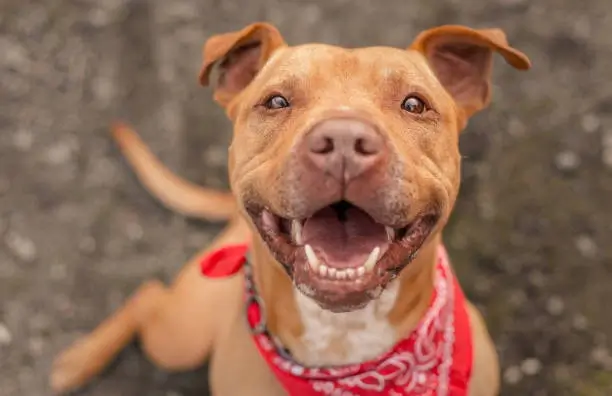
To achieve professional-level Positive Reinforcement Techniques, owners must master the use of Conditioned Reinforcers. Tools such as clickers and target sticks are not merely gadgets; they are precision instruments used to communicate Temporal Success to the dog. By utilizing these tools, we bypass the inherent lag of verbal communication, providing a consistent Acoustic Marker that the canine brain can process with near-instantaneous clarity. This high-definition feedback loop accelerates Synaptic Consolidation, allowing the dog to learn complex motor patterns with significantly fewer repetitions.
1. Clicker Training: The Science of the “Event Marker”
The clicker serves as a Secondary Reinforcer—a neutral sound that, through Classical Conditioning, acquires the same neurological value as food. In Positive Reinforcement Techniques, the click acts as an “Event Marker,” pinpointing the exact micro-second of success. This is particularly effective for Behavioral Shaping, where we reward tiny increments of movement toward a final goal. The clicker’s unique, non-emotional frequency prevents the “User Error” often associated with verbal praise, which can vary in pitch and intensity.
- Charging the Marker: Creating a “100% Predictability” link between the sound and a High-Value Primary Reinforcer.
- Capturing Micro-Behaviors: Using the clicker to mark spontaneous eye contact or a shifted weight—the building blocks of Impulse Control.
- Targeting Dynamics: Utilizing a target stick to guide the dog’s spatial orientation, facilitating Lure-Free Positioning for advanced tasks.
2. Digital Logistics: Tracking Behavioral Fluency
Modern Positive Reinforcement Techniques often incorporate digital tracking to monitor Response Latency and Success Rates. Training apps provide a Quantitative Audit of the dog’s progress, helping owners identify “Plateaus” where the criteria for reinforcement may be too high. By logging sessions, we can ensure Training Consistency across different family members, preventing the “Signal Noise” that occurs when multiple people use conflicting markers or reward schedules.
Advanced Schematics: Complex Chaining and Task Training
Once foundational cues are established, Positive Reinforcement Techniques evolve into Behavioral Chaining. This advanced methodology involves linking multiple discrete actions into a single fluid sequence. Whether training for high-level tricks or functional service tasks, the goal is to create a Dopamine-Fueled Momentum where the performance of one behavior serves as the Conditioned Reinforcer for the next. This creates a high level of Cognitive Endurance and focus.
| Advanced Vector | Technical Methodology | Training Outcome |
|---|---|---|
| Backward Chaining | Teaching the final step first. | Higher completion reliability; “End-Goal” motivation. |
| Environmental Shaping | Rewarding interactions with novel objects. | Reduced fear of new environments; increased curiosity. |
| Service Tasking | Precision targeting + Duration work. | Functional behaviors (retrieving meds, opening doors). |
3. The Successive Approximation Protocol
Advanced Positive Reinforcement Techniques rely heavily on Shaping—the process of reinforcing “Successive Approximations” toward a target behavior. Instead of waiting for a complex trick (like “Play Dead”) to happen perfectly, we mark and reinforce a simple head turn, then a shoulder lean, then a full roll. This Iterative Learning prevents the dog from reaching their Frustration Threshold and keeps their brain in a state of Optimal Learning Arousal.
The Maya Mai Verdict: Tools are Bridges, Not Crutches
“At PetCareCompass, I encounter owners who feel the clicker is too ‘robotic.’ My rule for Positive Reinforcement Techniques: The tool is a Precision Bridge to help your dog cross the gap between confusion and clarity. We don’t use a clicker forever; we use it to build the Neural Foundation. Once a behavior is fluent and on cue, the tool fades, but the Cognitive Bond remains. Don’t fear the tech—use it to speak your dog’s language with surgical accuracy.” — Maya Mai
Case Insight: Training a Service Task via Backward Chaining
Chaining sub-behaviors can turn a daunting task into a series of achievable successes.
Case Insight: A dog was trained to “Fetch Slippers” from another room. By applying Positive Reinforcement Techniques—specifically Backward Chaining—the owner first rewarded the dog for just dropping the slippers in their lap. Then, they rewarded walking 2 steps with them, then picking them up. By building the chain from the end back to the beginning, the dog always felt they were “moving toward the reward,” resulting in a 100% successful task completion rate within a week.
Behavioral Habituation: Implementing Daily Positive Reinforcement Techniques
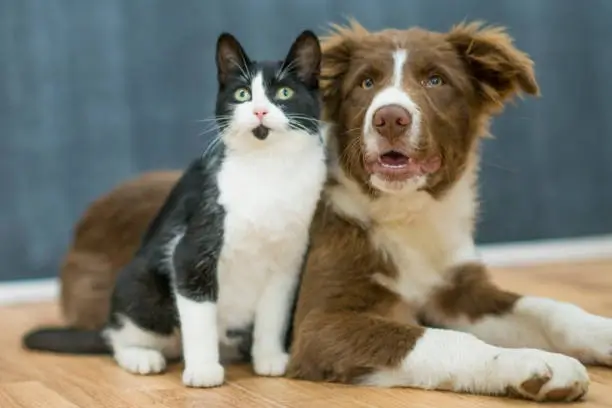
The long-term success of Positive Reinforcement Techniques is not determined by the intensity of a single training session, but by the Consistency of Reinforcement across the dog’s daily life. To move from simple “command following” to true Behavioral Fluency, the training must be integrated into the dog’s Circadian Learning Rhythms. By creating a structured environment where success is predictable and rewarded, we facilitate Neuroplasticity Consolidation—the process where new behaviors are physically etched into the neural pathways, eventually becoming automatic “default” responses to environmental cues.
1. The Daily Strategic Audit: Structuring for Success
A professional Positive Reinforcement Techniques routine is stratified to prevent Cognitive Fatigue. Short, high-intensity sessions followed by periods of “Passive Reinforcement” (capturing calm) ensure the dog remains in a state of Optimal Arousal. This approach respects the dog’s limited Attention Span while maximizing the Rate of Reinforcement. Consistency across all family members is the primary defense against “Signal Noise,” ensuring that the dog receives a clear, non-conflicting message about which behaviors lead to a high-value outcome.
- Morning Priming: Utilizing the high-alert state after rest to practice Precision Markers and new behavioral acquisition.
- Environmental Generalization: Integrating cues into meal times and walks to ensure Contextual Transfer (obeying in the kitchen vs. the park).
- Passive Capturing: Rewarding spontaneous “Decompression Behaviors” (lying down, sighing) to build a baseline of Emotional Stability.
2. Quantitative Behavioral Auditing: Tracking Progress
To evolve your Positive Reinforcement Techniques, you must move beyond subjective observation and toward a Behavioral Audit. Tracking Response Reliability (the percentage of successful cues) and Latency (how fast the dog responds) allows for the adjustment of the Criteria for Reinforcement. If a dog’s success rate falls below 80%, it indicates a Cognitive Overload, and the task must be broken down into simpler Successive Approximations. Conversely, 100% success suggests it is time to increase environmental difficulty.
| Daily Vector | Technique Application | Neurological Payoff |
|---|---|---|
| Active Sessions | 5-10m focused Marker Training. | Strengthening Synaptic Links for specific cues. |
| Routine Integration | Wait-for-bowl; Sit-at-door. | Establishing “Default Politeness” and Impulse Control. |
| Environmental Sweep | Rewarding focus despite distractions. | Achieving Generalization across novel stimuli. |
3. The Generalization Layer: Training Beyond the Living Room
A common failure in Positive Reinforcement Techniques is the “Homebound Mastery”—a dog that is perfect indoors but non-responsive outside. This is a lack of Generalization. To solve this, we apply the Distance-Duration-Distraction (3D) protocol. By slowly introducing Intermittent Reinforcement in increasingly complex environments, we teach the dog that the rules of the Reward Economy remain constant, regardless of the level of Ambient Sensory Input.
The Maya Mai Verdict: The “Life is a Session” Mantra
“At PetCareCompass, I encounter owners who treat training like a class that starts and ends. My rule for Positive Reinforcement Techniques: Your dog is always learning, whether you are ‘training’ or not. If you reward a jump at 5 PM but correct it at 6 PM, you are training Inconsistency. We treat every interaction as a data point. When you realize that Life is one continuous training session, you stop battling behavior and start Engineering Lifestyle. Consistency isn’t about being rigid; it’s about being Reliable for your dog.” — Maya Mai
Case Insight: Achieving Reliability via Lifestyle Integration
Integrating reinforcement into daily transitions can physically rewire a dog’s baseline patience.
Case Insight: A high-arousal dog was lunging at the door before walks. By applying Positive Reinforcement Techniques—specifically Conditioned Relaxation—the owner required a “Sit” and eye contact before the door opened. By making the walk itself the Functional Reinforcer and consistently applying this rule for 21 days, the dog transitioned from “Lunging” to “Automatic Sit” at the threshold. This proved that Environmental Consistency creates effortless obedience.
Frequently Asked Questions
1. How to transition from continuous to intermittent rewards?
Once your dog achieves an 80% success rate, start the Variable Ratio protocol. Reward 3 out of 5 correct responses, then 2 out of 5, ensuring the “jackpot” reward remains unpredictable. This builds Behavioral Resilience and prevents reward-dependency.
2. How to “charge” a clicker for marker training?
Use Classical Conditioning: Click, then immediately provide a high-value treat (Primary Reinforcer). Repeat 15–20 times until the dog exhibits Orienting Reflex—turning toward you at the sound. The click now has a 100% predictive value for the reward.
3. How to handle a dog that ignores high-value treats?
This indicates a Threshold Breach. When the environment provides too much sensory input, the dog’s brain shifts into survival mode. You must lower the Environmental Difficulty—move further away from the trigger until the dog can re-engage their prefrontal cortex.
4. How to prevent “Cue Poisoning” in recall training?
Never use the recall command for negative outcomes (e.g., calling the dog to end play or for a bath). If the cue is already “poisoned,” replace it with a new word and rebuild the Positive Association using a high-frequency, high-value reinforcement schedule.
5. How to use “Shaping” for complex behavioral tricks?
Apply Successive Approximation. Mark and reward any movement that trends toward the target behavior. If teaching “Roll Over,” first reward a head turn, then a weight shift, then a shoulder drop. Each step builds Neural Momentum toward the final chain.
6. How to master timing without a physical clicker?
Utilize a Conditioned Verbal Marker like a sharp “Yes!” or “Good!”. The key is Acoustic Consistency—the pitch and duration must remain identical every time to ensure the dog’s Temporal Processing correctly links the sound to the successful action.
Conclusion: Engineering Behavioral Excellence
Finalizing a Positive Reinforcement Techniques protocol is a commitment to Behavioral Reliability through empathy and science. By focusing on Precision Markers and Reward Stratification, you create a learning environment that is both efficient and ethically sound.
- Audit the Marker: Ensure your 0.5-second timing is surgically precise.
- Manage the Environment: Train below the dog’s Stress Threshold.
- Diversify Rewards: Match the value of the treat to the Cognitive Load of the task.
- Phase the Reinforcement: Move to intermittent schedules to ensure long-term habituation.
The PetCareCompass Learning Covenant
“Positive reinforcement is more than a training tool—it is a Cognitive Partnership. We build the brain, we don’t break the spirit. Empowered dogs learn faster, stay confident, and trust deeper.”
— Maya Mai
Find More Dog Care Guides
Continue exploring practical guides related to this topic.