Executive Summary
Play is far more than an outlet for excess energy; it is a sophisticated Biological Imperative essential for a dog’s neurological and emotional maturation. Mastering the nuances of Play Behavior allows owners to transform daily interactions into opportunities for Impulse Control and social bonding. This guide provides a strategic framework to interpret canine signals, mitigate destructive tendencies, and engineer a safe environment that fosters long-term behavioral stability.
By recognizing specific canine play signals and learning to regulate arousal levels, you can prevent sessions from escalating into stress or reactivity. Whether through physical wrestling or cognitive enrichment, effective play strengthens the human-canine bond while ensuring your dog remains emotionally balanced in a domestic setting.
Categorizing Play Behavior: Intent and Taxonomy
In the study of canine ethology, Play Behavior is recognized as “Borrowed Behavior”—movements adapted from hunting, fighting, or mating contexts but performed without the harmful intent. To manage these interactions, owners must recognize that play is a multi-modal experience, serving as a primary tool for Emotional Regulation and social calibration.
Physical & Kinesthetic
Involves chasing, pouncing, and wrestling. This builds Proprioceptive Awareness (body control) and maintains musculoskeletal health.
Cognitive & Solitary
Puzzle toys and independent scent work. This fosters Problem-Solving Resilience and reduces dependency on constant human interaction.
Social & Interpersonal
Human or inter-dog engagement. This teaches Bite Inhibition, boundary respect, and the interpretation of social meta-signals.
A dog’s ability to engage safely relies on Meta-communication—signals that provide context to their actions. Without these, a high-intensity wrestling match could easily be misinterpreted as Intra-species Aggression. Key indicators of playful intent include:
- The Play Bow: A universal biomechanical signal to “reset” the interaction and confirm non-aggressive intent.
- Self-Handicapping: When a larger dog intentionally slows down or falls over to maintain a symmetrical power balance with a smaller partner.
- Exaggerated Movements: Bouncy, inefficient gaits that differentiate “play-chasing” from “predatory-chasing.”
- Repetitive Sneezing: Often used during wrestling as a calming signal to de-escalate Arousal Levels.
Husbandry Rule: Play is a dialogue, not a monologue. If the role reversal stops, the session should be paused for a “Consent Test.”
The Dividends of Strategic Play: Beyond Physical Fitness
Regular engagement in structured Play Behavior triggers a cascade of Neurochemical Benefits. It functions as a natural mechanism for regulating Resting Cortisol and boosting dopamine, which directly translates to a more stable, less reactive temperament in the domestic environment.
Physical Homeostasis
Supports cardiovascular efficiency and musculoskeletal flexibility. Regular movement helps regulate energy baselines, preventing High-Arousal Destructive Behaviors indoors.
Cognitive Resilience
Interactive puzzles and problem-solving games increase Synaptic Connectivity, reducing the likelihood of boredom-induced anxiety and excessive vocalization.
Social Literacy
Controlled play teaches Impulse Control and boundary recognition, effectively reducing Resource Guarding and inter-dog reactivity.
Operational Red Flags: Common Play Errors to Avoid
Even well-intentioned owners often fall into “Play Traps” that can inadvertently reinforce Hyper-Arousal Dysfunction. Identifying these errors is essential for maintaining the Psychological Equilibrium of your dog.
Solution: Implement “Consent Breaks” every 3-5 minutes to allow the heart rate to normalize.
Critical pitfalls in play management include:
- Misinterpreting Micro-Signals: Ignoring subtle indicators like “Lip Licking,” “Hard Stares,” or “Stiff Postures” often leads to accidental escalation. Play should always be Fluid and Bouncy.
- Inconsistent Rule Stability: Allowing “mouthing” today but punishing it tomorrow creates Cognitive Dissonance. Dogs require rigid rule consistency to feel secure during high-excitement states.
- Inappropriate Tool Selection: Using unsafe materials or methods (like rough tugging on a puppy’s developing jaw) can cause physical trauma and reinforce Aggressive Displacement Behaviors.
- Lack of Recovery Time: Failing to provide mandatory decompression after a session leads to a chronically elevated state of stress.
Husbandry Rule: Play is a conversation. If your dog stops “listening” with their mind, their body is already over-aroused. Pause, Decompress, Reset.
Behavioral Diagnostics: Decoding the Language of Play
Interpreting Play Behavior requires an understanding of Canine Dialects. Dogs utilize a sophisticated system of Meta-signals to differentiate “Borrowed Aggression” (wrestling/chasing) from genuine conflict. Mastering these cues allows for proactive Arousal Regulation before a session escalates into stress.
| Signal Intensity | Visible Indicators | Operational Status |
|---|---|---|
| GREEN LIGHT | Play bows, loose/wiggly body, open mouth “smile,” sneezing, role reversal. | Proceed: Healthy social calibration in progress. |
| YELLOW LIGHT | Intense panting, lip licking, “whale eye,” obsessive humping, or frantic speed. | Pause: Near Arousal Redline. Implement a 60-second decompression break. |
| RED LIGHT | Stiff freezing, hard stares, vertical lip curl, low growl, or lack of “Self-Handicapping.” | Stop: Immediate, calm intervention required. Conflict is imminent. |
Environmental Security: Engineering a Safe Play-Zone
A safe play environment is the foundation of Low-Stress Husbandry. Beyond physical safety, the environment must facilitate Focus and Impulse Control, minimizing external triggers that could lead to Redirected Excitement.
Surface Mechanics
Avoid slippery tiles which can cause Ligament Trauma during high-speed play. Utilize non-slip mats or grass to ensure Orthopedic Safety.
Visual Hygiene
Remove sharp edges and breakables. Ensure the space is large enough to allow a “Retreat Zone” for dogs who need to disengage and Self-Regulate.
Husbandry Rule: The safest play environment is one that provides a clear exit. If a dog feels trapped, “Play” quickly becomes “Survival.”
Structured Play: Engineering Impulse Control
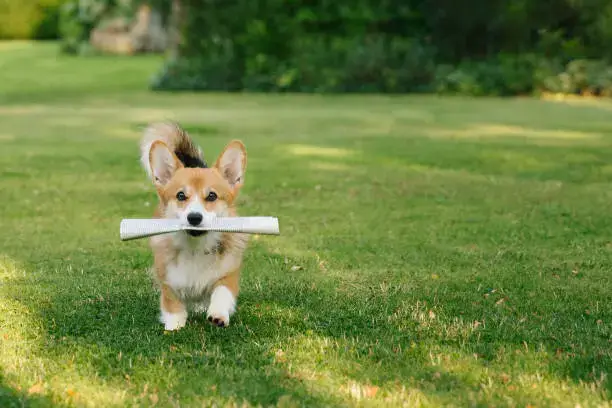
Unlike chaotic “Free-Roaming” play, Structured Play is a deliberate training modality designed to harness high-arousal energy into Goal-Oriented Focus. It serves as a primary tool for teaching Impulse Control—the ability for a dog to maintain cognitive function even when physically excited.
1. Strategic Session Planning
A “Healthy Play Diet” should be categorized into three distinct pillars to ensure total Well-being Homeostasis: Physical Prowess, Cognitive Depth, and Social Navigation.
2. Mastering Self-Regulation
The core of structured play is the Cued Start-Stop. Before engaging with any high-value resource, the dog must demonstrate a neutral behavior (“Sit” or “Down”). This protocol teaches the dog that Calmness is the Gateway to Excitement.
Operational safety during play depends on Tool Integrity. Toys should be selected based on Jaw Biomechanics and chewing intensity:
| Attribute | Puppy Protocol | Adult/Senior Protocol |
|---|---|---|
| Duration | 5-10 min (High Frequency) | 20-40 min (Endurance Focus) |
| Impact Level | Low (Ground-level play) | Moderate to High (Agility/Leaping) |
| Primary Goal | Bite Inhibition & Socialization | Impulse Control & Mental Depth |
Husbandry Rule: Structure is not the absence of fun; it is the guarantee of safety. A dog that waits for play is a dog that thinks before it acts.
Enrichment Logistics: Beyond Traditional Toys
Interactive tools are the backbone of Cognitive Enrichment. By shifting from passive toys to those requiring Mechanical Problem-Solving, you activate the dog’s “seeking system,” which naturally lowers anxiety and increases environmental confidence.
1. Precision Puzzle Solvers
Puzzle toys should be introduced using a Scaffolding Technique. Start with Level 1 before progressing to complex multi-step mechanical puzzles to prevent Frustration-Induced Destruction.
2. Strategic Tug
Tug-of-war is a high-arousal game governed by Bite Calibration. The “Drop It” command is non-negotiable; if teeth touch skin, the play session closes immediately.
3. Fetch 2.0
Advanced fetch incorporates Impulse Inhibitors. Require your dog to remain in a “Stay” while the toy is in motion, only releasing them to retrieve once the toy has landed.
Social Dynamics: Navigating Inter-Dog Hierarchies
Inter-dog play is the most complex form of Social Play Behavior. It requires the accurate reading of Conspecific Signals. Positive social experiences build “Social Fluency,” but one traumatic interaction can lead to lifelong Inter-dog Reactivity.
Not all dogs are “Social Butterflies.” Most adult dogs transition from “Social Proactive” to “Social Selective” or “Social Tolerant”:
| Sociability Tier | Characteristics | Recommended Play |
|---|---|---|
| Social Proactive | Enjoys almost all dogs/people | Group play, classes |
| Social Selective | Selective about play partners | 1-on-1 supervised playdates |
| Social Tolerant | Indifferent, ignores others | Solo work in public spaces |
Husbandry Rule: Socialization is the ability to remain neutral, not the requirement to be friendly. Neutrality is the highest form of social confidence.
Sensory Bio-diversification: Play in the Natural World
Outdoor Play Behavior provides a level of Sensory Complexity that indoor environments cannot replicate. Natural settings act as a “Biological Gymnasium,” challenging a dog’s Proprioception (body awareness) and olfactory processing through diverse terrains and organic stimuli.
1. Decompression Hiking (Sniffaris)
Hiking where the dog leads with their nose lowers heart rate and reduces systemic stress. Use long-lines (15-20ft) to allow freedom of movement while maintaining safety.
2. Hydro-Engagement
Water play is the gold standard for Low-Impact Physical Play. For dogs with joint sensitivities or high-energy profiles, swimming provides intense cardiovascular exertion without Orthopedic Strain.
Cognitive Mastery: The Science of Mental Enrichment
Mental play is a requirement for Neurological Health. By engaging a dog’s problem-solving faculties, you satisfy their Work-Drive Instincts, which significantly reduces “displacement behaviors” such as destructive chewing or excessive barking.
| Activity Category | Key Stimulus | Primary Benefit |
|---|---|---|
| Decompression Walks | Olfactory (Scents) | Stress reduction & Calmness |
| Interactive Feeding | Problem-solving (Cognitive) | Impulse control & Satiation |
| Water Agility | Kinesthetic (Movement) | Joint-safe cardio & Strength |
Husbandry Rule: The nose is the gateway to the canine brain. If you want to tire a dog, engage their scent-receptors before their muscles.
Behavioral Autonomy: Cultivating Independent Play
Developing Independent Play Behavior is a critical defense against Separation Anxiety and hyper-attachment. By encouraging your dog to find satisfaction in solitary activities, you are fostering Emotional Self-Regulation and building the confidence they need to remain calm when left alone.
1. Strategic Toy Rotation
Rotate groups of toys every 3-5 days to re-activate interest in “old” items, maintaining high levels of Independent Engagement without constant new purchases.
2. Oral Enrichment
Chewing is a Self-Soothing Mechanism that releases endorphins. Providing species-appropriate chew toys satisfies the Biological Drive to Masticate.
Conflict Mitigation: Correcting Maladaptive Play
| Behavior | Immediate Action | Long-Term Goal |
|---|---|---|
| Over-Arousal | Mandatory Decompression Break | Impulse Control Training |
| Resource Guarding | The “Trade-Up” Protocol | Positive Association with Sharing |
| Fear/Anxiety | Increase Distance from Stimulus | Confidence Building & Desensitization |
Husbandry Rule: Play is a privilege earned through calm behavior. If the mind loses control, the game must pause to protect the bond.
Play Governance: Establishing the Rules of Engagement
To maintain the safety of Play Behavior, owners must act as Active Moderators. Establishing a “Rules of Engagement” protocol ensures that excitement remains functional and does not degrade into Arousal-Induced Conflict.
| Integration Level | Interaction Goal | Key Command |
|---|---|---|
| Family/Friends | Gentle tactile engagement | “Off” / “Gentle” |
| Known Playmates | Reciprocal role reversal | “Break” / “Wait” |
| Group Settings | Neutrality under distraction | “Leave it” / “Watch me” |
Husbandry Rule: The owner’s role is not to entertain, but to facilitate. A well-moderated game is a masterclass in emotional intelligence.
Environmental Diversification: Kinesthetic Conditioning

Outdoor Play Behavior provides a unique opportunity for Proprioceptive Development—the ability for a dog to understand their body’s position in complex space. Transitioning play from flat indoor surfaces to varied natural terrains enhances joint stability and mental adaptability.
Conflict De-escalation: Mitigating Maladaptive Play
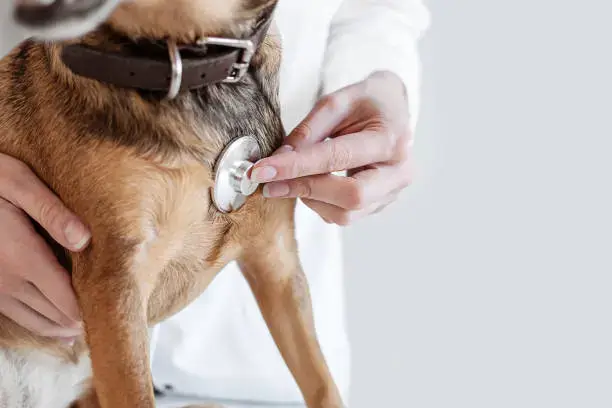
When Play Behavior shifts from cooperative to competitive, owners must implement Immediate Boundary Calibration. The goal is to prevent the “Adrenaline Spike” from becoming a traumatic imprinting event.
| Behavioral Issue | Visible Red Flag | Expert Mitigation |
|---|---|---|
| Hyper-Arousal | Nipping, frantic speed, dilated pupils. | Mandatory 2-minute “Time-In” (Calm tethering). |
| Resource Guarding | Stiffening, low growl, whale eye. | The “Trade-Up” protocol (Exchange for higher value). |
| Predatory Drift | Silent chasing, focusing on neck/throat. | Immediate separation. Consult a behaviorist. |
Husbandry Rule: Never punish fear or arousal. Instead, increase distance and redirect with a task. Punishment during play creates permanent negative associations.
Post-Play Decompression: The Art of the Cool-Down
A common failure in domestic Play Behavior is the lack of a “Cool-Down” phase. Abruptly stopping a high-arousal game like fetch leaves the dog with an Adrenaline Surplus, often leading to frantic pacing or destructive chewing indoors.
Step 1: The Transition Task
Switch from high-intensity chasing to a low-intensity “Search” task. Scatter 5-10 treats in the grass to shift the nervous system from Sympathetic Arousal to Parasympathetic Calm.
Step 2: Passive Oral Enrichment
Provide a long-lasting chew or a stuffed toy once indoors. The rhythmic action of licking or chewing releases Endorphins, lowering the heart rate and signaling the end of activity.
Biomechanical Safety: Protecting the Orthopedic Foundation
High-impact play is the leading cause of Cranial Cruciate Ligament (CCL) tears and spinal micro-trauma. To ensure Play Behavior supports longevity, you must audit the biomechanics of your sessions based on the dog’s life stage.
| Life Stage | Orthopedic Risk | Safety Adjustment |
|---|---|---|
| Puppy (< 12 months) | Growth plate fractures | Zero jumping; limit sessions to 10 mins. |
| Senior (> 7 years) | Osteoarthritis flare-ups | Switch to swimming or scent-work. |
| Large Breeds | Gastric Torsion (Bloat) | No vigorous play 1 hour before/after meals. |
Husbandry Rule: Play should build the body up, not wear it down. A session is only successful if the dog finishes sound in both mind and limb.
Daily Play Audit: Ensuring Balanced Engagement
Daily Play Audit Checklist
- Environmental Safety Sweep: Verify the play-zone is free of orthopedic hazards and ingestion risks.
- Stimuli Rotation: Introduce “Fresh” toys to prevent Novelty Fatigue and promote independent play.
- Balanced Modality: Ensure a 1:1 ratio between high-impact physical play and low-arousal mental work.
- Arousal Monitoring: Observe for signs of “Adrenaline Stacking” and implement mandatory settle breaks.
- Success Landing: Always conclude sessions on a calm note with a Positive Reinforcement cue.
Expert Insights: Play Behavior FAQ
Q1: How do I know if my dog is ‘too old’ for play?
No dog is too old, but their Kinesthetic Needs shift. For seniors, prioritize low-impact “Nose-Work” and interactive puzzles over high-speed chasing to protect aging joints while maintaining Cognitive Sharpness.
Q2: What if my dog doesn’t know ‘how’ to play?
Some dogs (often rescues) lack early Social Imprinting. Start with Passive Enrichment like snuffle mats. Once they associate toys with rewards, gradually introduce interactive play without pressure.
Q3: Can indoor play replace outdoor exercise entirely?
Indoor play is excellent for Mental Satiation, but it lacks the Olfactory Complexity of the outdoors. Aim for a hybrid approach: indoor problem-solving and outdoor “Sniffaris” for total emotional balance.
Conclusion: Engineering Harmony Through Play
Understanding Play Behavior is the cornerstone of modern, empathetic pet ownership. It is not a secondary activity, but a primary tool for developing Emotional Resilience and trust. By observing social cues, engineering safe environments, and balancing physical exertion with cognitive challenges, you are not just entertaining your dog—you are nurturing a sophisticated, well-adjusted canine mind.
Find More Dog Care Guides
Continue exploring practical guides related to this topic.