

Managing stress at home is crucial for your dog’s emotional health, happiness, and overall quality of life. Dogs can experience anxiety due to environmental changes, routine disruptions, noise, or social interactions. Recognizing early stress signals and implementing practical strategies helps reduce anxiety, strengthens trust, and promotes confidence.
This guide provides actionable stress relief tips for dogs at home, covering physical activity, mental stimulation, environmental adjustments, and behavioral strategies. By following these techniques, owners can help their dogs feel safe, relaxed, and confident every day. Whether you are a first-time pet parent or have years of experience, mastering stress relief tips at home ensures a happier and healthier companion.
Recognizing Stress at Home
Understanding the early signs of stress is the foundation of effective stress relief. By observing your dog’s behaviors and environment, you can identify triggers and intervene before anxiety escalates.
Common Behavioral Signs
Dogs often express stress through subtle or overt behaviors. Key signs include:
- Pacing or restlessness: Repeated movement without settling
- Whining or excessive barking: Vocal indications of discomfort or anxiety
- Hiding or avoiding interaction: Seeking solitude in unusual places
- Excessive licking, yawning, or panting: Stress-induced physiological responses
- Changes in appetite or sleep: Refusing food or struggling to rest
Highlight Tip: Early detection of these signs allows for quick intervention, reducing the risk of escalation into destructive or aggressive behaviors.
Mini Case Study
Charlie, a 3-year-old Golden Retriever, would start pacing and whining whenever a stranger approached the home. His owner noticed the early signs and created a quiet safe spot with toys and treats. Over a few weeks, Charlie learned to relax when guests arrived, showing the power of early recognition.
Environmental Triggers
Environmental factors often contribute to stress at home. Common triggers include:
- Loud noises: Appliances, traffic, construction, or vacuum cleaners
- Visitors or new pets: Unexpected social encounters can be overwhelming
- Routine changes: Altered feeding times, walking schedules, or sudden moves
- Cluttered or chaotic spaces: Overstimulation in the environment
Highlight Tip: Identify patterns by observing your dog’s reactions to specific environments. This helps you proactively manage stressors.
Mini Case Study
Bella, a 4-year-old Terrier, became anxious when the television was loud or the doorbell rang. Her owner implemented noise-dampening strategies and provided a dedicated quiet space. Over time, Bella remained calm despite household activity.
Why Early Recognition Matters
Addressing stress promptly offers multiple benefits:
- Prevents escalation: Chronic stress can lead to aggression or destructive behaviors
- Supports emotional stability: Calm dogs are more confident and responsive
- Strengthens trust: Predictable interventions reinforce a strong owner-dog bond
Highlight Tip: Consistent observation and early response are more effective than reacting to high-stress incidents after they occur.
Creating a Calm Home Environment
A supportive environment is essential for stress relief. Dogs feel more secure when their surroundings are predictable, safe, and tailored to their needs.
Designated Safe Spaces
Creating a dedicated safe area helps your dog retreat when feeling stressed:
- Quiet rooms or crates: Choose low-traffic areas for resting
- Comfort items: Soft bedding, blankets, and favorite toys
- Familiar scents: Include items that smell like the owner for reassurance
Highlight Tip: Allow your dog to access this space voluntarily to promote self-regulation.
Mini Case Study
Milo, a Beagle, became anxious during social gatherings. By providing a safe retreat with familiar toys, he could relax without feeling forced into interactions.
Noise Management
Reducing or controlling noise at home significantly decreases stress:
- Background sounds: White noise or calming music masks sudden startling noises
- Limit exposure: Avoid placing the dog near loud appliances or areas with high traffic
- Gradual introduction: Slowly expose your dog to new sounds in short sessions
Highlight Tip: Pair exposure with treats or praise to create positive associations with potential stressors.
Mini Case Study
Luna, a Labrador, panicked during thunderstorms. Playing soft classical music and closing curtains reduced auditory triggers, helping her remain calm.
Consistent Routine
Predictable routines foster security and reduce anxiety:
- Feeding schedules: Provide meals at the same time daily
- Walks and play: Regular outdoor activity reduces energy buildup and stress
- Gradual changes: Introduce any routine changes slowly to prevent anxiety spikes
Highlight Tip: Even minor changes in schedule can trigger stress. Maintaining consistency is key to a calm household.
Mini Case Study
Rocky, a Border Collie, became restless when his evening walk was skipped. By sticking to a strict schedule and providing indoor enrichment during deviations, his stress levels decreased.
Physical Activity for Stress Relief
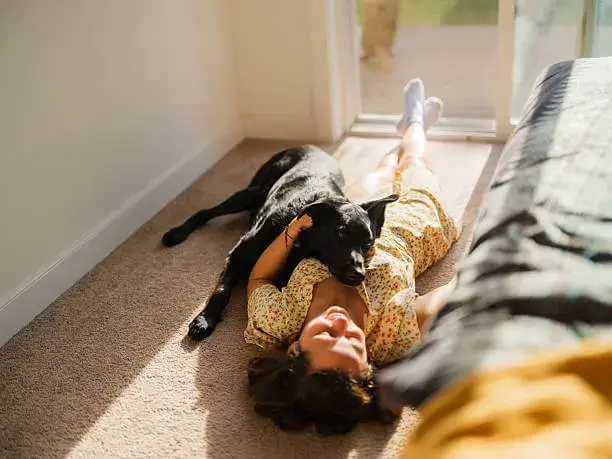
Exercise is one of the most effective tools for reducing stress. Physical activity burns excess energy, releases tension, and promotes emotional resilience.
Daily Walks and Outdoor Play
- Scheduled walks: Provide predictable outings to reduce anxiety
- Interactive games: Fetch, tug-of-war, and chase help release pent-up energy
- Adjust intensity: Tailor activity based on breed, age, and health conditions
Highlight Tip: Structured exercise not only supports physical health but also reduces stress-related behaviors.
Mini Case Study
Sasha, a young Labrador, displayed anxious behavior during the evenings. Incorporating a 30-minute morning walk and interactive play session significantly reduced her overall stress.
Mental Stimulation
Engaging your dog’s mind is as important as physical activity:
- Puzzle toys: Encourage problem-solving and focus
- Scent games: Hide treats for your dog to locate
- Training exercises: Reinforce commands while providing cognitive challenges
Highlight Tip: Mental stimulation reduces boredom-related anxiety and provides a constructive outlet for excess energy.
Mini Case Study
Max, a Border Collie, was destructive when left alone. Providing puzzle feeders and scent games kept him engaged and lowered anxiety levels.
Relaxation Through Touch
Gentle touch promotes relaxation and strengthens bonds:
- Massage: Calm strokes along the neck, back, and shoulders release tension
- Brushing: Provides sensory stimulation and comfort
- Pressure points: Light pressure can soothe anxious dogs
Highlight Tip: Incorporate touch into daily routines for both stress relief and enhanced bonding.
Mini Case Study
Luna, a Beagle, would pace before bedtime. A brief massage and gentle brushing helped her relax, promoting a calm evening routine.
For additional guidance on recognizing early stress signs, see dog stress signs at home.
Nutrition and Health for Stress Relief
A dog’s physical health and nutrition significantly affect their ability to cope with stress. Proper diet, hydration, and preventive care help maintain emotional stability and reduce anxiety.
Balanced Diet and Consistent Meals
- Provide high-quality, balanced meals suited to your dog’s age, breed, and activity level
- Feed at consistent times to give predictability and reduce mealtime-related anxiety
- Avoid overfeeding or inconsistent portions, which can increase stress
Highlight Tip: Dogs thrive on consistency, and predictable meals create a sense of security.
Mini Case Study
Milo, a 5-year-old Beagle, would become anxious when meals were delayed. Implementing a strict feeding schedule and structured routines reduced his stress and improved overall behavior.
Supplements and Calming Products
- Calming chews, pheromone diffusers, or herbal supplements may support anxious dogs
- Always consult a veterinarian before introducing new products
- Combine supplements with environmental and behavioral strategies for best results
Highlight Tip: Supplements are supportive tools, not replacements for training, exercise, or routine management.
Mini Case Study
Luna, a 6-year-old Labrador, was stressed during thunderstorms. A calming pheromone diffuser, combined with her safe retreat area, significantly reduced anxiety.
Monitoring Health Changes
- Watch for signs of illness or pain, as these can manifest as stress
- Schedule regular veterinary checkups
- Observe sudden changes in behavior, appetite, or activity, which may indicate underlying health issues
Highlight Tip: Addressing medical causes of stress promptly prevents long-term anxiety and promotes overall well-being.
Mini Case Study
Rocky, a senior Border Collie, became withdrawn and irritable. A veterinary exam revealed arthritis, and with appropriate pain management and gentle exercise, his anxiety decreased.
Socialization and Controlled Exposure
Social experiences, both positive and negative, directly impact a dog’s stress levels. Properly managing social interactions at home reduces anxiety and builds confidence.
Gradual Introduction to People and Pets
- Introduce new humans or animals slowly and in controlled environments
- Reward calm behavior with treats and praise
- Avoid forcing interaction, particularly with shy or anxious dogs
Highlight Tip: Short, positive sessions gradually increase confidence without overwhelming your dog.
Mini Case Study
Charlie, a Golden Retriever, froze when meeting unfamiliar dogs. Controlled introductions and positive reinforcement helped him relax and enjoy social interactions over time.
Controlled Exposure to New Environments
- Gradually introduce new sounds, sights, and locations
- Pair exposure with positive reinforcement to build positive associations
- Avoid overwhelming your dog with multiple stimuli at once
Highlight Tip: Controlled exposure teaches dogs to cope with changes and reduces anxiety during novel experiences.
Mini Case Study
Bella, a Terrier, panicked during car rides to busy areas. Starting with short, calm drives and rewarding her with treats helped her associate car rides with positive experiences.
Reinforcing Calm Behavior
- Reward calm behavior in stressful situations, such as vet visits or houseguests
- Use verbal praise, treats, or favorite toys to reinforce relaxation
- Avoid punishing stress behaviors, which can increase anxiety
Highlight Tip: Positive reinforcement builds a dog’s confidence and teaches self-regulation.
Behavioral Techniques for Anxiety Reduction
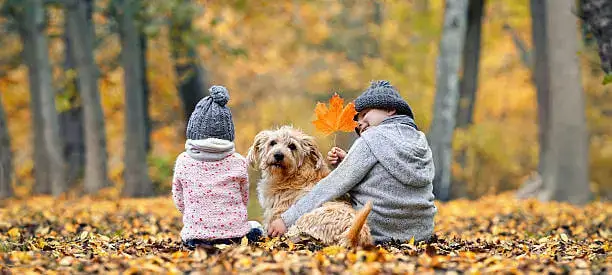
Behavioral strategies are essential for helping dogs manage stress long-term. They provide dogs with coping mechanisms and strengthen the owner-dog bond.
Positive Reinforcement
- Reward relaxed, calm behavior immediately with treats, toys, or praise
- Reinforce consistently to build lasting habits
- Avoid punishment, which can create fear and worsen anxiety
Highlight Tip: Timely rewards ensure dogs connect calm behavior with positive outcomes.
Mini Case Study
Bella barked excessively when the doorbell rang. Rewarding calm behavior during short visitor sessions taught her that staying relaxed brought treats and praise, reducing overall anxiety.
Desensitization Strategies
- Gradually expose dogs to stress triggers at low intensity
- Increase exposure slowly while rewarding calm responses
- Short, controlled sessions work better than prolonged exposure
Highlight Tip: Gradual desensitization prevents stress from overwhelming the dog and promotes confidence.
Mini Case Study
Max, a Beagle, feared the vacuum cleaner. Short, quiet sessions of exposure paired with treats helped him adjust and remain calm.
Counter-Conditioning
- Replace negative associations with positive experiences
- Pair triggers (like doorbells or new visitors) with treats, toys, or praise
- Helps dogs change emotional responses to previously stressful stimuli
Highlight Tip: Consistent, positive associations build long-term resilience to stress.
Mini Case Study
Charlie, a Golden Retriever, became anxious around guests. Counter-conditioning with treats and praise created positive associations, reducing stress and improving behavior.
Avoiding Negative Reinforcement
- Punishment can increase fear, anxiety, and distrust
- Focus on rewards, calm guidance, and gentle redirection
- Stress management is most effective when dogs feel safe and supported
Highlight Tip: Supportive, positive strategies are more effective than punishment for reducing anxiety.
Tracking Stress and Progress
Tracking behavioral changes is one of the most practical stress relief tips for dog owners who want long-term improvement. Monitoring progress helps you understand what works, what doesn’t, and when adjustments are needed to reduce anxiety effectively.
Keeping a Daily Journal
Maintaining a simple daily log is one of the most overlooked stress relief tips at home.
- Record stress-related behaviors such as pacing, whining, hiding, or restlessness
- Note potential triggers like visitors, loud noises, or schedule changes
- Track how your dog responds to calming routines and environmental adjustments
Highlight Tip: Written observations often reveal patterns that are easy to miss during busy days.
Mini Case Study
Luna, a Beagle, showed stress whenever guests arrived. After two weeks of journaling, her owner noticed anxiety peaked in the evenings. Adjusting routines and applying targeted stress relief tips helped Luna stay calmer during social interactions.
Analyzing Patterns and Severity
Understanding patterns allows you to apply stress relief tips proactively rather than reactively.
- Compare stress reactions across similar situations
- Measure intensity and recovery time after stressful events
- Identify early cues such as lip licking, yawning, or avoidance
Highlight Tip: Early pattern recognition allows intervention before stress escalates into destructive behavior.
Mini Case Study
Max, a Border Collie, displayed separation anxiety every weekday morning. Tracking severity helped his owner introduce pre-departure calming routines, improving overall stress management.
Using Technology to Assist
Technology can enhance stress relief tips by providing objective insights.
- Pet cameras show behavior when owners are away
- Wearable trackers monitor sleep, activity, and restlessness
- Mobile apps help log triggers and emotional responses
Highlight Tip: Data-backed insights help fine-tune stress relief tips with greater accuracy.
Daily Stress Relief Practices
Daily routines are the backbone of effective stress relief tips at home. Consistency builds emotional safety and predictability.
Morning Routine
Starting the day calmly reinforces positive emotional balance.
- Quiet greetings without excitement
- Gentle massage or brushing for 5–10 minutes
- Short, relaxed walk or potty break
Highlight Tip: A calm morning routine is one of the simplest stress relief tips with long-term impact.
Midday Routine
Midday structure prevents boredom-driven anxiety.
- Puzzle toys or scent-based games
- Brief interactive play sessions
- Rest time in a designated safe space
Highlight Tip: Mental engagement is a powerful stress relief tip for dogs left alone during the day.
Mini Case Study
Charlie, a Golden Retriever, became destructive at noon. Introducing midday enrichment as part of daily stress relief tips reduced chewing and restlessness.
Afternoon and Evening Routine
Evening routines help dogs decompress.
- Longer walks tailored to energy levels
- Controlled exposure to mild household noises
- Calm bonding time with petting or quiet play
Highlight Tip: Predictable evenings are among the most effective stress relief tips for anxious dogs.
Daily Stress Relief Checklist
Use this checklist to apply stress relief tips consistently:
- ☐ Calm morning routine
- ☐ Physical exercise matched to energy level
- ☐ Mental stimulation session
- ☐ Safe space access
- ☐ Positive reinforcement for calm behavior
- ☐ Observation of stress signals
Frequently Asked Questions
How often should stress relief tips be applied?
Stress relief tips work best when practiced daily and adjusted gradually based on your dog’s response.
Can stress relief tips replace professional training?
Stress relief tips support emotional stability, but persistent anxiety may require guidance from a licensed trainer or veterinarian.
How long before stress relief tips show results?
Many dogs show improvement within 2–4 weeks when stress relief tips are applied consistently.
Mini Case Study
Sasha, a Labrador, struggled with routine changes. By following structured stress relief tips daily, her confidence and relaxation improved significantly within one month.
Combining Stress Relief Strategies
The most effective stress relief tips combine multiple elements:
- Observation and journaling
- Structured routines
- Physical exercise
- Mental enrichment
- Environmental adjustments
- Positive reinforcement
Highlight Tip: Layered stress relief tips create emotional resilience and long-term calm behavior.
Conclusion
Implementing effective stress relief tips at home empowers your dog to live a calmer, happier life. By observing stress signals, understanding triggers, and providing consistent routines, owners can create a supportive environment that promotes emotional stability. Combining physical exercise, mental stimulation, positive reinforcement, safe spaces, and structured socialization helps dogs manage anxiety proactively. Regular monitoring and adjustments ensure interventions remain effective, while maintaining a predictable and nurturing environment strengthens trust and confidence. With these strategies, dogs develop resilience, enjoy a sense of security, and thrive in a stress-free home, improving both their behavior and overall well-being.
