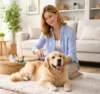
Quick Summary: Coat Conditioning is a systemic process of maintaining Keratin Integrity and Lipid Barrier health. A professional protocol involves Mechanical Stimulation (brushing), Topical Saturation (pH-balanced conditioners), and Metabolic Support (Omega-3 fatty acids). Optimizing these variables prevents Trans-Epidermal Water Loss (TEWL), resulting in a resilient, high-luster canine coat across all phenotypes.
In the PetCareCompass framework, a dog’s coat is more than an aesthetic feature—it is a Biological Mirror of systemic health. Coat Conditioning is the technical art of optimizing Sebaceous Secretions and protecting the Epidermal Shield. This guide provides a vet-informed Conditioning Architecture to eliminate dullness and ensure your dog’s fur remains a high-performance barrier of Dermal Security.
“At PetCareCompass, I categorize the coat as a Protective Infrastructure. My rule: We don’t ‘beautify’ the fur; we Calibrate its biological components. Mastering Coat Conditioning means protecting the Lipid Barrier and preventing protein degradation. A vibrant coat is the ultimate evidence of an optimized metabolism and forensic grooming precision.”
Structural Keratin
Protecting the protein fibers from oxidation and mechanical breakage to maintain tensile strength.
Lipid Stabilization
Ensuring the natural oils (Sebum) are evenly distributed to lock in moisture and repel environmental toxins.
Phenotype Calibration: Understanding Fiber Architecture
In the PetCareCompass Coat Conditioning protocol, safety and shine are achieved through Forensic Segmentation of the dog’s coat type. Every canine phenotype possess a unique Sebaceous Baseline (natural oil level) and Follicular Density. Understanding these biological variables is the first step in preventing Trans-Epidermal Water Loss and ensuring your grooming routine supports, rather than compromises, the Dermal Shield.
1. Diagnostic Markers: Identifying Systemic Issues
A dull or brittle coat is rarely just a topical issue; it is a Biometric Marker for Nutritional Deficiencies or environmental stress. Dermal Desiccation (dryness and flaking) often indicates an over-washing cycle that has stripped the Acid Mantle. If redness or inflammation persists, consult a Licensed Veterinarian to rule out Allergenic Dermatitis before proceeding with heavy conditioning protocols.
2. Instrumentation & Product Calibration
Effective Coat Conditioning requires Chemical Precision. Utilize only pH-Balanced Formulations specifically engineered for the canine epidermal pH (6.2 to 7.4). Avoid human-grade surfactants that cause Cuticle Fracture. Complement these products with soft-absorbent towels and Grooming Gloves to stimulate capillary blood flow during the drying phase, enhancing the systemic delivery of Keratin-Building Blocks.
“At PetCareCompass, I categorize the coat’s reaction to seasonal shifts as Adaptive Resilience. My rule: If the winter air is dry, we increase Topical Lipids; if the summer is humid, we focus on Follicular Aeration. We don’t just ‘brush the dog’; we calibrate the environment to protect the Structural Integrity of every single hair shaft.”
Mechanical Conditioning: The Daily Buffing Protocol
In the PetCareCompass Coat Conditioning architecture, daily brushing is treated as Mechanical Buffing. This process is not merely for aesthetics; it is a clinical method to distribute Surface Lipids (Sebum) from the root to the tip of the hair shaft. Consistent mechanical stimulation prevents Follicular Stagnation and ensures the hair cuticle remains flat, maximizing the coat’s Reflective Index (Shine).
1. Systematic Mechanical Stimulation
Execute short, high-precision strokes starting from the cranial region toward the tail. Focus on High-Friction Zones (axillary and post-auricular areas) where Mechanical Matting is most prevalent. Utilizing Instrumentation Calibration—matching the brush’s bristle density to the coat’s phenotype—prevents Cuticle Fracture and dermal irritation, maintaining the integrity of the hair’s protein structure.
2. Weekly Topical Saturation & Hydration
Weekly sessions focus on Topical Saturation using Humectant-Rich Formulations. Applying leave-in conditioners or natural oil-based sprays replenishes the Lipid Barrier lost to environmental oxidation. Proper Hydro-Management—ensuring a thorough rinse followed by low-heat desiccation (drying)—prevents residue buildup that can trigger Sebaceous Overcompensation (greasiness).
Strategic Recovery: Longitudinal Case Study Analysis
Transformation of a dull coat requires Longitudinal Consistency. At PetCareCompass, we track Conditioning Efficacy through structured observation. The following matrix illustrates the Luster Restoration Roadmap observed in high-density coat phenotypes (e.g., Golden Retrievers) over a 28-day cycle.
“At PetCareCompass, I categorize shine as Reflected Efficiency. My rule for Daily Routines: We don’t ‘brush’ the dog; we buff the Surface Lipids. A single week of neglected mechanical stimulation leads to Cuticle Desiccation. By committing to 28 days of the Restoration Roadmap, you aren’t just cleaning fur—bypassing the surface, you are engineering the systemic glow of a healthy animal.”
Nutritional Architecture: Fueling the Follicular Matrix
In the PetCareCompass Coat Conditioning framework, luster is treated as a Metabolic Output. The structural integrity of the hair shaft (Keratin) and the quality of surface oils (Sebum) are direct results of Bio-Lipid Availability. Without a foundation of high-density nutrients, topical treatments are merely temporary; true Longitudinal Luster requires a deep-tissue nutritional strategy.
1. Strategic Supplement Calibration
When standard diets fall short, Supplement Calibration is required. Fish oils (EPA/DHA) and flaxseed oil act as Luster Catalysts, stabilizing the Lipid Barrier. However, precision is key; always consult a Licensed Veterinarian to avoid Nutritional Toxicity. Over-supplementation can trigger Gastrointestinal Distress or lead to a “greasy” coat phenotype, indicating a failure in Metabolic Absorption.
2. Dietary Impact Analysis: Real-Life Efficacy
Consider the 6-week Luster Transformation cycle observed in high-grooming breeds like Poodles. By transitioning to Amino-Rich Proteins and balancing omega ratios, owners report a visible shift in Fiber Tensile Strength and a significant reduction in Reactive Shedding. This Metabolic Shift proves that effective Coat Conditioning is 80% internal and 20% topical.
The Master Checklist: Accelerated Luster Integration
- Execute daily Mechanical Buffing (5-10 mins).
- Implement weekly Topical Lipid Saturation.
- Maintain High-Bioavailability Protein baseline.
- Monitor for Epidermal Desiccation (dryness).
- Calibrate omega intake seasonally to protect the Dermal Shield.
“At PetCareCompass, I preach that ‘Luster is a Metabolic Echo.’ My rule for Nutritional Support: We don’t just feed the dog; we Provision the Follicle. When you align Amino-Acid Synthesis with Lipid Barrier Protection, you aren’t just ‘fixing’ a dull coat—you are architecting the systemic radiance of a healthy animal.”
Wash-Off Dynamics: Protecting the Acid Mantle
In the PetCareCompass Coat Conditioning framework, product selection is a matter of Biocompatibility. The canine skin possesses a unique Acid Mantle (pH 6.2–7.4), significantly more alkaline than human skin. Utilizing improper surfactants can lead to Epidermal Erosion. Achieving Zero-Residue Hygiene requires formulations that cleanse without triggering Sebaceous Overcompensation.
1. Stay-On Saturation: Leave-In Architecture
Leave-in treatments act as a Topical Shield against environmental oxidation. Utilizing Detangling Sprays reduces the Mechanical Friction required during brushing, preventing Cuticle Fracture. In arid climates, Anti-Static Sprays are essential to neutralize Electrical Cling, ensuring the hair shafts remain separated and aerated for optimal luster.
2. Procedural Calibration & Patch Testing
Effective Coat Conditioning requires Dosage Control. Over-application of shine enhancers can lead to Follicular Clogging and residue buildup. Always perform a 24-hour Patch Test on a localized area to rule out Allergenic Dermatitis. Matching the product density to the specific Coat Phenotype ensures that the fiber is nourished without being weighed down by synthetic waxes.
“At PetCareCompass, I categorize grooming products as Environmental Controls. My rule for Choosing Products: If the pH isn’t calibrated for a dog, it’s a Chemical Hazard. We don’t just ‘wash’ a dog; we perform Epidermal Maintenance. By mastering the Leave-In Architecture, you are engineering a 24/7 barrier that protects your dog’s shine from the inside out.”
Thermal Dynamics: Calibrating for Extreme Environments
In the PetCareCompass Coat Conditioning framework, weather is a Kinetic Stressor. The canine coat reacts to ambient humidity and UV intensity through Follicular Expansion or Cuticle Desiccation. Achieving Year-Round Luster requires a transition from static grooming to Adaptive Saturation—adjusting lipid density and hydration frequency to maintain the Dermal Shield against seasonal shifts.
1. Summer Protocol: Photoprotection & Saturation
High thermal loads increase the risk of Dermal Inflammation and sunburn, particularly in light-pigmented phenotypes. Utilize Lightweight Leave-In Sprays that act as Thermal Barriers without causing sebaceous clogging. Focus on systemic hydration—maintaining Plasma Volume ensures the skin retains enough moisture to resist heat-induced brittleness and Cuticle Lifting.
2. Winter Architecture: Combatting Static & Desiccation
Artificial indoor heating creates an Atmospheric Moisture Deficit, leading to static cling and hair breakage. Avoid over-bathing, which exacerbates Lipid Depletion; instead, deploy Waterless Shampoos and high-viscosity conditioners. Utilizing protective outerwear also functions as a Mechanical Buffer, reducing the friction that triggers Protein Oxidation during cold-wind exposure.
“At PetCareCompass, I treat the seasons as Operational Stressors. My rule for Seasonal Conditioning: If the thermometer drops, the lipid density must rise. We don’t just change the dog’s coat; we Engineer its Resilience. By mastering the Atmospheric Moisture Deficit, you ensure your dog’s shine is a Constant Variable, regardless of the external climate.”
Operational Error Control: Mitigating Product Misuse
In the PetCareCompass Coat Conditioning framework, most failures stem from Chemical Over-Saturation or Hygiene Frequency Misalignment. Over-bathing or the use of improper surfactants triggers a Sebaceous Crisis, where the skin either overcompensates with excess oil or suffers from Chronic Epidermal Desiccation. Achieving Longitudinal Luster requires a precision-based approach to product volume and application frequency.
1. Mechanical Matting: The Silent Barrier to Shine
Neglecting consistent mechanical stimulation leads to Mechanical Matting, which traps moisture and bacteria against the skin. This environment prevents natural Sebum Distribution and can cause Intumescence (swelling) or dermatitis. Short, high-frequency “Micro-Brushing” sessions are 300% more effective at maintaining Follicular Aeration than long, infrequent “deep-cleans,” which often cause Cuticle Fracture.
2. Ingredient Toxicity & Product Overload
Utilizing products containing parabens or harsh sulfates induces Chemical Trauma to the hair shaft. Excessive application of conditioners—particularly near the Follicular Base—leads to residue accumulation that attracts dirt and environmental toxins. Always prioritize Sulfate-Free Formulations and rotate leave-in treatments seasonally to prevent Bio-Residue Saturation on the fiber surface.
“At PetCareCompass, I categorize grooming mistakes as Environmental Friction. My rule: If you are scrubbing hard, you are damaging the Keratin Matrix. We don’t ‘fix’ mats with force; we prevent them with Procedural Discipline. By mastering the Nightly Micro-Scan, you ensure that Rocky—or any breed—retains their Dermal Security without the trauma of irregular, aggressive grooming.”
High-Performance Instrumentation: The Professional Home-Studio
In the PetCareCompass Coat Conditioning masterclass, we transition from basic hygiene to Fiber Engineering. Advanced techniques utilize High-Performance Instrumentation—such as precision-calibrated shears and pin-density-specific brushes—to manage Structural Keratin without inducing mechanical trauma. By integrating professional-grade tools, you eliminate Follicular Friction and maintain a consistent Reflective Luster.
1. Structural Shaping & Mat Mitigation
Advanced Coat Conditioning involves the strategic use of Convex-Edge Shears to eliminate Mechanical Matting without stripping the undercoat. High-end pin brushes offer deep-tissue stimulation, encouraging Sebaceous Secretion and improving overall Fiber Texture. Regular sanitization of these tools is mandatory to prevent Microbial Seeding across the skin surface.
2. Deep-Tissue Masking & Topical Saturation
Monthly Spa-Level Conditioning Masks utilize natural humectants to reverse Fiber Desiccation. Applying a blend of shea butter and aloe on damp hair allows for Thermal Absorption—opening the hair cuticle to receive Keratin-Building Blocks. Leaving these formulations for 10 minutes ensures the Lipid Barrier is fully restored before a final, high-purity rinse.
“At PetCareCompass, I categorize home-spa treatments as Systemic Maintenance. My rule for Advanced Techniques: We don’t just ‘wash’; we Hydrate the Matrix. By combining professional tools with Biocompatible Masks, you are elevating your dog’s care to a Forensic Level. Shine isn’t a gift; it’s the result of Instrumentation Precision and nutrient saturation.”
Systemic Maintenance: The Daily Luster Audit
In the PetCareCompass Coat Conditioning framework, consistency is the primary Performance Driver. High-luster results are achieved not through sporadic deep-cleans, but through Micro-Conditioning Cycles. By implementing a Daily Luster Audit, you identify Cuticle Desiccation and Mechanical Matting before they escalate into systemic fiber failure.

Daily Saturation Roadmap
- ☀ AM: Mechanical Buffing (Brushing); Focus on High-Friction Zones to distribute sebum.
- ☯ Midday: Hydro-Check; Light misting with leave-in humectants for static-prone phenotypes.
- ☽ PM: Topical Shielding; Apply detangling spray and comb to ensure Lipid Barrier integrity overnight.
- ◈ Weekly: Full Epidermal Sanitization; Rinse-off conditioning and Dermal Health Screening.
Clinical Troubleshooting: Coat Conditioning FAQ
1. How to calibrate conditioning frequency per breed?
Standard phenotypes require weekly treatments. However, Curly or High-Density coats necessitate 2-3 saturation cycles per week to prevent Cuticle Desiccation. Adjust based on environmental humidity and individual Sebaceous Baseline.
2. How to identify if a product is bio-compatible?
Avoid human-grade products. Verify the pH-Balance (6.2–7.4). Human surfactants trigger Acid Mantle Depletion, leading to chronic itching and protein fiber breakdown. Always perform a 24-hour Patch Test on new formulations.
3. How to detect systemic allergies via coat quality?
Watch for Epidermal Erythema (redness), localized hair loss, or “hot spots.” These symptoms often indicate Allergenic Dermatitis rather than simple dryness. If flaky patches persist despite conditioning, consult a Licensed Veterinarian for metabolic diagnostics.
4. How to reduce shedding through environmental control?
Integrate high-performance De-shedding Instrumentation with a diet rich in Bioavailable Amino Acids. Shedding is a Follicular Turnover process; by stabilizing the Dermal Shield with omega fatty acids, you reduce Reactive Shedding triggered by inflammation.
5. How to use nutrition as a luster catalyst?
Conditioning is 80% internal. Provision the follicle with Omega-3 Fish Oils and Vitamin E to enhance the Sebaceous Secretion quality. This Metabolic Saturation creates a resilient base that topical conditioners then lock in for maximum gloss.
6. How to minimize grooming stress during conditioning?
Transition to short Micro-Grooming sessions (5 mins) paired with high-value rewards. By making conditioning a Positive Behavioral Anchor, you lower Cortisol Levels, making the physical process of application and brushing seamless for both pet and owner.
The Maya Mai Luster Manifesto
“At PetCareCompass, we teach that A Healthy Coat is the Best Nutrition Label. My final rule for Coat Conditioning: We don’t chase shine; we Engineer Vitality. By aligning Mechanical Buffing with Metabolic Saturation, you aren’t just cleaning fur—you are preserving the Biological Integrity of your dog’s most visible health indicator.”
Find More Dog Care Guides
Continue exploring practical guides related to this topic.