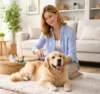
Understanding Different Types of Brushes
Brushes are a cornerstone of effective grooming, and knowing how to use each type properly is a key part of grooming tools overview. Different brushes suit different coat types and purposes, from removing tangles to smoothing and adding shine.
Slicker Brushes
Ideal for Long-Haired Dogs
- Removes mats, tangles, and loose undercoat efficiently
- Best for breeds like Golden Retrievers, Collies, and Huskies
Step-by-Step Usage
- Hold brush at a slight angle to avoid skin irritation
- Start at the back or tail and work towards the head
- Use short, gentle strokes and detangle mats slowly
Mini-Case: Reducing Mats on a Golden Retriever
- “Max,” a 3-year-old Golden Retriever, developed heavy mats in the winter undercoat
- Using a slicker brush 3 times per week removed tangles before they became severe, cutting grooming time by 50%
Bristle Brushes
Suitable for Short-Haired Dogs
- Smooths coat and distributes natural oils for shine
- Ideal for Beagles, Boxers, and other short-haired breeds
Technique Tips
- Brush in the direction of hair growth
- Use moderate pressure to avoid scratching sensitive skin
- Clean brush regularly to remove hair buildup
Mini-Case: Shiny Coat on Beagle
- “Bella,” a Beagle with dull coat, improved shine and reduced shedding by brushing with a bristle brush daily for 5–10 minutes
Pin Brushes
Best for Curly or Dense Coats
- Helps lift coat for better airflow and easier drying
- Reduces tangling on curly-coated breeds like Poodles or Bichons
Usage Frequency and Care
- Brush at least 3 times per week to prevent mats
- Wash and dry brush every month to maintain hygiene
Combs for Detangling and Finishing
Combs are an essential part of grooming tools overview, used after brushing to remove hidden tangles and finish the grooming process.
Wide-Tooth Combs
Benefits for Thick Undercoats
- Perfect for detangling without breaking hair
- Works well on double-coated dogs like Huskies and Malamutes
Step-by-Step Detangling
- Start at the ends of the hair and work upwards
- Separate coat into small sections
- Remove small mats gradually to prevent discomfort
Fine-Tooth Combs
Finishing Touches for Smooth Coats: Removes remaining loose hairs and smooths the coat. Ideal for short or medium hair, giving a polished appearance.
Mini-Case: Poodle Grooming Routine
- “Luna,” a Poodle, had uneven hair length after bath
- Using a fine-tooth comb after brushing created uniform coat length and a silky finish
Dematting Combs
Preventing Severe Mats
- Specifically designed to cut through stubborn tangles
- Reduces coat damage when used properly
Step-by-Step for Stress-Free Use
- Hold hair close to skin to prevent pulling
- Work in small sections
- Use gentle strokes, alternating sides if needed
- Reward dog with treats to reduce stress
Clippers and Trimmers Overview

Clippers and trimmers are indispensable in grooming tools overview for efficiently trimming coat length and shaping areas like paws, ears, and tails.
Types of Clippers
Corded vs Cordless
- Corded: Continuous power, ideal for long grooming sessions
- Cordless: Portable, flexible, best for quick touch-ups or small dogs
Blade Selection Guide
- Blades numbered for different coat lengths
- Use sharp, clean blades to prevent pulling or uneven cuts
Trimmers for Sensitive Areas
Ears, Paws, Tail
- Safer and more precise for delicate regions
- Avoid nicking the skin by using slow, controlled movements
Step-by-Step Safety Tips
- Trim in short, gentle strokes
- Hold the skin taut to prevent cuts
- Frequently check progress and comfort
Mini-Case: Grooming a Schnauzer with Clippers
Preparation, Tools, Technique:
- “Rocky,” a Schnauzer, required regular trimming of legs, ears, and facial hair
- Clippers used with proper blades and trimmers on sensitive areas reduced grooming time from 90 to 50 minutes
Outcome and Time Saved:
- Dog remained calm throughout
- Coat remained even and professional-looking
Quick Tips for Brush, Comb, and Clippers Usage:
- Always detangle before clipping to prevent snags
- Keep clippers and combs clean and oiled
- Work in sections for long-haired dogs
- Use treats to reward calm behavior during grooming
- Replace dull blades promptly to maintain efficiency
Maintenance and Cleaning of Grooming Tools
Proper maintenance is a critical part of grooming tools overview. Clean, well-kept tools not only last longer but also prevent infections, skin irritation, and poor grooming results.
Cleaning Brushes
Remove Hair and Debris
- After each grooming session, remove trapped hair using a comb or fingers
- Shake brushes gently to dislodge loose debris
Wash and Dry Correctly
- Use mild soap and warm water for deep cleaning
- Let brushes air-dry completely before next use to prevent mold
Step-by-Step Mini Routine
- Remove hair from brush teeth
- Wash in warm, soapy water
- Rinse thoroughly
- Shake off excess water
- Air-dry on a towel in a warm, ventilated area
Sanitizing Combs
Step-by-Step for Safety
- Soak combs in pet-safe disinfectant for 5–10 minutes
- Rinse and dry completely
- Helps prevent bacterial and fungal infections
Frequency Recommendations
- Daily for tools used on multiple dogs
- Weekly for single-dog grooming routines
Clippers Maintenance
Oil Blades Regularly
- Keeps blades sharp and reduces friction
- Prevents hair pulling and skin irritation
Mini-Case: Avoiding Blade Overheating
- “Daisy,” a long-haired Bernese Mountain Dog, experienced discomfort from overheated clippers
- Regular blade oiling and brief cooling intervals made grooming faster and safer
Choosing the Right Tools for Your Dog
Selecting proper grooming tools is essential in any grooming tools overview. Every dog is different—coat type, size, temperament, and age affect which brushes, combs, and clippers are most effective.
Coat Type Considerations
Short vs Long vs Curly Coats
- Short-haired: bristle brushes and fine combs
- Long-haired: slicker brushes, wide-tooth combs, dematting tools
- Curly coats: pin brushes, dematting combs, professional-grade clippers
Tool Recommendations
- Invest in quality tools suitable for your dog’s coat
- Avoid using harsh or unsuitable brushes that can damage hair or irritate skin
Dog Size and Temperament
Small vs Large Breeds
- Small dogs: lightweight brushes and clippers
- Large dogs: sturdy, ergonomic tools for longer sessions
Tools for Anxious Dogs
- Quiet, low-vibration clippers
- Gentle brushes to minimize stress
- Reward system with treats to keep grooming positive
Budget and Quality
Cost vs Durability
- High-quality tools may have higher upfront costs but last longer
- Cheaper alternatives may wear out quickly, causing uneven grooming
Mini-Case: Investing in Professional Tools
- “Rocky,” a 4-year-old Cocker Spaniel, had frequent matting with cheap brushes
- Switching to professional-grade tools reduced grooming time and improved coat health
Tips for Efficient Grooming Sessions
Knowing how to use your tools properly maximizes efficiency. These grooming tools overview tips save time and reduce stress for both you and your dog.
Pre-Grooming Prep
Bath, Coat Detangling, Calm Environment
- Brush coat before bath to remove tangles
- Use a calm space, perhaps with soft music or treats
- Ensure towels, brushes, and clippers are ready to reduce delays
Step-by-Step Grooming Routine
- Towel dry if bathing first
- Brush thoroughly to remove loose hair
- Detangle with combs, focusing on mats
- Trim with clippers and trimmers where needed
- Finish with fine comb for smooth coat
Common Mistakes to Avoid
Over-Brushing or Wrong Tool Use
- Can irritate skin or damage hair
- Avoid brushing against hair growth direction
Ignoring Safety
- Clippers should never be used on wet coat
- Always check for skin folds or sensitive areas before trimming
Quick Tips:
- Section coat for longer-haired breeds
- Reward calm behavior consistently
- Clean and maintain tools after every session
Professional vs Home Grooming Tools
Understanding the difference between professional and home grooming tools is an essential part of grooming tools overview. Using the right equipment ensures safety, efficiency, and the best results for your dog.
Benefits of Professional Tools
Durability, Speed, Comfort
- Professional brushes, combs, and clippers last longer and handle heavy grooming
- Often quieter and more ergonomic, reducing stress on both owner and dog
Mini-Case: Salon-Level Grooming at Home
- “Luna,” a Poodle with thick curly hair, was groomed with professional-grade clippers
- Grooming time reduced by 40%, and coat remained even and shiny
When Home Tools Are Enough
Coat Type and Grooming Frequency
- Short-haired dogs may require only basic bristle brushes and fine combs
- Long-haired breeds benefit from occasional use of professional tools for detangling and trimming
Safety and Ease
- Home tools are typically safer for beginners when used correctly
- Lightweight and easy to handle for shorter grooming sessions
Daily Grooming Checklist and FAQs
A consistent routine keeps your dog’s coat healthy and reduces matting or skin issues. Incorporating a daily checklist is a key part of any grooming tools overview.
Daily Grooming Checklist:
- Brush daily to remove loose hair and prevent tangles
- Comb regularly to detangle and smooth the coat
- Trim nails and check paws for debris or irritation
- Inspect ears for dirt or signs of infection
- Sanitize grooming tools after each session
- Reward dogs with treats to reinforce positive behavior
Frequently Asked Questions
How Often Should I Groom My Dog?
- Short-haired breeds: 2–3 times per week
- Long-haired or curly breeds: Daily brushing with weekly combing and trimming
- Mini-Case: “Max,” a Golden Retriever, benefited from 20 minutes of daily brushing, reducing mats and shedding significantly
Which Brush Is Best for My Dog?
Use a grooming tools overview to select brushes based on coat type:
- Short-haired: bristle brush, fine comb
- Long-haired: slicker brush, pin brush
- Curly coats: pin brush, dematting comb
Can I Use Clippers Safely at Home?
Yes, if you follow safety guidelines:
- Keep blades sharp and clean
- Never clip wet coat
- Use gentle strokes and check sensitive areas
Reward calm behavior with treats for stress-free grooming
Step-by-Step Daily Grooming Routine:
- Brush to remove loose hair and tangles
- Detangle with wide-tooth combs if needed
- Section coat for long-haired dogs
- Trim with clippers and trimmers where necessary
- Finish with fine comb or brush for smooth coat
- Check paws, ears, and tail for debris or irritation
- Clean and sanitize tools
- Reward dog with treats and praise
Quick Tips for Stress-Free Grooming:
- Maintain a calm environment with low noise and soft lighting
- Section hair for long-haired dogs to avoid overwhelm
- Rotate tools and brushes to reduce friction and skin irritation
- Replace dull blades promptly for efficiency and safety
Summary of Key Grooming Tools Overview
- Brushes: Slicker, bristle, pin brushes for different coat types
- Combs: Wide-tooth, fine-tooth, dematting combs for detangling and finishing
- Clippers and trimmers: Corded, cordless, and sensitive area tools
- Maintenance: Clean, oil, and sanitize tools regularly
- Selection: Choose tools based on coat type, size, temperament, and budget
- Professional vs home tools: Know when high-grade tools are necessary
- Daily routine: Brush, comb, check sensitive areas, trim as needed, reward
Mini-Case Recap:
- Proper grooming tools overview reduces grooming time, prevents mats, and keeps dogs comfortable
- Investing in the right tools and learning correct techniques can make grooming a stress-free experience for both dog and owner
Find More Dog Care Guides
Continue exploring practical guides related to this topic.