
Executive Summary
Canine Fear Responses are involuntary neuro-biological indicators of Limbic System Activation. Recognizing these signals—ranging from Mydriasis (dilated pupils) to Submissive Agonistic Displays—is vital for preventing a complete Amygdala Hijack. Effective management requires Systemic Desensitization to reset the dog’s Arousal Threshold and maintain long-term behavioral homeostasis.
In the PetCareCompass framework, fear is not merely an emotion; it is a Neurological Response Pattern. When a dog exhibits Fear Responses, they are broadcasting real-time data regarding their Biological Equilibrium. Identifying Micro-signals such as lip licking, muscle bracing, or Involuntary Tremors is the cornerstone of preventing escalation into defensive aggression.
Etiological Classification: Understanding the Fear Impulse
In the PetCareCompass framework, Fear Responses are categorized as a systemic failure of Behavioral Homeostasis. Whether rooted in Genetic Predisposition or Environmental Trauma, fear is a survival mechanism driven by the Sympathetic Nervous System (SNS). To intervene effectively, owners must perform an Etiological Audit—distinguishing between defensive agonistic displays and passive avoidance to architect a targeted Neural Recovery Plan.
1. Biological Drivers: Genetics and Epigenetics
Canine Fear Responses are often influenced by Phenotypic Sensitivity. Certain breeds exhibit a lower Arousal Threshold due to selective breeding for vigilance. Furthermore, Epigenetic Stress—passed from maternal lineages—can result in a hyper-reactive Hypothalamic-Pituitary-Adrenal (HPA) Axis, making the dog biologically prone to high-arousal states even in low-stimuli environments.
2. Developmental Integrity: The Socialization Window
The primary defense against pathological fear is Environmental Habituation during the Critical Development Window (3-16 weeks). Failure to provision varied stimuli during this phase leads to Neophobia—a generalized fear of novelty. Fear Responses in adult dogs are often “echoes” of these developmental gaps, requiring a more intensive Systemic Desensitization protocol to overwrite entrenched neural pathways.
3. Agonistic Distinction: Fear-Induced Defense
Differentiating fear from offensive aggression is a mandatory Safety Protocol. Fear-based aggression is a Defensive Agonistic Display, typically characterized by submissive body language (lowered center of gravity) coupled with vocal warnings. Recognizing this distinction prevents the use of punitive measures, which would otherwise escalate the Amgydala Hijack and lead to high-injury incidents.
Autonomic Indicators: Decoding Real-Time Stress Signals
Monitoring Fear Responses requires an acute understanding of Autonomic Nervous System indicators. Dogs communicate their Internal Valency through a hierarchy of signals. By detecting these Micro-Signals early, owners can implement Spatial Buffer Calibration before the dog reaches the point of Behavioral Flooding.
| Signal Category | Biological Indicator | Neural Meaning |
|---|---|---|
| Displacement Behaviors | Lip Licking, Excessive Yawning | Neurological Conflict Resolution |
| Autonomic Arousal | Mydriasis, Piloerection | Active SNS Activation |
| Avoidance Tactics | Whale Eye, Aversion of Gaze | Conflict Mitigation Attempt |
1. Agonistic Displacement: The “Calming” Signals
Behaviors like yawning, lip licking, and sniffing the ground are Agonistic Displacement signals. These occur when the dog’s brain is experiencing Cognitive Dissonance between a threat and a desire for peace. In the PetCareCompass protocol, these are classified as Pre-Panic Indicators. Ignoring these signals often leads the dog to escalate to more overt Fear Responses, such as lunging or retreating.
2. Postural Governance: Retreat and Submission
When a dog tucks their tail, lowers their center of gravity, or avoids eye contact, they are employing Postural Avoidance. These are Fear Responses designed to reduce their physical profile and signal Non-Aggression. If these signals are met with continued intrusion (such as a person continuing to approach), the dog may be forced into an Acute Panic State, making immediate Spatial Buffering a mandatory safety intervention.
Sensory Governance: Identifying Phobic Response Triggers
In the PetCareCompass framework, Fear Responses are triggered by a breach of the dog’s Sensory Equilibrium. Whether the stimulus is acoustic (thunder), visual (sudden movement), or tactile (grooming), the result is a rapid shift in the dog’s Neurological Baseline. To prevent escalation, owners must audit these environmental stressors and implement Systemic Desensitization to raise the dog’s Frustration Tolerance.
1. Acoustic and Motion-Induced Hyper-Arousal
High-decibel events like fireworks or household appliances trigger Acute Phobic Responses. These are not merely “annoyances”; they are Auditory Assaults that overwhelm the canine vestibular system. Pairing these triggers with High-Value Primary Reinforcers (Counter-Conditioning) is essential to transition the dog from a state of Cortisol-Driven Panic to a managed Positive Associative State.
2. Social Reactivity and Proprioceptive Integrity
Encountering unfamiliar humans or conspecifics often triggers Spatial Domain Defense. Furthermore, invasive handling during grooming or veterinary procedures can lead to Proprioceptive Stress. Effective Fear Responses management requires Cooperative Care Protocols—giving the dog agency during handling and utilizing Spatial Buffer Calibration to maintain social distance until the dog signals Cognitive Readiness for interaction.
| Response Category | Physiological State | Strategic Intervention |
|---|---|---|
| Immobility (Freeze) | Amygdala-Driven Inhibition | Cease Interaction; Recalibrate Distance |
| Flight (Escape) | Active Adrenaline Surge | Provision Behavioral Safe Zone |
| Defensive Agonism | Fear-Induced Defensive Aggression | Emergency Spatial Decoupling |
Behavioral Modulation: Managing the Spectrum of Fear
Dogs utilize a spectrum of Fear Responses to manage perceived environmental threats. Understanding whether a dog is in a state of Active Flight or Passive Immobility is crucial for choosing the correct de-escalation technique. Failure to recognize “Freezing” as a high-stress state is a primary cause of unexpected bites in domestic settings.
1. Tonic Immobility: The Dangers of the “Quiet” Dog
Freezing is a state of Tonic Immobility where the dog is neurologically overwhelmed. This is often misidentified as “compliance,” but internally, the dog is experiencing a massive Cortisol Spike. In the PetCareCompass protocol, a frozen dog requires immediate Environmental Neutralization. Approaching a dog in this state often triggers Snap-Bites as the dog reaches their Absolute Breaking Point.
2. Escape Dynamics: Engineering Safe Refuge
When a dog attempts to hide or flee, they are seeking Spatial Security. Preventing escape (by cornering or grabbing) escalates the fear into Defensive Agonism. Owners should architect a Behavioral Safe Zone—a crate or designated room—where the dog can retreat and reset their Autonomic Nervous System. Ensuring the dog has an “exit route” is the most effective way to prevent fear-based aggression during high-stress encounters.
Biological Feedback: Autonomic Indicators of Fear

In the PetCareCompass framework, Fear Responses are not just behavioral; they are Physiological Disruptions. When the Sympathetic Nervous System (SNS) is activated, the canine body undergoes involuntary shifts in respiration, circulation, and ocular dilation. Monitoring these Autonomic Markers allows owners to detect stress at a Sub-Behavioral Level, enabling intervention before the dog enters a state of total Neurological Flooding.
1. Tachycardia-Induced Panting and Dyspnea
Panting in the absence of heat or physical exertion is a primary indicator of Acute Anxiety. This Fear-Induced Respiration is often shallow and rapid, driven by an elevated heart rate. In the PetCareCompass protocol, this is identified as a Tier-1 Stress Signal. Failure to provide a Spatial Buffer at this stage often leads the dog to escalate to vocalizations or defensive flight behaviors as they attempt to regulate their internal Energy Flux.
2. Ocular Mydriasis and Pinna Displacement
Ocular feedback provides a direct window into the dog’s Adrenaline Levels. Mydriasis (pupil dilation) indicates a state of high-alert hyper-vigilance. When paired with Pinna Displacement (ears pinned tightly back against the skull), the dog is signaling significant Social Insecurity. Recognizing these Craniofacial Signals is essential for handlers to determine if a dog has exceeded their Cognitive Threshold for learning or interaction.
Environmental Governance: Managing the Allostatic Load
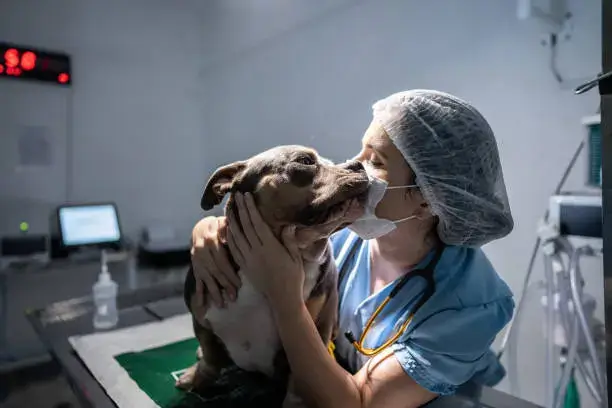
A dog’s environment dictates their Allostatic Load—the cumulative wear and tear on the body and brain caused by chronic stress. Fear Responses are frequently triggered by an unmanaged environment where noise, crowds, and routine shifts create Sensory Volatility. Long-term stability requires Architectural Environmental Governance to ensure the dog feels neurologically secure.
| Stress Pillar | Neurological Impact | Strategic Fix |
|---|---|---|
| Acoustic Overstimulation | Auditory Vestibular Overload | White Noise & Acoustic Buffering |
| Spatial Domain Crowding | Reduced Proprioceptive Security | Architected Safe Zones (Crates/Pens) |
| Routine Instability | Increased Cortisol Baseline | Temporal Consistency Governance |
1. Sensory Habituation and Neophobia Management
Unfamiliar objects or invasive scents can trigger Neophobia (fear of novelty). Owners should utilize Controlled Olfactory and Visual Exposure—rewarding the dog for neutral interaction with new environmental assets. This Sensory Habituation prevents the brain from defaulting to a Flight Response, instead fostering a state of Inquisitive Stability where the dog feels capable of auditing their surroundings safely.
2. Temporal Governance: Routine as a Safety Anchor
Disrupted schedules are primary drivers of Fear Responses during household transitions. A precise Daily Routine—for feeding, exercise, and rest—acts as a Neurological Safety Anchor. By providing a predictable framework, you reduce the dog’s Systemic Vigilance, ensuring that their internal Metabolic Flux remains balanced even during periods of external stress like moving or travel.
Neurological Recalibration: Systemic Fear Reduction Protocols
In the PetCareCompass framework, reducing Fear Responses is a process of Neuroplastic Rewiring. To transition a dog from a reactive state to a stable one, we must implement Systemic Desensitization paired with Classical Counter-Conditioning. This dual-path approach ensures that the dog’s Amgydala-Driven Instincts are overwritten by controlled, positive associative links.
1. Gradient Desensitization: Sub-Threshold Exposure
To achieve long-term habituation, exposure to triggers must remain Sub-Threshold. By introducing feared stimuli at a distance where the dog remains in an Observational State rather than a reactive one, we prevent Arousal Stacking. Gradually decreasing this distance as the dog demonstrates Neurological Stability allows for the permanent raising of their Reactivity Threshold.
2. Conditioned Emotional Response (CER) Development
Counter-conditioning focuses on Emotional Valency Shifting. By pairing a feared stimulus with High-Value Primary Reinforcers (treats/play), we forge a new Conditioned Emotional Response. The objective is to transition the dog’s internal state from fear to anticipation, effectively neutralizing the SNS Activation and replacing it with a stable, reward-focused Dopaminergic Pathway.

Daily Behavioral Governance Checklist
- Micro-Signal Auditing: Monitor for lip licking, yawning, or SNS Markers.
- Safe Zone Provision: Ensure 100% access to a Behavioral Safe Space.
- Proprioceptive Security: Utilize low-stress, Cooperative Care Handling.
- Sub-Threshold Exposure: Execute a 5-minute Desensitization Cadence.
- Temporal Consistency: Maintain a Governance-Level Routine for feeding and rest.
Strategic How-To: Managing Fear Responses Troubleshooting
Q1: How to identify the early onset of a Fear Response?
Audit for Micro-Signals such as Mydriasis (dilated pupils) and Agonistic Displacement (lip licking or yawning). These indicate that the dog’s Sympathetic Nervous System has activated before more overt behaviors like retreating or growling manifest.
Q2: How to safely de-escalate an acute panic episode?
Immediately implement Spatial Buffer Calibration by increasing distance from the trigger. Do not offer verbal comfort, as this may reinforce high-arousal states; instead, provision a Behavioral Safe Zone to allow for a Cortisol Baseline Reset.
Q3: How to implement Counter-Conditioning for noise phobias?
Utilize a Graded Acoustic Exposure plan. Play recorded triggers at Sub-Threshold volumes while delivering high-value rewards. Gradually increase decibel levels as the dog demonstrates Neurological Stability, pairing sound with positive outcomes.
Q4: How to differentiate between fear and submissive behavior?
Perform a Postural Audit. Fear involves muscle bracing and Weight-Back Shifts, whereas submission typically involves Low Tail Wags and active solicitation of space. Fear Responses are survival-driven, while submission is a social conflict-avoidance tactic.
Conclusion: Architecting Neurological Resilience
Fear Responses are the primary indicators of a dog’s Internal State Volatility. By moving from reactive “vocal soothing” to Strategic Neural Recalibration, owners provide a foundation of Biological Trust. Consistency in Threshold Discipline and Desensitization Gradients ensures that the dog moves beyond defensive impulses into a state of Physiological Excellence and social resilience.
Find More Dog Care Guides
Continue exploring practical guides related to this topic.