
Safety Disclaimer
Resource guarding can escalate into possessive aggression. If your dog exhibits a history of snapping or biting, do not attempt the modification techniques below without consulting a Certified Professional Dog Trainer (CPDT) or a veterinary behaviorist. Safety is the absolute priority.
“At PetCareCompass, we view resource guarding not as ‘bad behavior’ but as a deeply rooted evolutionary survival mechanism. Our task is to prove to our dogs that human presence near a resource is a signal of abundance, not deprivation.” — Maya Mai
Resource guarding is a natural yet complex canine behavior that stems from a perceived threat to a valued possession. Whether it is food, toys, or personal territory, this behavior is often driven by innate insecurity or experiences of scarcity. Without strategic intervention, guarding can escalate from subtle body language to overt possessive aggression. The goal of this guide is to move beyond simple obedience and address the root emotional cause. By implementing desensitization protocols and positive reinforcement, we can shift your dog’s internal association of human approach from “threat” to “reward,” fostering a safe and harmonious household.
The Foundation of Successful Management:
- Emotional Regulation: Reframing the presence of others as a positive event.
- Incremental Exposure: Starting behavior modification with low-value items to prevent stress.
- Functional Commands: Master the “Trade-Up” protocol and “Leave it” for real-world safety.
Decoding the Triggers of Resource Guarding

Effective resource guarding management begins with acute observation. Owners must distinguish between mere enthusiasm and genuine possessive distress. Identifying these triggers early allows for proactive environmental management rather than reactive correction.
The Anatomy of a Guarding Response:
Before a growl occurs, most dogs display “micro-signals” of anxiety:
- Freeze & Stiffen: Sudden muscular tension when approached.
- The “Whale Eye”: Showing the whites of the eyes while staring at the perceived threat.
- Curbing: Physically shielding the object with their head or body.
- Hovering: Lowering the head over the resource without consuming it.
1. Food and Dietary Guarding
Guarding during mealtime often stems from scarcity trauma or competitive pressure. To neutralize this response, we must replace the fear of loss with a positive association of human proximity.
- Separation Protocols: Feed multi-dog households in separate rooms to lower the metabolic stress level.
- The “Addition” Method: Occasionally drop high-value treats (like small pieces of chicken) into the bowl as you walk by, rather than reaching into their space.
- Impulse Control: Implement the “Wait” command to establish calm before the resource is presented.
2. High-Value Objects and Toys
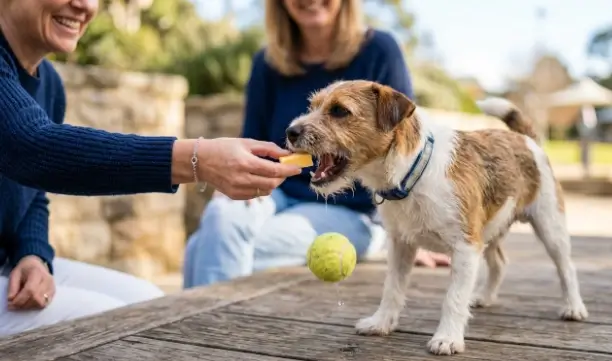
Possessiveness over chews, bones, or specific toys is a common form of competitive guarding. The goal is to prove that “giving up” an item leads to a superior reward.
The “Trade-Up” Strategy
Never forcibly pry an object from your dog’s mouth. Instead, offer a treat of significantly higher value (e.g., a piece of cheese for a tennis ball). This teaches the dog that yielding a resource is a profitable transaction, not a loss.
3. Spatial Territoriality (The Bed & Couch)
Spatial guarding—protecting couches, beds, or doorways—is an extension of a dog’s need for environmental security.
- “Off” and “Place” Cues: Train these commands in a neutral, non-triggering environment before applying them during a guarding event.
- Lure and Reward: Use movement and treats to encourage the dog to leave a guarded space voluntarily.
- Boundary Consistency: If spatial guarding becomes aggressive, temporarily restrict access to the furniture until the behavioral modification is complete.
Safe Handling & Trust-Based Interaction
Proper intervention during resource-guarding episodes is a matter of safety and long-term success. Confrontational methods—such as physical scolding or “alpha rolls”—frequently backfire by triggering negative escalation, reinforcing the dog’s belief that humans are a threat to their resources.
The “Leave It” Command
A fundamental impulse control tool. Start with neutral objects and reward immediate disengagement. The goal is to make “leaving it” more rewarding than “keeping it.”
The Trade-Up Protocol
Exchange a low-value item for a high-value treat (e.g., trading a toy for a piece of chicken). This proves that yielding a resource results in a biological profit.
Special Dynamics: The Multi-Dog Household
Resource guarding is significantly more complex in multi-dog environments due to Intraspecific Competition. To maintain harmony, focus on environmental management:
- Structured Dining: Utilize crates or separate rooms for feeding to lower metabolic stress.
- Boundary Autonomy: Ensure each dog has a dedicated “safe space” where they are never disturbed by others.
- Active Monitoring: Supervise playtime with high-value chews; if tension rises, remove the resource calmly before an escalation occurs.
Desensitization & Classical Counter-Conditioning
To “rewire” a guarding dog, we use Systematic Desensitization paired with Classical Counter-Conditioning (CC). This scientific approach changes the dog’s emotional response from “fear of loss” to “anticipation of joy.”
Step-by-Step Implementation
- Neutral Proximity: Approach the dog while they have a resource, but stay outside their Reactivity Threshold (the distance at which they stiffen).
- The Toss: Toss a superior treat (boiled chicken or cheese) near them without stopping or making eye contact.
- Incremental Advance: Over multiple sessions, decrease the distance only when the dog shows zero signs of tension.
- The Trade-Off: Once trust is established, initiate a full trade, rewarding them for voluntarily yielding the item.
In cases of mealtime guarding, simply walking past the bowl and dropping a treat (without reaching for the bowl) often yields faster results than forced obedience. This builds Predictable Safety.
Building Long-Term Confidence and Trust
Resource guarding is inversely proportional to a dog’s level of self-assurance. A dog that feels Secure in Abundance is far less likely to perceive human proximity as a threat to their survival. Confidence building through Structured Empowerment is the ultimate antidote to possessiveness.
The Family Alignment Protocol
Inconsistency is the primary cause of behavioral regression. To ensure success, every household member must follow these rules:
- Unified Cues: Use identical verbal commands (e.g., always “Trade,” never “Swap”).
- Zero Confrontation: No one, including children, should ever attempt to “test” the dog by taking items away.
- Identical Rewards: Use the same high-value markers to build Predictable Safety.
Reinforcing Calm Arousal States
Instead of reacting to guarding, we must proactively reward the absence of it. Utilizing Capturing Calm techniques—where you reward the dog for simply lying quietly near a valued item—helps lower their baseline cortisol levels over time.
When to Seek Professional Intervention
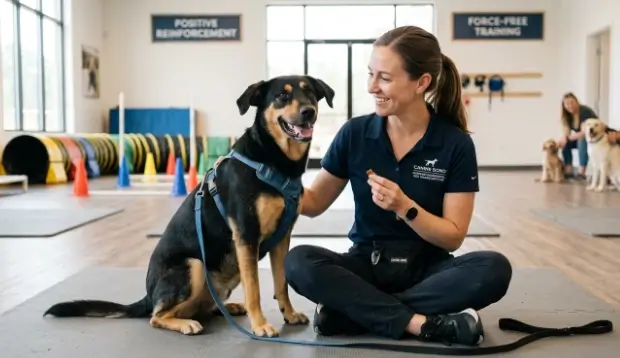
Resource Guarding can occasionally stem from underlying neurological or pain-related issues. If behavioral modification at home does not yield progress, professional help is not just recommended—it is mandatory for safety.
Consult a Professional if you notice:
- Persistent lunging, snapping, or skin-breaking bites.
- Escalation of guarding to include “invisible” resources (like space or shadows).
- Sudden onset of guarding in a previously relaxed adult dog (this may indicate medical distress).
Choosing the Right Expert
When selecting a professional, prioritize those with certifications from the Certification Council for Professional Dog Trainers (CCPDT) or the International Association of Animal Behavior Consultants (IAABC). Look for “Force-Free” or “LIMA” (Least Intrusive, Minimally Aversive) based practitioners to ensure long-term trust is maintained.
🔗 Related Guide: If guarding behavior is accompanied by excessive vocalization, read our Complete Guide to Managing Dog Barking at Home.
Systematic Gradual Exposure: Rewiring the Response
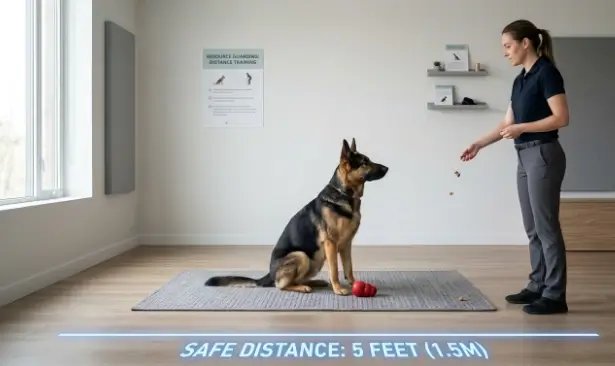
Gradual Exposure is a systematic behavioral protocol designed to increase a dog’s tolerance to proximity while they possess a resource. Instead of a confrontation, we create a controlled learning environment where the dog learns that a human approach signals safety and abundance, not a threat of loss.
Respecting the “Distance Threshold”:
Success in exposure therapy depends on staying sub-threshold. This means working at a distance where your dog is aware of your presence but remains physically relaxed. If you see stiffening or intense staring, you are too close—back up and resume from a distance where the dog feels secure.
Step-by-Step Exposure Protocol
- Identify the Safety Zone: Determine the exact footage where your dog notices you but continues to enjoy their resource calmly.
- Passive Association: Walk past the dog at this safe distance, tossing a high-value treat (like a piece of freeze-dried liver) toward them without stopping.
- Incremental Closing: Over several sessions, decrease your approach distance by 6-12 inches, only if the dog’s body language remains loose.
- Reward Neutrality: Consistently pair your proximity with “bonus” rewards that are better than what they currently have.
Implementing “The Trade Game”
The Trade Game is the gold standard for teaching Non-Confrontational Relinquishment. It shifts the dynamic from a “power struggle” to a “profitable transaction,” fostering a cooperative mindset in even the most possessive dogs.
Phase 1: Low-Value Swap
Offer a standard toy. Say “Trade” and present a high-value treat. As they drop the toy for the treat, praise and immediately give the toy back. This proves that “giving up” doesn’t mean “losing forever.”
Phase 2: High-Value Progression
Move to guarded items like chews or bones. Offer a “super-reward” (e.g., fresh chicken or cheese) in exchange. Always ensure the trade is an upgrade for the dog.
“We worked with a Golden Retriever who guarded rawhides aggressively. By utilizing the Trade Game twice daily for 14 days, the dog transitioned from stiffening at 5 feet to voluntarily dropping the bone when hearing the ‘Trade’ cue from across the room. The key was 100% consistency and never ‘cheating’ the dog out of their reward.”
Leveraging Essential Commands for Emotional Control
Structured training provides the linguistic framework for Resource Guarding management. By mastering impulse-control commands, you replace a dog’s reactive “guarding reflex” with a proactive “listening response,” fostering a predictable and low-stress environment.
The Guarding Prevention Toolkit
- 1. “Leave It” vs. “Drop It”: Leave It is a preventative cue (don’t touch that item). Drop It is a corrective cue (release what is already in your mouth). Mastering both ensures you can manage a situation before and during an interaction with a resource.
- 2. The “Wait” Protocol: Essential for mealtime. Teaching a dog to wait for permission before accessing their bowl shifts their mindset from “I must protect this” to “I receive this from a trusted leader.”
- 3. “Place” Training: Provides a functional alternative to spatial guarding. By sending a dog to their “Place,” you de-escalate territorial tension over couches or doorways.
Navigating Resource Guarding in Multi-Dog Households
In a multi-dog setting, guarding often becomes Intraspecific (dog-to-dog). The presence of another canine can heighten the perceived “threat level,” leading to more frequent escalations. Management must focus on Environmental Isolation and controlled communal experiences.
The “Safe Dining” Protocol
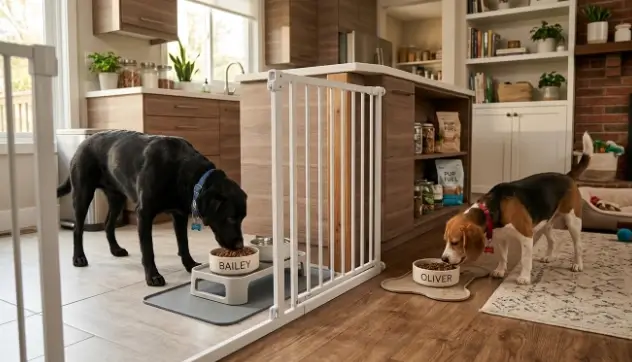
- Physical Barriers: Use baby gates or separate rooms during feeding to eliminate the visual stimulus of a “competitor.”
- Individual Value Zones: High-value chews (bully sticks, marrow bones) should only be enjoyed in crates or separated areas to prevent “stealing” and subsequent fights.
- Neutral Interaction: Reward both dogs for being calm in each other’s presence while toys are visible but not in active play.
Supervised Communal Play
Shared toys can be a significant trigger. Start with “neutral” activities like parallel walks before introducing communal toys. Utilize Positive Reinforcement for both dogs when they choose to disengage from a toy voluntarily, fostering a culture of cooperation rather than competition.
Pro Tip: When intervening in a multi-dog dispute, remain silent and calm. Scolding often adds “arousal energy” to the situation, potentially triggering a reactive bite.
Advanced Recognition: Identifying Subtle Warning Signs
Recognizing the “pre-growl” phase is essential for Anxiety Reduction and conflict prevention. Dogs often utilize Displacement Behaviors—subtle cues that indicate rising internal tension before they resort to overt guarding or aggression.
The “Micro-Signal” Checklist:
- Somatic Freezing: A momentary total body stiffening, as if the dog has turned to stone.
- Lip Licking & Yawning: Classic stress signals used to self-soothe when they feel a resource is threatened.
- Hard Eye Contact: A focused, unblinking stare directed at the person or pet approaching.
- Increased Consumption Speed: Rapidly gulping food to “finish it before it’s gone.”
Emotional Counter-Conditioning Protocols
The objective of Counter-Conditioning is to fundamentally rewire the dog’s emotional response to human proximity during high-value activities. We transition the dog from a state of “defense” to a state of “anticipation.”
The “Bonus Delivery” Technique
Approach the dog while they are eating (staying outside their tension zone). Toss a piece of high-value treat (boiled chicken or cheese) near their bowl without stopping. Over time, your presence becomes a signal that something better is coming, effectively neutralizing the guarding reflex.
Professional Intervention & Long-Term Stability
Managing Resource Guarding is a marathon, not a sprint. Regression is common if a structured routine is not maintained. If guarding behavior escalates to snapping or biting, professional guidance is mandatory for the safety of the household.
Maintaining Success: The 3-Step Action Plan
- 1. Daily Reinforcement: Practice “Trade Games” with low-value items at least twice daily to keep the skill sharp.
- 2. Consistent Boundaries: Ensure all family members adhere to the same commands and reward structures to avoid confusing the dog.
- 3. Vigilant Observation: Use a Behavior Journal to note any new triggers or signs of tension, allowing you to adjust your approach before an incident occurs.
🌐 Expert Resource: For further clinical studies on behavioral modification, explore the American Kennel Club’s guide to Resource Guarding.
Architecting Safety: Management Tools & Physical Boundaries
Management tools are essential “safety nets” that prevent guarding incidents while behavior modification is in progress. These tools are designed to manage the environment, ensuring that the dog is never placed in a position where they feel forced to defend a resource.
Barriers & Baby Gates
Establish “safe zones” using baby gates or crates. These allow your dog to enjoy high-value chews or meals without the perceived threat of a passerby, effectively lowering their defensive arousal.
Leash Management
A “house line” (a short, handle-less leash) can provide a safe way to guide a dog away from a guarded resource without reaching into their Reactivity Zone.
Guarding Against Regression: Preventing Relapse
Behavioral recovery is rarely linear. A dog may exhibit Regression during times of high stress, illness, or major household changes (like moving or a new family member). Long-term success requires a commitment to a Predictable Lifestyle.
The Relapse Prevention Protocol
- Maintenance Reps: Continue practicing the “Trade Game” weekly, even if the dog hasn’t guarded in months.
- Stress Audits: If your dog is stressed from a loud event (e.g., fireworks), temporarily restrict access to high-value resources to avoid a “stress-stacking” incident.
- Consistent Rituals: Keep feeding times and locations identical to regulate metabolic expectations and lower anxiety.
Monitoring Social Dynamics & Gradual Integration
In multi-pet or social settings, Resource Guarding can become contagious. Vigilant observation of social cues—such as lip licks, sudden freezes, or whale eye—is mandatory when resources like toys or attention are present.
Step-by-Step Social Integration:
- 1. Parallel Interaction: Walking dogs together without resources present to build a neutral bond.
- 2. Low-Value Communal Space: Supervised time in a large area with no “guardable” items.
- 3. Micro-Exposure: Introducing a single, neutral toy under strict supervision and utilizing Intervention Cues (like “Leave it”) at the first sign of tension.
The Hierarchy of Value: Categorizing Resources
Successful Resource Guarding modification depends on your ability to “out-bid” the guarded item. Understanding how your dog perceives value allows you to structure Trade-Up Exercises effectively.
| Category | Low-to-Mid Value (The “Start”) | High Value (The “Ultimate Trade”) |
|---|---|---|
| Toys/Objects | Old tennis ball, rubber ring, dry kibble. | Squeaky plushies, puzzle toys, stolen laundry. |
| Edibles | Standard dog biscuits, baby carrots. | Rawhides, Bully sticks, fresh chicken, cheese. |
Critical Mistakes: What NOT to Do
Inadvertent body language or outdated training myths can solidify a dog’s guarding reflex. To maintain Anxiety Reduction, avoid these common pitfalls:
Forced “Alpha” Removal
Never forcibly pry an item from a growling dog. This confirms their fear that you are a “thief,” potentially leading to a bite.
Intense Eye Contact
Staring directly at a guarding dog is a high-level challenge in canine language. It increases cortisol levels and triggers defensive aggression.
Messing with their Food
A common myth is that you should “pet them while they eat.” For a guarding dog, this is invasive and increases mealtime anxiety.
The Resource Guarding Management Checklist
Consistency is the primary driver of behavioral change. A structured Daily Protocol ensures that your dog remains in a “learning state” rather than a “defensive state.” Use this checklist to maintain environmental predictability.
Feed in separate rooms or crates to maintain Metabolic Calm.
5 minutes of “Leave it” and “Wait” drills to reinforce impulse control.
Perform 2-3 “Trade-Up” exercises with low-to-mid value items.
Note any Displacement Behaviors (lip licking, stiffening) seen today.
Success Profiles: Real-World Behavioral Recovery
Reviewing successful modification programs illustrates the effectiveness of the PetCareCompass methodology. Behavioral change takes time, but with the right protocol, even severe guarding can be neutralized.
Case A: The Multi-Dog Mealtime Conflict
Challenge: Two Labradors exhibited snapping and growling during feeding, leading to increased household tension.
Intervention: Implemented Physical Isolation (crate feeding) and “Parallel Calm” training with high-value treats thrown from a distance.
Result: Within 8 weeks, the Intraspecific Competition was eliminated. Both dogs now wait calmly in their designated zones for meals.
Case B: Chronic Toy & Chew Guarding
Challenge: A Rescue Terrier guarded bully sticks with severe Possessive Aggression.
Intervention: Utilized the Trade-Up Protocol exclusively for 6 weeks, starting with low-value toys and progressing to high-value chews.
Result: The dog successfully generalized the “Trade” cue, voluntarily relinquishing items for rewards without somatic stiffening.
🌐 Expert Guidance: For clinical insights on managing severe possessive aggression, we recommend the American Kennel Club’s (AKC) resource on Managing Resource Guarding.
Empowerment Through Education: The Owner’s Journey
Effective Resource Guarding management is not a one-time fix; it is an ongoing commitment to understanding canine psychology. Owners who invest in Continuing Education are better equipped to recognize the nuance of their dog’s communication, ensuring a lifetime of safety and mutual respect.
Expert-Recommended Learning Path
- Advanced Behavioral Webinars: Focus on LIMA (Least Intrusive, Minimally Aversive) protocols.
- Literature: Explore works by certified behaviorists (e.g., Jean Donaldson’s “Mine!”) for deep-dive clinical insights.
- Workshops: Participate in hands-on sessions focusing on Impulse Control and Cooperative Care.
Frequently Asked Questions (FAQ)
Q1: Is resource guarding a sign of dominance?
No. Resource guarding is an evolutionary survival mechanism driven by fear of loss or insecurity, not a desire for dominance. Treating it as a power struggle often worsens the aggression.
Q2: Should I punish my dog for growling when guarding?
Never punish a growl. A growl is a warning signal. If you suppress the growl through punishment, the dog may proceed directly to biting without warning in the future.
Q3: Can resource guarding be fully “cured”?
While it can be managed to the point where it no longer poses a risk, guarding is a natural instinct. Consistency in Behavioral Modification ensures the dog remains comfortable and rarely resorts to guarding behaviors.
Find More Dog Care Guides
Continue exploring practical guides related to this topic.