
Many dog owners don’t realize how often dog stress signs at home appear in everyday situations. Loud noises, changes in routine, or even subtle shifts in your behavior can trigger stress responses in dogs. When stress goes unnoticed, it may slowly turn into long-term behavioral or health problems.
Recognizing dog stress signs at home early allows owners to adjust the environment, routines, and interactions before stress escalates. This section focuses on the earliest, most commonly overlooked signals that dogs display in familiar home settings.
If you are new to home-based dog care, this article works alongside the broader principles explained in the complete guide to caring for a dog at home, helping you build a safe daily environment step by step.
Early dog stress signs at home every owner should notice
Why early dog stress signs at home are easy to miss
Dogs rarely show stress in dramatic ways at first. Instead, early dog stress signs at home tend to be subtle and easily confused with normal behavior. Many owners assume their dog is simply tired, stubborn, or playful.
Common reasons early signs are overlooked include:
- Stress behaviors that appear briefly and then disappear
- Misinterpreting stress as disobedience
- Assuming dogs “get used to” uncomfortable situations
Many veterinarians recommend observing patterns rather than isolated moments. Repeated small behaviors often signal underlying stress.
Common dog anxiety symptoms at home in the early stage
One of the most frequent early dog stress signs at home involves mild anxiety responses. These may occur during specific times of day or around certain household activities.
Examples include:
- Following owners closely from room to room
- Restlessness before bedtime
- Difficulty settling after normal play
In daily routines, these signs often show up when dogs anticipate something stressful, such as being left alone or hearing loud household appliances.
How daily routines influence dog stress signs at home
Dogs thrive on predictability. Sudden changes to feeding times, walking schedules, or owner availability can trigger dog stress signs at home, even if the change seems minor to humans.
- An owner starts working late for a week
- The dog begins pacing in the evening
- Appetite slightly decreases
If concerns persist, consult a licensed veterinarian to rule out medical causes that may mimic stress behaviors.
Dog stress signs at home shown through body language and posture
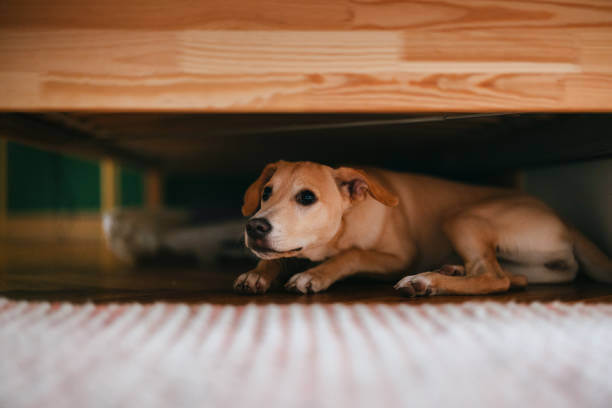
Dog stress body language signs owners often misread
Body language is one of the clearest indicators of dog stress signs at home, yet it is often misunderstood. Dogs communicate discomfort long before vocalizing distress.
Subtle stress-related body signals include:
- Ears pinned slightly back
- Avoiding eye contact
- Tense facial muscles
These behaviors are not signs of guilt or defiance. They reflect emotional discomfort in the current environment.
Posture changes as dog stress signs at home
Changes in posture can signal that a dog feels unsafe or overwhelmed at home. Owners may notice these dog stress signs at home during interactions with guests or children.
Common posture-related signals:
- Lowered head while standing
- Shifted weight toward the back legs
- Tail held lower than usual
Many veterinarians recommend observing posture during routine activities like feeding or greeting family members.
Facial expressions linked to dog stress signs at home
A dog’s face can reveal stress even when the rest of the body appears calm. Early dog stress signs at home often show through facial tension.
Watch for:
- Frequent lip licking without food present
- Yawning during calm moments
- Wide eyes showing more white than usual
These expressions often appear when dogs feel pressured to interact or remain still.
Common behavior issues at home—such as barking, stress, or difficulty staying alone—share similar triggers and require a consistent training approach. For an overview of how dogs behave in home environments, check Dog Behavior at Home.
If you’re dealing with specific concerns, guides like Dog Barking at Home, Dog Home Alone Training, and Dog Stress Signs at Home offer practical strategies to improve your dog’s comfort and behavior indoors.
Behavioral dog stress signs at home that often go misunderstood
Stress-related behaviors mistaken for bad habits
Many dog stress signs at home are mistakenly labeled as behavioral problems. This misunderstanding can worsen stress when dogs are punished instead of supported.
Examples include:
- Chewing household items after routine changes
- Barking excessively when owners move between rooms
- Ignoring previously learned commands
These behaviors often indicate emotional overload rather than poor training.
Behavioral changes in stressed dogs at home
Behavioral shifts are one of the clearest dog stress signs at home, especially when they appear suddenly. Dogs may act differently even in familiar spaces.
Common changes include:
- Reduced interest in play
- Increased clinginess
- Withdrawal from family interaction
Many veterinarians recommend documenting when these behaviors occur to identify specific stress triggers.
How household environments reinforce stress
Cluttered spaces, constant noise, or lack of quiet areas can amplify dog stress signs at home over time. Dogs need places where they can relax without interruption.
Helpful adjustments include:
- Creating a quiet resting zone
- Limiting constant background noise
- Allowing dogs to retreat when overwhelmed
Small environmental choices impact long-term behavior and comfort.
Environmental dog stress signs at home linked to household hazards

How toxic household items trigger dog stress signs at home
Some dog stress signs at home are not purely emotional. They are physical stress responses caused by exposure to unsafe household items. Dogs may react to toxins long before showing severe symptoms, and these early stress signals are often overlooked.
Common household hazards include:
- Cleaning products stored at floor level
- Human medications left on tables
- Certain plants placed in living areas
When dogs are exposed, early dog stress signs at home may include pacing, drooling, restlessness, or sudden avoidance of specific rooms. Many veterinarians recommend treating unexplained behavioral changes as potential exposure risks, especially in curious dogs.
Dog stress signs caused by smells, noise, and chemicals
Strong scents and loud noises can overwhelm a dog’s sensitive nervous system. Continuous exposure can reinforce dog stress signs at home, even if the dog does not appear frightened initially.
Environmental triggers often include:
- Scented candles and air fresheners
- Vacuum cleaners and kitchen appliances
- Renovation sounds or nearby construction
According to the ASPCA Animal Poison Control Center, even common household substances can cause stress-related reactions in dogs when inhaled, licked, or absorbed through the skin.
Why environmental management reduces dog stress signs at home
Dogs feel safer when their environment is predictable and free of threats. Reducing hazards helps lower baseline stress levels and prevents repeated dog stress signs at home linked to discomfort or fear.
Helpful adjustments include:
- Storing chemicals in locked cabinets
- Ventilating rooms after cleaning
- Creating quiet, scent-free resting zones
If concerns persist, consult a licensed veterinarian to rule out toxin-related or neurological causes behind sudden stress behaviors.
Routine-based dog stress signs at home caused by daily disruptions
How schedule changes amplify dog stress signs at home
Dogs rely heavily on routine. When schedules change suddenly, dog stress signs at home often emerge within days. These signs may be subtle but consistent.
Common disruptions:
- Inconsistent feeding times
- Reduced walk frequency
- Irregular sleep schedules
A dog accustomed to evening walks may whine or pace when walks are delayed repeatedly.
Stress during owner absence or remote work shifts
Changes in owner presence can strongly influence dog stress signs at home. Dogs used to companionship struggle when left alone longer, or get stressed by constant interaction during remote work.
Signs to monitor:
- Excessive following or shadowing
- Restlessness during work hours
- Difficulty settling when owners are home
Veterinarians recommend maintaining predictable interaction windows.
Using consistent routines to reduce dog stress signs
Structured daily routines help dogs anticipate what comes next, which significantly reduces dog stress signs at home. Even small consistencies provide emotional stability.
Effective routine strategies:
- Fixed feeding and walking times
- Predictable rest periods
- Clear transitions between activity and calm
Focus on rhythm and predictability that dogs can rely on daily.
Health-related dog stress signs at home linked to physical discomfort
How hidden pain triggers dog stress signs at home
Not all dog stress signs at home come from emotional causes. Physical discomfort is one of the most commonly missed triggers. Dogs often mask pain instinctively, but stress behaviors may appear before clear medical symptoms.
Common sources of physical discomfort include:
- Dental pain or gum disease
- Digestive upset or food intolerance
- Joint stiffness, especially in older dogs
A dog experiencing discomfort may pace, isolate itself, or show sudden irritability. Many veterinarians recommend treating unexplained stress behaviors as potential pain indicators rather than assuming behavioral disobedience.
Dog stress signs at home related to sleep disruption
Poor sleep quality can significantly worsen dog stress signs at home. Noise, lighting, temperature changes, or uncomfortable bedding may prevent deep rest.
Signs linked to sleep-related stress include:
- Frequent nighttime movement
- Increased daytime lethargy
- Heightened sensitivity to sounds
A dog sleeping near a television or hallway light may struggle to relax fully, leading to stress behaviors the following day. Simple environmental changes often improve both sleep and emotional regulation.
When health-related dog stress signs at home need veterinary attention
Not all dog stress signs at home are purely behavioral. In some cases, stress is the body’s response to underlying physical discomfort or illness. When stress signals persist, intensify, or appear without a clear environmental trigger, veterinary evaluation becomes essential rather than optional.
Stress can function both as a warning sign and as a contributing factor to declining health. Dogs experiencing pain, hormonal imbalances, digestive issues, or neurological discomfort may display stress behaviors long before obvious medical symptoms appear.
Seek veterinary guidance if dog stress signs at home:
- Appear suddenly without changes to routine, environment, or household dynamics
- Are accompanied by appetite loss, overeating, vomiting, diarrhea, or unexplained weight changes
- Include excessive panting, trembling, pacing, or restlessness during normal rest periods
- Persist for weeks despite consistent routine adjustments and environmental improvements
Many veterinarians emphasize that stress should never be treated in isolation. Addressing only behavior without ruling out medical contributors can delay proper treatment and prolong discomfort. If concerns persist, consult a licensed veterinarian to evaluate pain levels, digestive health, neurological function, and overall wellness before assuming stress is purely emotional.
Long-Term Effects & Prevention Strategies
Long-term dog stress signs at home and their impact
When dog stress signs at home continue unchecked, they often shift from temporary reactions into long-term behavioral patterns. Chronic stress places sustained pressure on a dog’s nervous system, disrupting emotional regulation and reducing the ability to cope with everyday stimuli.
Over time, this constant activation can lead to emotional burnout, where the dog appears disengaged, apathetic, or unusually quiet. This state is often misunderstood as calm behavior, but in reality it reflects emotional overload rather than relaxation.
Common long-term stress-related behaviors include:
- Learned helplessness, where the dog stops responding or attempting engagement
- Withdrawal from social interaction with people or other pets
- Reduced curiosity and diminished play behavior
- Heightened sensitivity to minor environmental changes
Dogs experiencing long-term stress may no longer communicate discomfort clearly, making early signs easy to miss. This is why consistent observation and early response are critical.
Behavioral escalation caused by prolonged stress
If chronic stress remains unresolved, dog stress signs at home may escalate into more disruptive or concerning behaviors. Stress does not disappear on its own—it often transforms into behaviors that demand attention.
Possible escalations include:
- Destructive chewing or digging as a coping mechanism
- Excessive barking, whining, or howling
- Resource guarding or defensive reactions
- Increased reactivity to everyday triggers such as sounds, visitors, or routine handling
Behavioral escalation is not a sign of disobedience. It is often a signal that the dog’s coping capacity has been exceeded. According to the American Kennel Club, prolonged stress can significantly alter canine behavior patterns, reinforcing the importance of early recognition and timely intervention.

Preventing long-term dog stress signs through early action
Early intervention remains the most effective way to prevent lasting emotional and behavioral damage. Addressing dog stress signs at home promptly protects both mental and physical health while strengthening the dog–owner relationship.
Helpful prevention strategies include:
- Observing daily behavior patterns rather than focusing only on major incidents
- Introducing routine changes gradually instead of abruptly
- Reinforcing calm behaviors consistently without punishment
- Providing predictable rest periods alongside physical and mental enrichment
Many veterinarians recommend proactive stress management rather than waiting for severe symptoms to appear. Small, consistent adjustments often prevent stress from becoming chronic.
Managing stress with confidence and consistency
Successfully managing dog stress signs at home requires patience, structure, and realistic expectations. Improvement is rarely instant, but consistent routines and calm leadership help dogs regain emotional stability over time.
Stress management is not about eliminating all triggers—it is about helping dogs build resilience and feel safe navigating their environment.
Frequently asked questions & Daily Checklist
Frequently Asked Questions
Boredom typically improves with added activity or enrichment. Stress tends to persist even after play and may include avoidance behaviors, tension, or restlessness.
Mild stress may improve with routine consistency. Persistent or worsening stress requires active management and sometimes professional support.
Yes. Puppies often express stress through excessive chewing, vocalization, hyperactivity, or clinginess rather than withdrawal.
Daily Checklist to Reduce Stress Signs
Use this checklist as a simple daily reference:
- ☐ Maintain consistent feeding and walking schedules
- ☐ Provide a quiet, predictable resting area
- ☐ Minimize exposure to sudden loud noises
- ☐ Monitor appetite, sleep quality, and energy levels
- ☐ Keep daily routines predictable
- ☐ Observe and respond to behavior changes early
Small, consistent daily actions significantly reduce the risk of long-term dog stress signs at home and support emotional balance over time.
Find More Dog Care Guides
Continue exploring practical guides related to this topic.