
Executive Summary: Vital Homeostasis & Vascular Stabilization
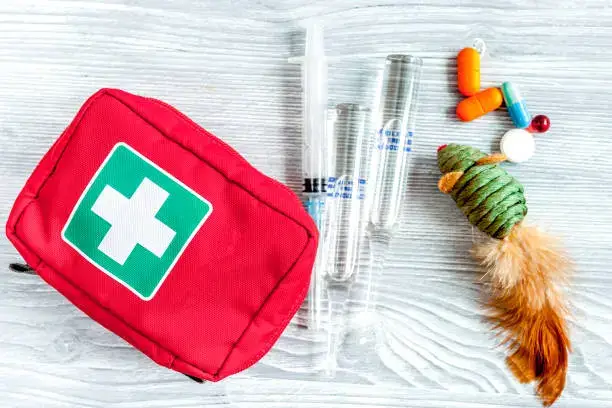
A clinical Emergency Kit Checklist for dogs must prioritize Vascular Stabilization, Toxicology Neutralization, and Thermal Governance. Beyond basic bandages, an architected kit includes Hemostatic Agents, Digital Diagnostic Tools, and Vital Homeostasis supplies. This infrastructure is designed to maintain life during the “Golden Hour”—the critical window between injury and professional veterinary intervention.
In the PetCareCompass framework, an Emergency Kit Checklist is not a passive inventory; it is a Biological Guardrail. We define emergency preparedness as the ability to maintain Vital Homeostasis under extreme somatic stress. Whether navigating a Vascular Crisis or a sudden environmental evacuation, your kit serves as the primary Somatic Stabilization System that preserves life until advanced clinical care can be reached.
Somatic Triage: Architecting the Clinical First Aid Unit
In the PetCareCompass framework, an Emergency Kit Checklist is organized into Somatic Triage Zones. The primary objective is to manage Acute Physiological Stress through Vascular Closure and Pathogen Exclusion. By prioritizing high-velocity response tools, you ensure that minor trauma does not escalate into systemic shock or secondary infection during the Golden Hour of emergency care.
1. Vascular Closure and Wound Shielding
Effective wound governance requires Hemostatic Agents and Self-Adherent Compression Wraps. Standard bandages often fail in high-moisture or high-movement scenarios. We mandate the inclusion of lint-free gauze and Antiseptic Irrigation solutions to neutralize Pathogen Loading before sealing the site. This architected layer of protection is the first line of defense against Sepsis and chronic inflammatory responses.
2. Toxicology Neutralization and Vital Recovery
Sudden ingestion of toxins requires an immediate Toxicology Neutralization protocol. Your kit must contain veterinary-approved Activated Charcoal and specific inducing agents (under clinical guidance only). Additionally, Glucose Recovery Gel is essential for managing hypoglycemic shock, ensuring Metabolic Stability while transitioning to a clinical facility. Preparing for toxic exposure is a mandatory pillar of Biological Security.
Diagnostic Clarity: Auditing Vital Signs in Crisis
An advanced Emergency Kit Checklist includes tools for Diagnostic Clarity. Monitoring Vital Signs—such as core temperature and mucosal color—is critical for baseline assessment. Without these data points, you are operating in a Diagnostic Void, which can delay life-saving interventions during a Biological Emergency.
| Diagnostic Tool | Biological Marker | Operational Directive |
|---|---|---|
| Digital Rectal Thermometer | Thermal Homeostasis | Audit for fever or hypothermic shock immediately |
| Mylar Thermal Blanket | Core Heat Retention | Utilize to neutralize shock-induced heat loss |
| Isotonic Eye Wash | Ocular Integrity | Flush Particulate Irritants to prevent corneal trauma |
1. Sterile Barrier and Hygiene Governance
Maintaining a Sterile Field during first aid is non-negotiable. Your kit must prioritize Nitrate-Free Disposable Gloves and Mechanical Debris Removal tools (tweezers/scissors). These items act as Biological Guardrails, ensuring you do not introduce new pathogens during the stabilization process. Proper hygiene governance reduces the Allostatic Load on your dog’s immune system during a crisis.
2. Integrity Auditing: The 6-Month Protocol
At PetCareCompass, we treat an emergency kit as Perishable Infrastructure. We mandate a Quarterly Integrity Audit to inspect expiration dates on medications and hemostatic agents. Replacing used or aged items ensures Operational Readiness. An expired kit is a failure in Emergency Architecture; discipline in maintenance is the hallmark of a visionary pet owner.
Hydration Governance: Architecting Fluid Homeostasis

In the PetCareCompass framework, Hydration Governance is the highest priority for Metabolic Resilience. Somatic stress significantly accelerates fluid loss, making a secure water supply a mandatory pillar of your Emergency Kit Checklist. By ensuring Contaminant Exclusion and maintaining strict rotation schedules, you preserve your dog’s kidney function and thermal regulation during high-stress environmental shifts.
1. Volumetric Requirements and Purity Protocols
We mandate a minimum storage of one gallon of potable water per dog per day, architected for a 72-hour window. Utilize BPA-free, food-grade containers to prevent chemical leaching into the supply. For senior phenotypes or those prone to stress-induced dehydration, we recommend including Isotonic Support (unflavored electrolytes) to facilitate rapid fluid absorption and maintain Electrolyte Homeostasis during evacuation events.
2. Ergonomic Consumption: Collapsible Delivery Systems
Efficient consumption mechanics are vital in transit. We prioritize Collapsible Silicone Delivery Systems over rigid bowls to maximize space efficiency in your emergency kit. These tools must be sanitized and dried post-use to prevent Biofilm Proliferation. By integrating ergonomic feeding tools, you reduce the physical effort required for subsistence, allowing your dog to focus on Somatic Recovery during a crisis.
Metabolic Continuity: Nutritional Integrity in High-Stress Scenarios
Sudden dietary shifts during emergencies often trigger Gastrointestinal Distress, adding Allostatic Load to an already compromised system. Metabolic Continuity requires maintaining a consistent nutrient profile even when displaced from your primary facility.
| Subsistence Category | Storage Advantage | Operational Directive |
|---|---|---|
| Dehydrated/Dry Kibble | High Nutrient Density | Store in vacuum-sealed, light-protected pouches |
| Caloric Boosters (Gels) | Rapid Glucose Availability | Essential for senior dogs to prevent hypoglycemic shock |
| Non-Perishable Rewards | Psychological Stabilization | Use freeze-dried proteins to maintain dietary familiarity |
1. Life-Stage Calibration: Puppies and Seniors
At PetCareCompass, we mandate Life-Stage Specificity in your Emergency Kit Checklist. Puppies require higher caloric intake to support rapid growth and metabolic heat production. Senior dogs, conversely, need moisture-rich food or Hydration Aids (like low-sodium broth) to support reduced renal efficiency under stress. Calibrating your nutritional pack to your dog’s current biological age is a mandatory step in Metabolic Governance.
2. Storage Governance: Neutralizing Spoilage Risks
To ensure Nutritional Integrity, all subsistence supplies must be stored in airtight, moisture-proof containers in a Cool-Zone Environment. Exposure to heat and sunlight triggers Lipid Oxidation, rendering food toxic or nutritionally void. We implement a First-In, First-Out (FIFO) rotation protocol every 6 months. Discipline in subsistence maintenance ensures that when the crisis occurs, your dog receives high-potency fuel, not contaminated waste.
Kinetic Governance: Architecting Secure Structural Restraint

In the PetCareCompass framework, Kinetic Governance is the foundation of field safety. During a crisis, autonomic stress responses can lead to unpredictable flight behaviors. A clinical Emergency Kit Checklist must prioritize Structural Restraint Systems that distribute force across the skeletal frame rather than the delicate cervical spine. By ensuring secure attachment points, you prevent Vascular Impairment and maintain total control during high-velocity evacuations.
1. Biomechanical Load Distribution: Harness Protocols
We mandate the use of a Y-Front Safety Harness over standard collars during emergencies. This architecture prevents tracheal compression and ensures even Biomechanical Load Distribution across the thorax. Your kit should include a secondary “slip-lead” as a Redundant Restraint. By utilizing high-tensile, reflective webbing, you architect a state of Proprioceptive Security, ensuring the dog remains anchored even in chaotic, low-visibility environments.
2. Somatic Containment: The Mobile Recovery Unit
A ventilated Impact-Resistant Carrier serves as a Mobile Recovery Unit for injured or high-anxiety phenotypes. Containment provides Somatic Stabilization, shielding the dog from overwhelming environmental stimuli that trigger Allostatic Overload. Integrating a familiar scent-saturated blanket within the carrier provides a Olfactory Anchor, maintaining Psychological Homeostasis while in transit to a clinical stabilization facility.
Environmental Armor: Neutralizing Physical Trauma Risks
Moving through Hazardous Terrains during a natural disaster requires Environmental Armor. Without digital and thermal protection, a dog is vulnerable to Ocular Trauma, pad lacerations, and Thermal Desiccation.
| Equipment Category | Protective Advantage | Operational Directive |
|---|---|---|
| Tactical Paw Booties | Digital Integrity Protection | Utilize for hot asphalt or glass-strewn debris zones |
| Surgical Muzzle (Nylon) | Nociceptive Reflex Management | Mandatory when handling injured dogs to prevent bites |
| Absorbent Microfiber Towels | Thermal Desiccation Prevention | Use to neutralize moisture-induced heat loss |
1. Pain-Induced Aggression Governance
In the PetCareCompass framework, we acknowledge that pain triggers a Primitive Bite Reflex. Including a correctly-sized muzzle in your Emergency Kit Checklist is a mandatory safety guardrail for the architect. This tool allows for the application of Vascular Closure techniques without risking injury to the handler. Behavioral Neutralization during a crisis ensures that medical stabilization can proceed with clinical precision.
2. Mechanical Redundancy and Integrity Checks
At PetCareCompass, we treat mobility equipment as Life-Critical Components. We mandate Mechanical Redundancy—always carry a backup leash and carabiner. Every 6 months, perform a Structural Integrity Audit on all plastic clips and metal fasteners to detect fatigue or Environmental Degradation. Ensuring your mobility gear is functionally sound is the hallmark of Operational Readiness in the field.
Clinical Documentation: Architecting Diagnostic Continuity

In the PetCareCompass framework, Data Governance is the cerebral core of your Emergency Kit Checklist. In a crisis, the ability to provide immediate Immunological Clearance (vaccination proof) and a detailed medical history ensures that your dog receives frictionless care at any clinical facility. Without architected records, Diagnostic Continuity is broken, leading to critical delays in triage and life-saving interventions.
1. Immunological Clearance and Somatic History
Your kit must house a comprehensive Somatic History, including up-to-date certificates for Rabies and core immunizations. This Information Infrastructure is mandatory for boarding during evacuations or emergency intake. We mandate the inclusion of recent bloodwork baselines and a current pharmaceutical ledger. This ensures that any relief veterinarian can baseline your dog’s Biological Security without redundant, time-consuming testing during a crisis.
2. Tactical Contact Architecture: The Triage Network
Effective response relies on a Tactical Contact Architecture. Beyond your primary veterinarian, your list must prioritize 24-hour Secondary Trauma Centers and Toxicology Hotlines. By architecting this network beforehand, you neutralize the “search delay” during a Vascular Crisis. We recommend a Redundant Access strategy: keep physical copies in a waterproof sleeve and a Cryptographic Digital Backup on a cloud server accessible by your emergency proxies.
Operational Protocols: Field Manual Governance
During a Biological Emergency, cognitive load can impair decision-making. Your Emergency Kit Checklist must serve as a Field Governance Manual, providing clear, pre-vetted instructions for stabilization protocols.
| Data Category | Operational Security | Governance Directive |
|---|---|---|
| Stabilization Manual | Standard Operating Procedures | Include Vascular Triage Protocols (wound care) |
| Pharmaceutical Ledger | Metabolic Safety | List dosages for all Maintenance Medications |
| Identification Artifacts | Legal Identity Verification | Include photos and microchip ID numbers |
1. Actionable Intelligence: First Aid Procedures
In the high-cortisol environment of a crisis, memory fails. We mandate the inclusion of laminated, step-by-step Stabilization Instructions for common trauma—specifically Hemostatic Application and Toxicology Induction. Providing actionable intelligence within your kit ensures that even a secondary handler can maintain Somatic Stabilization. This Field Governance is what transforms a bag of supplies into a functional Emergency Infrastructure.
2. Information Integrity Audits
At PetCareCompass, out-of-date information is considered Critical Data Corruption. We implement a Quarterly Information Audit to verify that emergency contacts remain active and that vaccination records reflect current Immunological Status. Test your Digital Redundancy systems to ensure offline accessibility. Maintaining the integrity of your documentation is the hallmark of Operational Readiness; a kit is only as effective as the data that guides its use.
Tactical Deployment: Architecting the Response Framework

In the PetCareCompass framework, an Emergency Kit Checklist is functionally void without a Tactical Deployment Framework. During a crisis, Cognitive Load significantly impairs decision-making. By architecting specific evacuation pathways and assigning Somatic Governance roles to household members, you neutralize chaos and ensure that Vital Homeostasis is maintained through a structured, high-velocity response.
1. Evacuation Architecture and Role Governance
Effective deployment requires Role Governance. Every household member must be assigned a specific Triage Responsibility: one for kinetic restraint (leash/harness), one for Subsistence Acquisition (the kit), and one for Information Retrieval (documents). Architecting these roles beforehand prevents Operational Redundancy and ensures a seamless transition from the primary facility to a secure shelter during a Biological Emergency.
2. Kinetic Habituation: Neutralizing Autonomic Stress
A crisis triggers rapid Autonomic Stress Responses in dogs, often leading to flight or freeze behaviors. We mandate Kinetic Habituation Drills—practicing rapid crate entry and high-stress mobility maneuvers under non-emergency conditions. By utilizing Dopaminergic Reinforcement (treats) during these drills, you condition the dog to view emergency gear as a precursor to safety, maintaining Psychological Homeostasis when a real threat occurs.
Infrastructure Integrity: Monitoring Operational Readiness
Maintaining Infrastructure Integrity is a mandatory pillar of Emergency Governance. A kit that has not been audited is a liability. Regular mechanical and biological checks ensure that your response system remains functional under Allostatic Load.
| Audit Component | Readiness Objective | Operational Directive |
|---|---|---|
| Metabolic Integrity | Pathogen Exclusion & Freshness | Rotate food and water every 180 days (FIFO) |
| Mechanical Hardware | Structural Security | Audit leashes and crate fasteners for Fatigue Fractures |
| Pharmaceutical Potency | Clinical Efficacy | Replace all Hemostatic Agents and meds before expiration |
1. Collective Intelligence: Household Response Education
At PetCareCompass, we define readiness as Collective Intelligence. Every individual in the household—from children to primary caregivers—must be fluent in the use of the Emergency Kit Checklist. Conduct Refresher Governance Sessions every quarter to verify that everyone can locate the kit and perform basic Vascular Triage. A shared understanding of the response framework minimizes confusion and preserves Biological Security when milliseconds count.
2. Modeling Behavioral Resilience
During Tactical Deployment, the dog utilizes its architect as a Somatic Mirror. If you exhibit high cortisol levels and erratic movement, the dog will mirror this with Hyper-Arousal or panic. We mandate Behavioral Resilience Modeling: speak in low-frequency tones and move with Mechanical Deliberation during drills. This modeling anchors the dog in a state of calm, ensuring they remain responsive to commands even in a Biological Crisis.
Strategic How-To: Emergency Deployment Protocols
Q1: How to audit your Emergency Kit for Clinical Integrity?
Implement a Quarterly Integrity Audit. Inspect all Hemostatic Agents and medications for expiration. Verify that vacuum-sealed food remains oxidation-free and rotate fluid supplies every 180 days. Maintaining Operational Readiness ensures your kit provides high-potency stabilization when a Biological Emergency occurs.
Q2: How to execute Hemostatic Application during trauma?
In a Vascular Crisis, immediately apply high-pressure Hemostatic Dressings or styptic powder to the breach. Utilize self-adherent wraps to maintain compression without impairing distal circulation. This Vascular Closure protocol is the primary guardrail against systemic shock during the Golden Hour of transport.
Q3: How to architect a rapid Somatic Evacuation?
Assign Triage Roles to every household member: one for Kinetic Restraint (leash/harness), one for the kit, and one for Diagnostic Documents. Use high-visibility gear and move with Mechanical Deliberation to keep the dog’s cortisol levels low, ensuring a seamless transition to a secure facility.
Q4: How to ensure Diagnostic Continuity through data?
Maintain a Cryptographic Digital Backup of all Immunological Status records and pharmaceutical ledgers. If physical documents are lost during a disaster, digital access ensures that relief veterinarians can baseline your dog’s Biological Security and avoid redundant, stressful testing during triage.
Q5: How to neutralize Autonomic Stress during drills?
Utilize Kinetic Habituation by simulating mini-evacuations using kit rewards. Pair the scent of emergency blankets and the sound of carriers with Dopaminergic Reinforcement. This modeling anchors the dog in a state of calm, preventing Allostatic Overload when real environmental threats manifest.
Q6: How to select the correct Kinetic Governance gear?
Prioritize Y-Front Safety Harnesses over collars to ensure Biomechanical Load Distribution across the thorax. This prevents tracheal trauma if the dog pulls during panic. Include a Nylon Muzzle as a guardrail against the Nociceptive Reflex (pain-induced biting), ensuring safe handling for all architects.
Master Operational Readiness Checklist
| Audit Level | Governance Action | Biological Objective |
|---|---|---|
| Metabolic Audit | Rotate food/water every 6 months (FIFO) | Nutritional Continuity |
| Clinical Audit | Test Digital Thermometry and lights | Diagnostic Clarity |
| Mechanical Audit | Check harness clips for Fatigue Fractures | Structural Restraint Security |
| Data Audit | Update Tactical Contact Architecture | Diagnostic Continuity |
Conclusion: The Blueprint for Somatic Resilience
Consistent maintenance of an Emergency Kit Checklist is the only antidote to unpredictable biological crises. By transitioning from a passive bag of supplies to a Tactical Response System, owners ensure the maintenance of Vital Homeostasis during high-stress displacements. The integration of Hemostatic Agents, Data Redundancy, and Somatic Habituation ensures that your dog’s Biological Security remains uncompromised through every crisis.
Find More Dog Care Guides
Continue exploring practical guides related to this topic.