
A systematic Coat Inspection is the first line of defense in proactive pet wellness. Beyond aesthetics, the condition of the coat serves as a biological mirror, reflecting systemic hydration, nutritional efficacy, and early-stage dermatological stressors before they escalate into chronic health issues.
💡 The Inspection Mandate: Dryness and matting are often silent signals. By implementing a tactile-visual audit, you can ensure epidermal barrier integrity, detect parasitic vectors early, and maintain the skin’s essential lipid balance through a low-stress daily habit.
In this comprehensive guide, we translate professional veterinary standards into a stress-free routine for at-home care. You will learn to identify the subtle signs of follicular distress, choose the correct diagnostic tools, and implement a hygiene habit that strengthens the physiological and emotional bond between you and your pet.
Why Daily Coat Inspection is a Veterinary Necessity
In the professional pet care industry, a Coat Inspection is far more than a simple vanity check; it is a fundamental pillar of preventative medicine. The canine integumentary system (skin and coat) is the dog’s largest organ and its primary defense against the external world. When this barrier is compromised by dryness or neglect, it creates an immunosuppressive gap that allows environmental pathogens to thrive.
🛡️ Immunological Defense
A healthy, well-inspected coat maintains a strict microclimate near the skin. Regular checks ensure the acid mantle (the skin’s natural protective film) is intact, preventing colonial proliferation of bacteria, fungi, and opportunistic yeast like Malassezia.
📉 Systemic Health Biomarker
The coat acts as a biological mirror. Sudden changes in texture—such as brittle shafts or excessive dullness—often serve as early warning signs of internal nutritional deficiencies, metabolic stress, or thyroid irregularities long before other symptoms appear.
Advanced Early Detection: Spotting the Invisible
Daily inspections allow owners to catch subclinical issues—problems that are occurring but haven’t yet caused obvious distress. By the time a dog begins scratching, a minor irritation has likely evolved into a full-scale inflammatory response.
- Sebaceous Audit: Feel for “waxiness” or “grittiness” which may indicate seborrhea (excessive oil production) or blocked follicles.
- Epidermal Hydration: Run your fingers against the grain. If the skin feels tight or flakes easily, it indicates transepidermal water loss.
- Parasitic Vectors: Use your fingertips to navigate the “hot zones”—under the collar, armpits, and groin—where fleas and ticks frequently colonize.
- Structural Anomalies: Detect subcutaneous lumps or minor abrasions that are hidden under dense fur before they become infected.
The Diagnostic Toolkit: Beyond the Brush
Effective Coat Inspection requires a curated selection of tools designed for diagnostic precision rather than just aesthetic grooming. Your toolkit should be an extension of your senses.
Utilize a fine-toothed flea comb not just for parasites, but as a depth-gauge for undercoat compaction. If the comb snags mid-shaft, you’ve identified a budding mat.
Rubber grooming gloves enhance your ability to feel temperature variations on the skin surface, which can signal localized inflammation or “hot spots” before redness appears.
A high-lumen inspection flashlight is vital for assessing the deep dermal layers in dark-coated breeds, revealing hidden lesions or early-stage parasitic eggs.
The Anatomical Coat Inspection Protocol
A professional Coat Inspection follows a specific anatomical sequence to ensure no diagnostic marker is overlooked. By moving from cranial to caudal (head to tail), you maintain a systematic approach that reduces pet anxiety and ensures comprehensive dermal coverage.
📍 Phase 1: Cranial & Cervical Audit (Head & Neck)
The area behind the ears and under the chin is a primary site for sebaceous gland activity and parasitic colonization. Use a fine-toothed comb to lift the hair shafts at the base of the ears to inspect for erythema (redness) or dark debris, which may indicate ear mites or localized yeast overgrowth.
Pro Tip: Pay close attention to skin folds in brachycephalic breeds; moisture trapped here triggers rapid bacterial proliferation.
📍 Phase 2: Dorsal & Lateral Scanning (Back & Sides)
Run your palms firmly against the grain of the fur to perform a tactile scan for subcutaneous irregularities. In double-coated breeds, look for undercoat compaction—dense clumps of dead hair that prevent airflow to the skin. This lack of ventilation is a leading cause of “hot spots” and chronic dryness.
📍 Phase 3: Ventral & Distal Extremities (Belly, Legs & Tail)
The underbelly and inner thighs are the most vulnerable areas due to thinner fur and direct environmental contact. Inspect for pustules or papules that could indicate allergic contact dermatitis. Check the interdigital spaces (between toes) for embedded debris or interdigital cysts, which often manifest as excessive licking.
Decoding Common Pathologies: What Your Audit Reveals
Identifying a problem during a Coat Inspection is only the first step. Understanding the underlying mechanism—whether nutritional, environmental, or parasitic—allows for a targeted intervention.
Epidermal Desquamation (Flakiness)
Visible white flakes (dandruff) often stem from low ambient humidity or a deficiency in Omega-3 fatty acids. This compromise in the skin’s lipid barrier leads to pruritus (itching) and secondary self-trauma.
Compacted Matting & Peltation
Severe mats create mechanical tension on the skin, causing pain with every movement. These mats act as organic sponges, trapping moisture against the dermis and fostering a breeding ground for bacterial infections.
Seasonal Adaptations: The Photoperiod Effect
Canine coats are biologically tuned to photoperiodism—the seasonal changes in daylight. As an owner, your Coat Inspection must evolve alongside these shifts to manage the surge in follicular activity.
☀️ The Summer/Winter Humidity Gap
During peak summer, UV radiation can induce follicular dryness and even sunburn on light-pigmented skin. Conversely, winter poses the risk of indoor dehydration; central heating systems strip moisture from the air, causing the coat to become brittle and prone to static. Increase your use of hydrolyzed protein sprays during these extremes to preserve shaft elasticity.
Specialized Coat Inspection for Sensitive and Senior Dogs
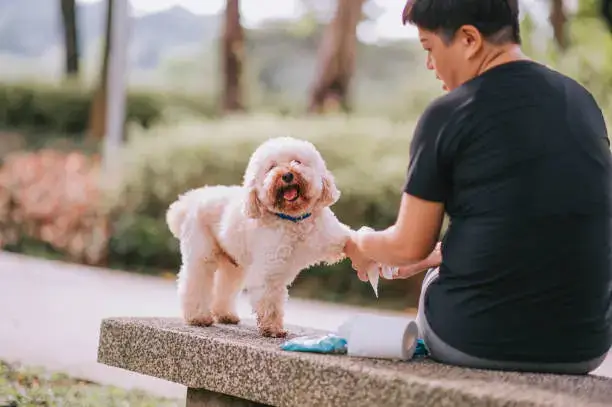
As dogs transition into their senior years, or if they possess a high-anxiety temperament, the Coat Inspection routine must evolve from a technical task to a therapeutic engagement. Biological changes, such as the thinning of the dermal layer and the loss of subcutaneous fat padding, make senior dogs hyper-sensitive to pressure and temperature during inspection.
🧤 Adaptive Tactile Pressure
Senior skin lacks the elasticity of youth. During your audit, replace firm stroking with “palpation-lite” techniques—using the pads of your fingers to gently roll the skin. This allows you to detect lipomas (fatty lumps) or early-stage cysts without causing discomfort to aging joints or sensitive nerve endings.
🧠 Cooperative Care Models
For dogs with “grooming trauma,” implement short-burst inspections. A 5-minute audit of the cranial zone (head and neck) followed by a high-value reward is more effective than a 20-minute full-body struggle. This builds behavioral predictability, teaching the dog that the session has a clear, non-threatening conclusion.
Deep-Dive: Identifying & Managing Common Coat Pathologies
A consistent Coat Inspection is your diagnostic baseline. Understanding the “Why” behind the “What” allows you to pivot from observation to effective intervention.
Dermal Xerosis & Flaking
Visible desquamation (dandruff) is often the result of Transepidermal Water Loss (TEWL). This occurs when the skin’s moisture barrier is breached by low indoor humidity or the overuse of alkaline shampoos.
The Solution: Look for “humectant” ingredients in topical sprays and ensure the diet is rich in Eicosapentaenoic acid (EPA). Regular inspection allows you to see if flakes are “oily” (Seborrhea Oleosa) or “dry” (Seborrhea Sicca), which dictates completely different treatment paths.
Matting, Peltation & Cutaneous Tension
Severe mats don’t just “sit” on the fur; they create continuous traction on the dermis, leading to bruising and reduced blood flow. During your inspection, use the “pinch test” near a mat—if the skin doesn’t move freely, the mat is already causing mechanical pain.
The Solution: Utilize silicon-based detangling agents to reduce friction before attempting extraction. For senior dogs, if a mat is too close to the skin, prioritize clippering over combing to avoid tearing fragile tissue.
The Parasitic Audit: Beyond Fleas
During a Coat Inspection, look for “flea dirt” (digested blood) which looks like black pepper. If these specks turn red on a wet paper towel, you have an active infestation. In senior dogs, pay special attention to the interdigital spaces and the base of the tail—areas where mobility issues might prevent the dog from self-grooming, making them a “safe harbor” for ticks and mites.
- The “Glide” Test: Daily, run your flat palm from head to tail. Any “stutter” in the glide indicates a developing mat or a dry patch.
- The Luminescence Audit: Inspect the coat under natural sunlight weekly. A lack of specular highlight (shine) signals a need for lipid replenishment.
- Nutritional Correlation: Track coat changes alongside diet. A sudden dullness 3-4 weeks after a food change is a significant data point.
- Digital Record: Use your phone to photograph any new lumps or redness next to a coin for scale. This is invaluable data for your veterinarian.
Seasonal Dynamics: Synchronizing Your Coat Inspection
A professional Coat Inspection is never static; it must fluctuate in response to your dog’s circannual rhythms. As the environment shifts, the skin’s lipid production and hair follicle cycles undergo significant physiological changes. Failure to adapt your audit to these seasonal markers often results in missed early-warning signs of dermal dehydration or parasitic surges.
🍂 The Vernal & Autumnal Shed
During the transitional periods of Spring and Fall, the primary focus of your Coat Inspection must shift toward undercoat extraction. Dead hair trapped within the topcoat acts as a moisture sponge, leading to bacterial peltation. Increase tactile audits to daily to identify “tufting” before it develops into deep-seated mats that restrict skin oxygenation.
❄️ The Indoor Heating Gap
Winter poses a unique threat: artificial desiccation. Central heating strips ambient humidity, causing the hair shaft to become brittle and the skin to lose its natural sebum barrier. Inspect specifically for “static lift” and micro-flaking (dandruff), which signal an urgent need for topical lipid replenishment.
Geriatric Stewardship: The Fragile Skin Audit
As dogs enter their senior years, the epidermal layer thins and subcutaneous fat padding diminishes. This makes the dog hyper-sensitive to the pressure of traditional brushes. A Coat Inspection for a senior dog must transition into a “Low-Impact Palpation” routine.
- The Joint-First Rule: Observe the dog’s mobility before starting. If they are stiff, avoid stretching limbs during the audit of the underbelly or paws.
- Lump Mapping: Senior dogs are prone to lipomas (fatty tumors) and sebaceous cysts. Use a digital map or journal to track the size, texture, and mobility of any new growth found during inspection.
- Thinning Zones: Inspect the “friction points” (elbows and hocks) for callus formation or pressure sores, which can become infected if the skin cracks due to seasonal dryness.
The Diagnostic Armory: Professional Gear Selection
To perform a high-level Coat Inspection, you must choose tools that serve as extensions of your diagnostic senses. It is the difference between simply brushing and performing a dermatological screening.
| Diagnostic Tool | Primary Clinical Use | Targeted Pathology |
|---|---|---|
| Rubber Palm Gloves | Tactile temperature mapping | Localized inflammation & Hot spots |
| Fine-Toothed Metal Comb | Debris & Parasite extraction | Flea dirt, Tick nymphs & Cheyletiella (Walking Dandruff) |
| LED Inspection Light | Visualizing deep dermal layers | Hidden abrasions & Fungal lesions |
Executing the Anatomical Protocol: A Cranial-to-Caudal Routine
A systematic Coat Inspection routine ensures that no diagnostic marker is missed. By following a Cranial-to-Caudal (head to tail) sequence, you provide a predictable and calming experience for the dog.
Focus on the post-auricular areas (behind ears) and the sub-mandibular folds. These are “hot zones” for ear mites and yeast proliferation. Use your fingers to roll the skin—it should be supple, not thickened or warm.
Perform a “Skin Tent Test” along the back to assess systemic hydration. Run your hands laterally along the ribs. A healthy coat should exhibit a specular highlight (natural shine) under light, indicating healthy sebaceous activity.
Inspect the inguinal (groin) and axillary (armpit) regions for erythema (redness). Check the interdigital spaces of the paws. Persistent moisture here often leads to fungal infections that manifest as red-stained fur between the toes.
The Operational Coat Inspection Protocol: A Daily Stewardship
Implementing a Coat Inspection checklist is not merely about tracking tasks; it is about establishing a predictable physiological baseline for your dog. Consistency allows you to identify “micro-deviations”—subtle changes in skin temperature, oil distribution, or hair elasticity—that precede clinical symptoms of illness or infestation.
☀️ AM: Vitality & Surface Audit
Perform a rapid tactile scan to assess overnight hydration levels. Morning is the ideal time to check for facial tear-staining and ear-canal debris accumulated during sleep. Brushing during this window stimulates blood flow to the follicles, promoting a vibrant specular highlight.
🌙 PM: Deep Dermal Recovery
Focus on “debris extraction” from daily activities. Inspect the paws for interdigital inflammation and the underbelly for environmental allergens. Evening is the most effective time for lipid replenishment (moisturizing), as the skin’s permeability increases during rest.

Beyond Daily Habits: Weekly & Monthly Strategic Extras
While daily Coat Inspection catches immediate surface changes, a structured periodic audit is essential to address long-term dermal health and mechanical integrity. These sessions allow for a more clinical assessment of your dog’s physiological condition, moving from simple observation to proactive asset management.
🧪 Weekly: The Precision Audit
Once a week, perform a High-Tension Detangling session. Focus specifically on the post-auricular (behind ears) and axillary (armpit) zones where friction and moisture frequently create “micro-mats.” Combine this with a Biosecurity Check: a microscopic scan of the groin and tail base for nymphs or larvae that daily brushes might displace but not remove.
📊 Monthly: Dermal Integrity Review
A monthly Coat Conditioning protocol is vital for lipid replenishment. Use this time to perform a “Skin Tent Test” to monitor systemic hydration. Inspect for Epithelial Hyperplasia (thickened skin) or new pigmentations, which can be early indicators of hormonal shifts or chronic inflammatory responses.
Specialized Handling: Adapting to Age and Activity
A dog’s lifestyle and life stage dictate the Coat Inspection frequency and methodology. A “one-size-fits-all” approach often fails sensitive populations or high-performance outdoor dogs.
Managing Geriatric Sensitivity
Aging dogs experience epidermal thinning and a decrease in subcutaneous fat. During your audit, minimize mechanical pressure to avoid iatrogenic bruising. Senior coats often lose their “water-repellent” properties; therefore, daily inspection must focus on detecting interdigital moisture and paw-pad cracks that could lead to fungal infections.
Post-Activity Debris Mitigation
For dogs active in high-vegetation areas, Coat Inspection is a safety mandate. Beyond ticks, look for foxtails and grass seeds—these organic barbs can migrate through the coat and penetrate the dermis, causing internal abscesses. Always perform a “Tactile Sweep” immediately after return, focusing on the paws, chest, and ears.
Decoding Dermal Signals: Solutions for Common Issues

Visual clarity and tactile feedback are your primary diagnostic tools during a coat audit.
| Dermal Issue | Diagnostic Marker | Expert Intervention |
|---|---|---|
| Chronic Xerosis | Brittle shafts, white dander, “static” lift. | Increase Omega-3 (EPA/DHA); utilize humidifier. |
| Active Matting | Peltation near skin; resistive clumps. | Silicon-based detangling; Point-cutting for extraction. |
| Allergic Dermatitis | Ventral erythema (red belly); frequent licking. | Medicated wipes; Identify environmental allergens. |
Seasonal Adaptations: Synchronizing with the Environment
Environmental variables significantly impact Coat Inspection priorities. As ambient humidity and UV levels fluctuate, so must your stewardship routine.
🛡️ The Seasonal Survival Guide
- The Vernal Shed: During Spring, the undercoat “blows.” Increase inspection to daily to prevent dead hair from trapping moisture against the skin, which triggers hot spots.
- UV & Heat Management: In Summer, inspect light-skinned areas (nose, ears) for Actinic Keratosis (sun damage). Ensure pads are audited for thermal burns from hot pavement.
- Winter Dehydration: Artificial heating strips the coat of its Lanolin-like barrier. Incorporate a weekly “Hydration Audit” to check for brittle hair shafts before breakage occurs.
The Definitive Coat Stewardship Calendar
To maintain epidermal barrier health, consistency is more valuable than intensity. This structured calendar translates professional Coat Inspection standards into a manageable at-home routine, ensuring no diagnostic marker is overlooked across daily, weekly, and monthly cycles.
☀️ Daily Vitality Audit
- AM Surface Scan: Run hands from head to tail to detect localized thermal variations or new subcutaneous lumps.
- Midday Debris Check: Focus on the interdigital spaces (paws) and ventral area (belly) for environmental irritants or grass seeds.
- PM Lipid Recovery: Apply targeted moisturizers to dry patches; the skin’s permeability for absorption peaks during rest.
🧪 Weekly Precision Tasks
- Full Undercoat Extraction: Deep brush to mitigate follicular compaction.
- Parasitic Sweep: Utilize a fine-toothed comb on “hot zones” (neck and tail base).
- Sanitary Audit: Inspect and cleanse the perianal area for inflammatory markers.
🛠️ Monthly Strategic Review
- Professional Grooming Alignment: Review coat architecture for seasonal trimming.
- Dermal Mapping: Photograph any permanent moles or cysts to track morphological changes.
- Deep Lipid Bath: Professional-grade conditioning to restore the Lanolin-like barrier.
Coat Inspection FAQ: Answering the Vital Questions
What is the clinical priority if I find a new lump during inspection?
Immediate assessment of mobility and texture is key. If the lump is firm, attached to underlying tissue, or has grown rapidly, consult a veterinarian. Use a coin as a scale reference in photographs to track changes accurately.
How does ‘flea dirt’ differ from environmental debris?
Perform the Wet Paper Test. Flea dirt consists of digested blood; when placed on a damp white paper towel, it will dissolve into a reddish-brown stain. Normal dirt remains gray or black.
Can I perform a coat inspection if my dog is highly anxious?
Yes. Implement the Cooperative Care Model: divide the audit into 2-minute zones (e.g., only the head today). Pairing inspection with high-value reinforcement builds behavioral resilience and trust over time.
Conclusion: Mastering the Language of the Coat
A thorough Coat Inspection is the ultimate diagnostic conversation between you and your dog. By committing to this systematic stewardship, you transform a simple grooming task into a profound act of preventative health care.
“At PetCareCompass, we believe that every strand of fur tells a story of internal wellness. When you learn to listen through inspection, you ensure your dog enjoys a life defined by comfort, vitality, and health.”
Ready to optimize your routine? Pair your inspection skills with our
At-Home Grooming Essentials
to ensure you have the precision tools required for a professional-grade audit.
Find More Dog Care Guides
Continue exploring practical guides related to this topic.